Himalayan Salt Wall Panels: A Design & Installation Guide for Contractors


Himalayan salt wall panels can add natural color and a warm, softly lit feature to a spa, hotel, sauna, or wellness interior. For designers and contractors, a successful installation starts with practical planning: the layout, wall support, lighting, and room conditions all need attention before the salt arrives.
This guide covers the key decisions to make when planning Himalayan salt wall panels, from choosing the format to coordinating the installation.
Himalayan Salt Wall Panels: Start with the Design
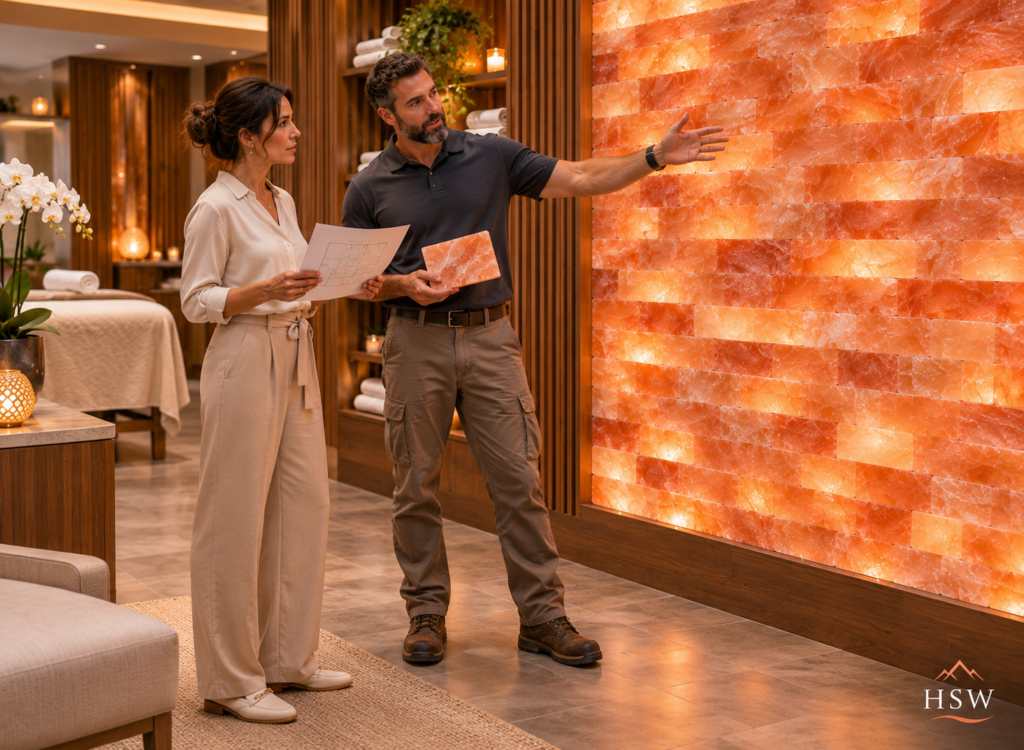
Begin by deciding what role the salt feature will play in the room. A compact panel behind a reception desk creates a different effect from a full-height wall in a relaxation space. Consider the main viewing angle, nearby furniture, door swings, outlets, and any signs or displays around the feature.
A simple rectangular layout is often easier to set out than a design with many corners or cutouts. If the plan includes a niche, framed edge, or multiple panels, include those details in the drawings so the installer can plan the pattern and cuts.
Salt walls are decorative architectural features. They are not a substitute for room ventilation, medical care, or a purpose-built halotherapy system.
Salt Wall Panel Materials: Tiles or Bricks?
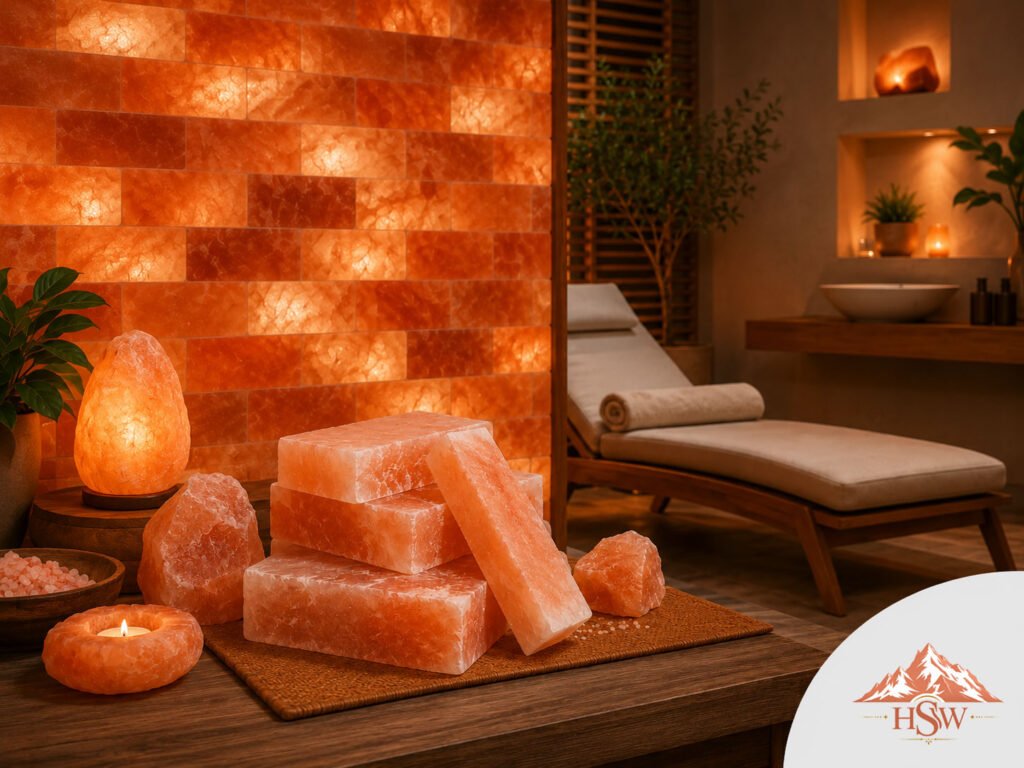
Material choice affects the wall’s depth, appearance, and weight. HSW’s pink salt wall tiles are listed as 8 × 4 × 1 inches, weighing approximately 2.5–2.9 lb each. Their slimmer profile may suit a shallower decorative feature, while thicker salt bricks create a deeper, more substantial look. Confirm current specifications before finalizing drawings or ordering.
When comparing formats, consider:
- Available depth behind the finished wall
- Desired appearance, including joints and natural color variation
- Whether the feature will be front-lit or backlit
- The planned installation and support system
- Material quantity, including cuts and openings
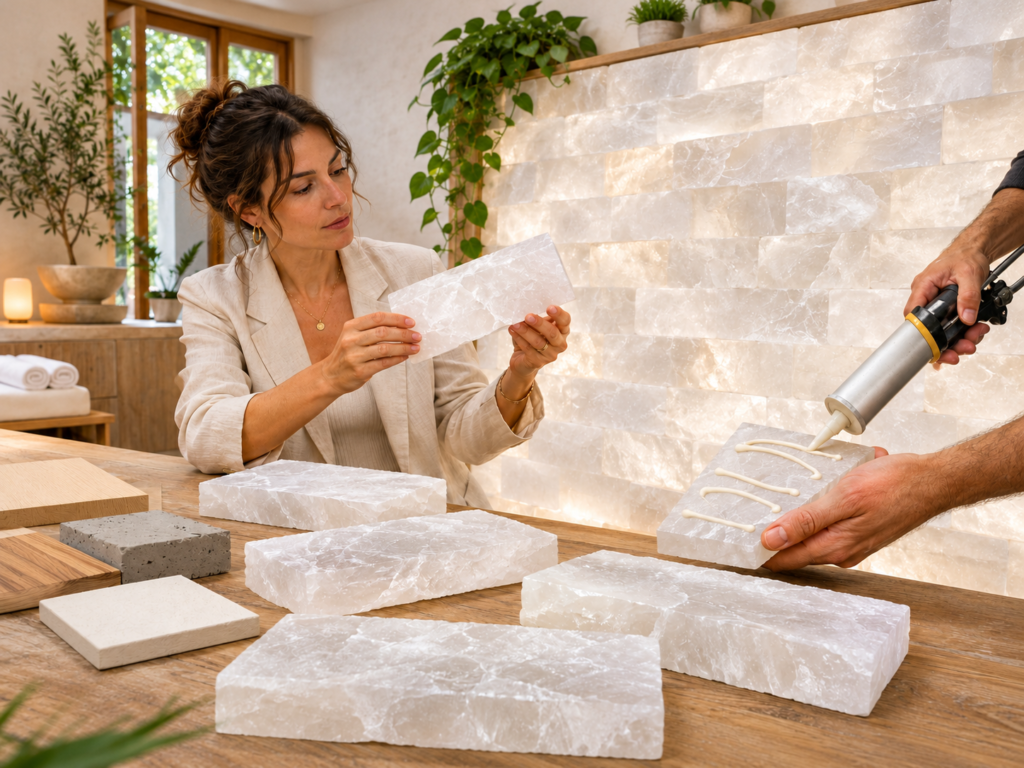
Natural salt varies in color and crystal pattern. If visual consistency matters across a large installation, review representative product images or pieces before specifying the material.
Himalayan Salt Wall Panel Weight and Support
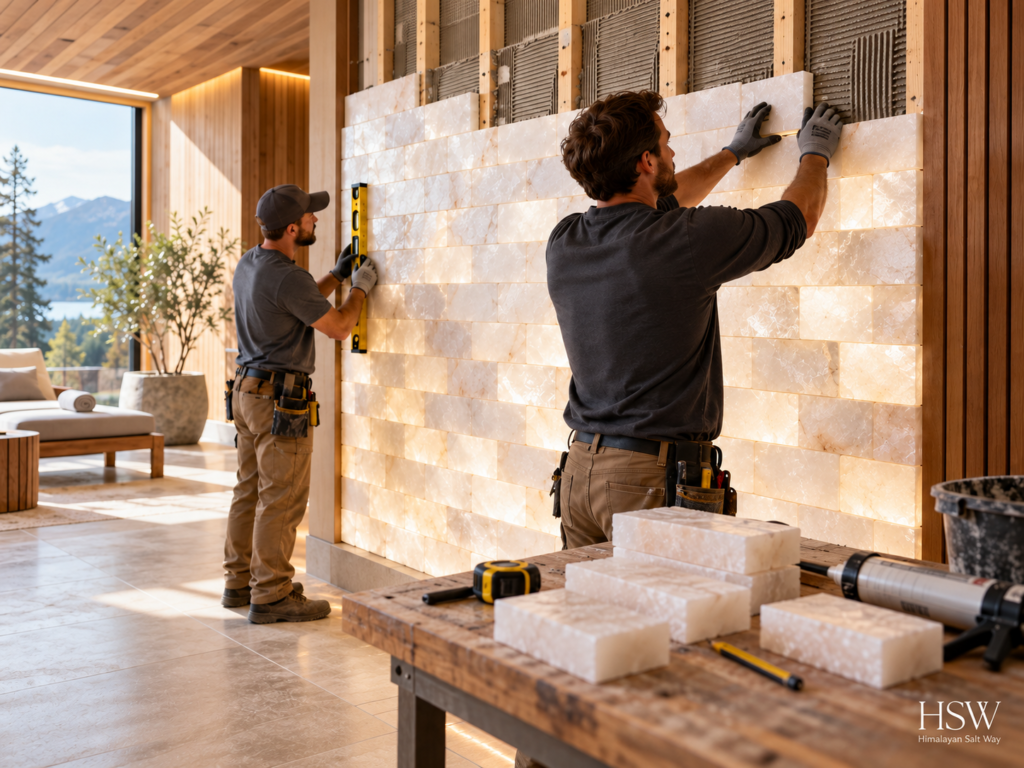
Do not plan around tile weight alone. The complete assembly may also include backing, adhesive, lighting components, framing, and support hardware.
For a rough estimate, an 8 × 4-inch tile covers about 0.22 square feet. Using HSW’s approximate tile weight, the salt tiles alone work out to roughly 11.25–13.05 lb per square foot. This is an early planning estimate, not structural approval. Have the responsible project professional review the actual wall assembly and attachment method.
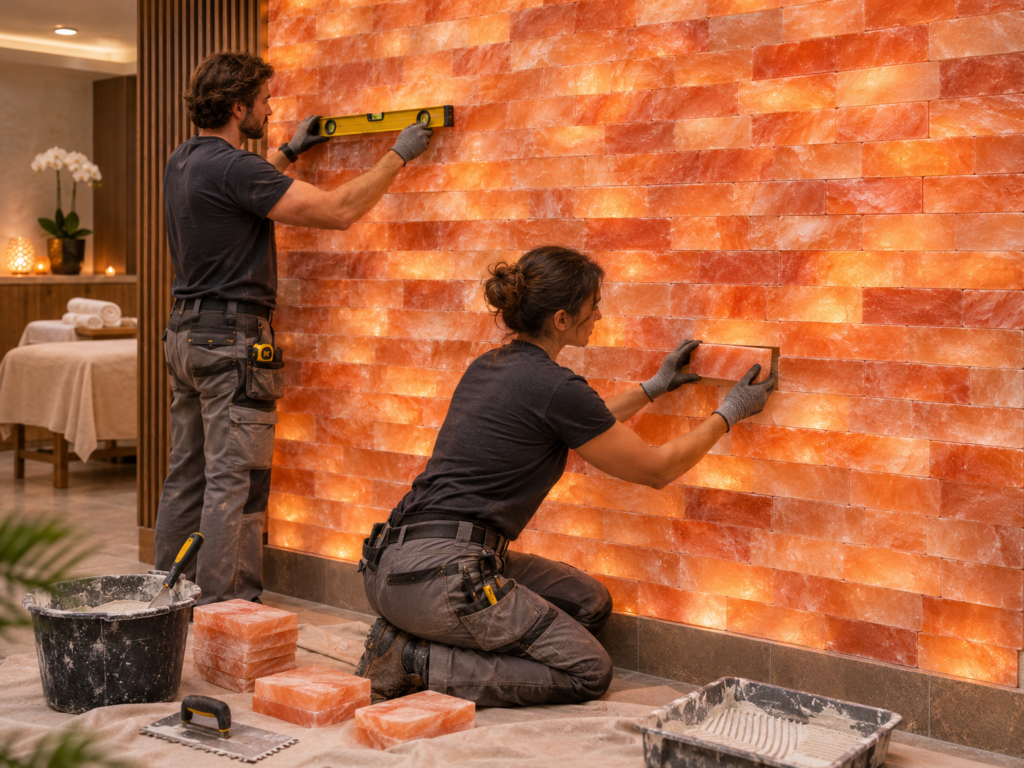
For a larger feature, include the proposed dimensions and assembly details in the construction documents. The project professional should determine whether the design needs additional framing, a bearing ledge, mechanical retainers, or another support method.
Backlit Salt Wall Panels: Plan Lighting Early
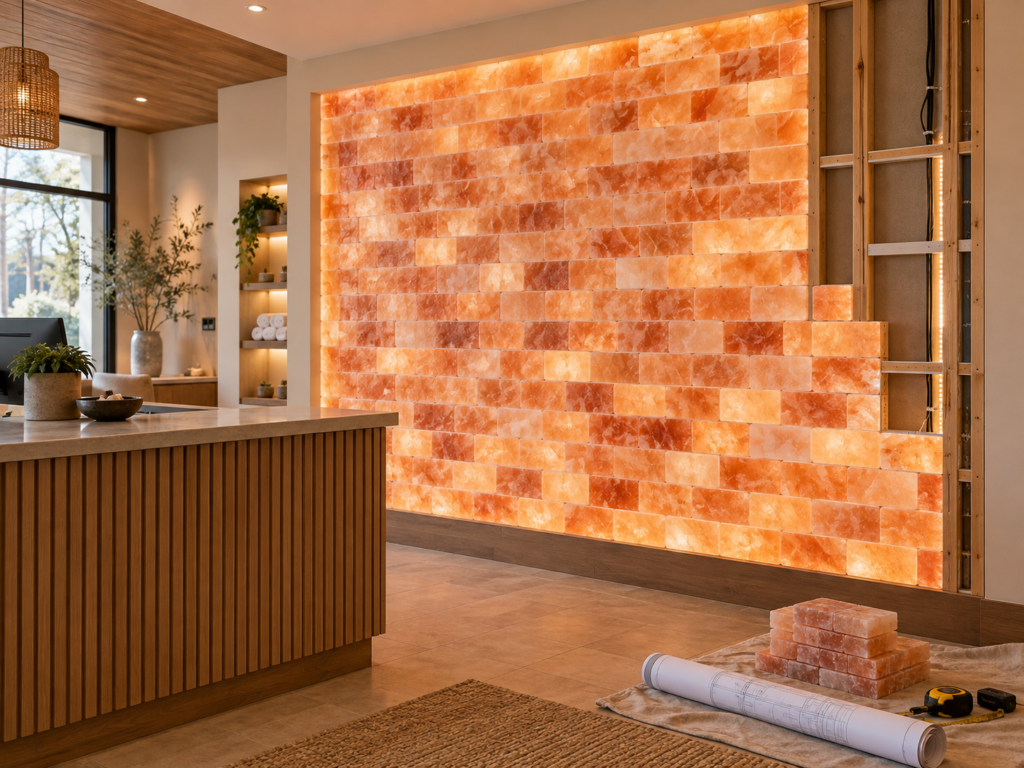
Backlighting can bring out the natural variation in salt, but it needs to be coordinated with the wall build-up. Decide where the light source, wiring, access points, and any cavity will go before installing the backing and salt.
Before full installation:
- Confirm the light source and its position.
- Coordinate wiring and electrical work with the qualified installer.
- Test a sample section to review the color and brightness.
- Keep access to components that may need servicing.
- Check applicable local requirements for the installation.
A small mock-up can help the design team judge the final look before committing to a larger area.
Salt Wall Moisture and Room Conditions
Room conditions matter when specifying a salt feature. Salt can dissolve when exposed to water, so discuss expected humidity, ventilation, cleaning routines, and proximity to water with the project team. The U.S. Geological Survey explains the water-soluble nature of salt in its overview of water as a solvent.
Avoid placing a salt wall where it will receive direct splashing unless the design has been reviewed for that exposure. A decorative feature in a dry area has different considerations from one inside a hot or humid room. HSW’s salt adhesive guide also recommends considering the salt, wall surface, room conditions, and installation system together.
Coordinate the Salt Wall Specification
Before ordering, prepare a short project schedule that includes:
- Wall width and height
- Salt tile or brick format
- Planned layout and openings
- Backing and support details
- Lighting location and access
- Room conditions and intended use
- Estimated quantity and delivery timing
Share these details with the supplier and installer early, while there is still time to resolve design questions. For project planning, review HSW’s pink salt wall tiles, Himalayan salt wall cost guide, and salt adhesive guide.
A Well-Planned Himalayan Salt Wall Panel
Himalayan salt wall panels can become a distinctive feature in a wellness interior when the design and installation details are considered together. Plan the layout, confirm the material, account for the complete wall assembly, coordinate lighting, and review room conditions before construction begins.
For help planning materials, send Himalayan Salt Way the wall dimensions, room type, preferred tile or brick format, and lighting concept.
FAQs About Himalayan Salt Wall Panels
How much do Himalayan salt wall tiles weigh per square foot?
Using HSW’s listed 8 × 4-inch tile size and approximate 2.5–2.9 lb piece weight, the salt tiles alone are roughly 11.25–13.05 lb per square foot. The complete assembly weighs more, so have a project professional review the full design.
Should I choose salt tiles or salt bricks?
Tiles have a slimmer profile, while bricks create a deeper feature. Choose based on the design, available wall depth, installation method, and room conditions.
Can a Himalayan salt wall be backlit?
Yes, if the lighting position, wiring, access, and wall build-up are planned before installation. Test a sample section when appearance is important.
Can salt wall panels be installed near water?
Salt can dissolve in water. Discuss the location and exposure with the supplier and project professional, especially where there may be direct splashing or persistent humidity.