
Why Do Animals Need Salt Licks?

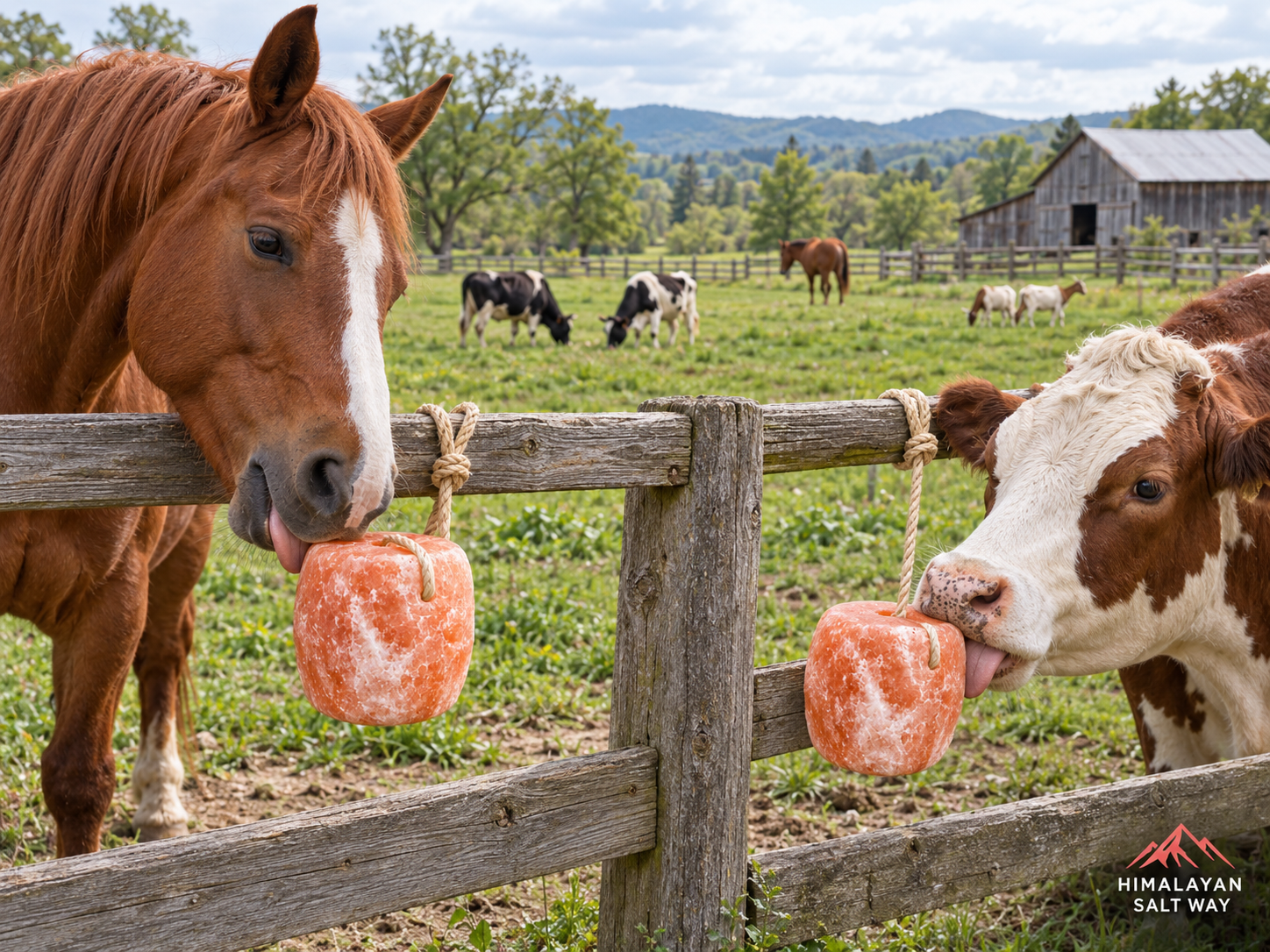
Watch a horse pause beside a salt block or a cow return to a lick in the pasture, and it is easy to wonder what keeps bringing them back. They already have grass, hay, and feed, so why do animals need salt licks?
The main reason is to help meet their need for sodium and chloride. These nutrients support normal fluid balance, nerve signals, and muscle function. Although forage provides many nutrients, it may not supply enough sodium.
A salt lick offers a convenient way to provide supplemental salt. However, choosing one involves more than placing a block near the fence. The animal’s species, existing diet, and mineral program all matter.
Why Do Animals Need Salt Licks Alongside Grass and Hay?
A pasture can look lush and still leave nutritional gaps. Its mineral content depends on the soil, the plants growing in it, and when those plants are grazed or harvested.
Oklahoma State University’s guidance on grazing cattle nutrition explains that almost all the forages discussed in its guide require supplemental salt as a sodium source.
That does not mean every animal needs the same supplement. Some already receive salt through fortified feed or a mineral mix. Others may need a separate source.
The useful question is therefore not simply, “Does this animal have a salt block?” It is, “Does the complete diet provide enough salt in a form the animal actually consumes?”
What Does Salt Do for Animals?
Salt supplies sodium and chloride, two electrolytes involved in everyday body functions. They help maintain fluid balance and support the communication between nerves and muscles.
These functions are essential whether an animal spends its day grazing, growing, or working. However, supplying more salt than needed does not automatically bring extra benefits.
Salt should be considered alongside the rest of the feeding program. It cannot replace good forage, sufficient feed, or a suitable mineral supplement.
Water deserves equal attention. Whenever supplemental salt is available, make sure animals have reliable access to fresh drinking water. Checking the trough is just as important as checking the lick.
Salt Licks for Horses, Cattle, Sheep, and Goats
Salt supplementation is common in livestock care, but the right approach varies between species.
Horses
For horse owners, a salt block is a familiar sight in a stall or paddock. It can offer a convenient salt source, but its presence alone does not tell you how much the horse consumes.
Some horses use their blocks regularly, while others show little interest. Extension Horses’ feeding and nutrition guidance notes that block consumption varies, which makes blocks unreliable for supplying precise amounts of other minerals.
Look at the whole ration before adding supplements. The University of Minnesota’s guide to horse vitamins and minerals explains several feeding approaches and how the salt source fits into each one.
If a horse barely touches its block, review its existing feed and discuss suitable alternatives with an equine nutritionist or veterinarian.
Cattle
For cattle, salt supplementation should match the forage and the overall mineral program. The needs of a growing animal may differ from those of a mature cow producing milk.
Practical access matters, too. A supplement can only be useful if the animals can reach it. Watch whether all members of the herd have access, rather than assuming that one feeding point works equally well for everyone.
If cattle already receive a salt-containing mineral mix, check before offering a separate lick. Another salt source may affect how much of that mix they consume.
Sheep and Goats
Sheep and goats may share similar surroundings, but their mineral requirements are not identical.
Copper is a particularly important difference. Sheep are sensitive to excess copper, so a mineral product intended for another species may be unsuitable for them.
Virginia Cooperative Extension’s sheep mineral guide explains why species-specific mineral selection matters. Always read the label and confirm that the product is appropriate for the animals receiving it.
Himalayan Salt Licks and Mineral Supplements: What Is the Difference?
When shopping for animal salt licks, you may see plain salt blocks, Himalayan salt licks, and formulated mineral supplements. They should not be treated as interchangeable.
A plain salt block primarily provides sodium chloride. A Himalayan salt lick should also be evaluated primarily as a salt source, using the product’s composition and feeding information.
A formulated mineral supplement, meanwhile, is designed to provide specified nutrients for particular animals or feeding conditions.
Naturally occurring trace minerals do not automatically make a salt lick a complete mineral supplement. The presence of a mineral also does not tell you whether an animal will receive enough of it.
Read the product analysis rather than relying on pink color or the word “natural.” Clear feeding directions and suitability for the intended species are more useful than broad claims.
You can explore Himalayan Salt Way’s cattle salt lick collection to compare available options and review the individual product details.
How to Choose the Right Animal Salt Lick
A good purchase starts with a clear understanding of the feeding program.
Check What the Diet Already Supplies
Review the forage, feed, mineral mixes, and other supplements your animals receive. This helps you avoid adding products without knowing how they fit together.
If you are unsure about the ration, a livestock nutritionist can help identify what is missing and what is already covered.
Read the Label Carefully
Look for the intended species, ingredients, mineral analysis, and feeding directions. A product being sold for livestock does not necessarily mean it suits every farm animal.
Choose products with clear information that allows you to make a sensible comparison.
Consider the Feeding Setup
Think about where the lick will go, how animals will reach it, and how you will keep it clean.
A suitable holder can keep the product off contaminated ground. Protection from unnecessary rain exposure also makes it easier to distinguish normal use from weather-related loss.
Observe Actual Use
Make a note of when you put out a new lick and check it regularly. Is it being used? Can every animal reach it? Is it dissolving in the rain?
These simple observations can be more useful than assuming the product is doing its job because it is available.
Common Mistakes to Avoid
One common mistake is expecting a salt lick to cover every mineral requirement. It may provide supplemental salt while leaving other dietary needs unaddressed.
Another is adding a new lick without considering an existing mineral mix. More products do not necessarily create a better-balanced ration.
It is also easy to overlook weather exposure. A block that disappears quickly may be dissolving as well as being consumed. Equally, a block that lasts for months may deserve a closer look to see whether the animals are using it.
Keep the routine simple: review the diet, choose an appropriate product, check access, and monitor consumption.
Understanding why do animals need salt licks starts with reviewing what they already eat. Grass, hay, and prepared feed contribute different nutrients, so a suitable salt source should complement the complete diet. Check the product label and monitor how much your animals actually consume.
Frequently Asked Questions
Do All Animals Need Salt Licks?
Animals need sodium and chloride, but a lick is only one way to supply them. Whether supplemental salt is needed depends on the species and the nutrients already provided by the complete diet.
Can a Salt Lick Replace a Mineral Supplement?
A plain salt lick should not be used as a replacement for a complete mineral supplement. Check the product analysis and the feeding program to understand what it provides and what may still be missing.
Is Himalayan Salt Better Than Regular Salt for Animals?
Pink color alone does not demonstrate a nutritional advantage. Compare the composition, suitability, feeding directions, and actual consumption of each product.
How Long Does a Salt Lick Last?
There is no fixed lifespan. The size of the lick, the number of animals using it, consumption, and weather exposure all affect how quickly it needs replacing.
What If an Animal Does Not Use Its Salt Lick?
First, check that the lick is clean and easy to reach. Then review whether the animal already receives salt through its feed. If intake remains uncertain, ask a veterinarian or nutritionist whether another format would be more suitable.
Making Salt Part of a Thoughtful Feeding Routine
Why do animals need salt licks? They can help supply salt that may be missing from the daily diet. Choosing a suitable product starts with reviewing the complete feeding program and observing how each animal uses its lick.
Check the feed, keep fresh water available, and pay attention to how the supplement is used. A little consistency makes it easier to spot problems and ask the right questions.
For available products, browse Himalayan Salt Way’s animal salt lick options. You can also contact Himalayan Salt Way for pack availability and bulk purchasing information. For individual feeding amounts and mineral balance, consult your veterinarian or livestock nutritionist.