
Himalayan Salt Tile Moisture: Causes & Care Guide

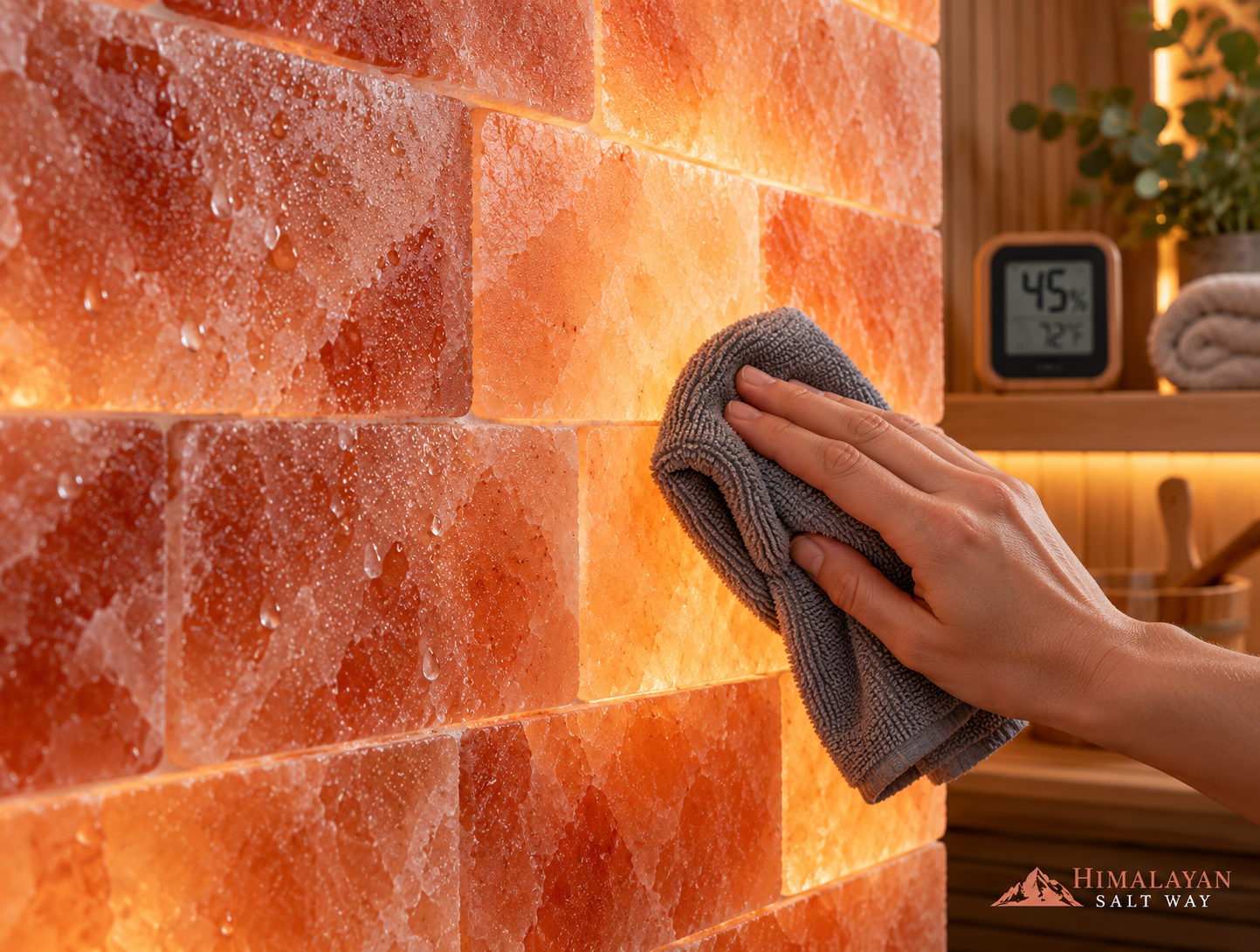
Himalayan salt tile moisture can appear as tiny droplets, a damp surface, or a thin salty film across a wall. This condition is often called “sweating,” but it does not mean that the salt tiles are damaged or producing water.
Natural salt attracts moisture from the surrounding air. When indoor humidity becomes high, the moisture may collect on the surface of Himalayan salt tiles and bricks. Understanding why this happens can help you protect the appearance, stability, and long-term condition of your salt wall.
Quick answer: Himalayan salt tiles may sweat because salt naturally attracts water vapor from humid air. Better ventilation, controlled indoor humidity, gentle warmth, and protection from direct water can reduce moisture buildup.
Why Does Himalayan Salt Tile Moisture Develop?
Himalayan salt is hygroscopic, which means it naturally attracts moisture from the air. This is a normal property of salt rather than a manufacturing defect.
When the surrounding air contains a high level of water vapor, the salt surface begins attracting that moisture. Small droplets may eventually join together and create a thin layer of salty water known as brine.
The problem is more noticeable in:
- Bathrooms and shower areas
- Steam rooms
- Indoor pools
- Basements
- Coastal locations
- Poorly ventilated rooms
- Seasonal periods of high humidity
- Salt walls positioned near doors or windows
A small amount of occasional moisture can usually be managed. However, repeated or heavy exposure may slowly soften tile edges, leave white salt marks, affect nearby materials, or weaken an unsuitable installation system.
Is Himalayan Salt Tile Moisture Normal?
Light moisture during humid weather can be normal. Salt is a natural material, so it continues interacting with the surrounding environment after installation.
The important question is how often the sweating occurs and how much water is present.
A few small droplets during an unusually humid day are different from continuous dripping. Persistent moisture may indicate poor ventilation, direct water exposure, an HVAC problem, a hidden leak, or unsuitable installation conditions.
Regularly check the wall, grout lines, supporting surface, lighting system, and nearby floor. Early attention is much easier than repairing an installation after prolonged water exposure.
How to Prevent Himalayan Salt Tile Moisture
1. Control Himalayan Salt Tile Moisture With Proper Humidity
Place a digital humidity meter near the salt wall. This provides a clearer picture than judging humidity by comfort alone.
The U.S. Environmental Protection Agency recommends keeping indoor relative humidity below 60%, ideally between 30% and 50% where possible. Maintaining a lower and more stable level can reduce condensation and moisture buildup. Read the EPA guidance on indoor moisture and humidity.
A dehumidifier may be useful in basements, treatment rooms, pool areas, and other spaces where humidity regularly increases.
2. Reduce Salt Tile Moisture With Better Airflow
Still air allows moisture to remain around the salt surface. Gentle, continuous airflow helps keep the wall dry.
Use appropriate room ventilation, ceiling fans, exhaust systems, or HVAC circulation. After operating a sauna or steam-producing appliance, continue ventilation until the room and wall surfaces have dried.
Avoid directing a powerful fan at one small section of the wall. Balanced airflow across the room is generally more effective.
3. Use Gentle and Consistent Warmth
Many backlit salt walls produce mild warmth from their lighting system. This warmth may help keep the surface dry by supporting evaporation.
The lighting system should be properly installed and should not overheat the tiles, wiring, adhesive, or surrounding materials. Electrical components in humid rooms must be selected and installed by a qualified professional.
Do not use portable heaters or heat guns directly against a salt wall.
4. Protect Himalayan Salt Tiles From Water and Moisture
Himalayan salt tiles should not receive direct water from showers, sprinklers, cleaning equipment, pool splashes, or leaking pipes.
Even in a sauna or wellness room, a salt wall should be positioned away from direct water sources. If the room is frequently washed, protect the salt installation during cleaning.
5. Select a Suitable Installation Location
Moisture control begins before installation.
Avoid placing a salt wall:
- Directly against a leaking or damp wall
- Under an air-conditioning vent that produces condensation
- Next to an unsealed shower
- Where wet towels or equipment will touch it
- In contact with the floor where cleaning water can collect
- Near an exterior opening exposed to rain
Before installation, make sure the supporting wall is dry, stable, clean, and suitable for the combined weight of the salt pieces.
For design inspiration and placement considerations, see these practical spa salt wall ideas.
6. Use Installation Materials Designed for Salt Walls
Ordinary household glue may not provide the performance needed for a heavy salt feature.
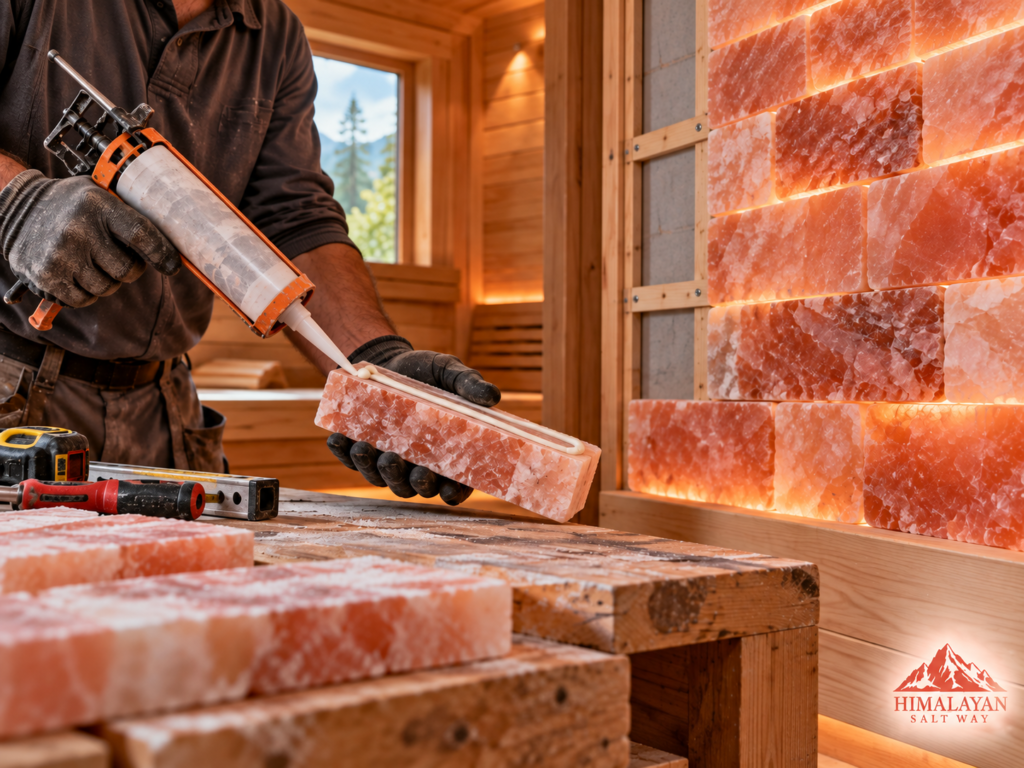
The adhesive should be compatible with the salt pieces, supporting surface, room temperature, and expected humidity. Himalayan Salt Way offers salt wall adhesive options for tile and brick installations.
Large walls, commercial spaces, and installations near heat or moisture should be reviewed by an experienced installer.
7. Inspect the Wall Regularly
A quick monthly inspection can identify problems before they become serious.
Check for:
- Repeated water droplets
- Soft or rounded tile edges
- Loose tiles or bricks
- Changes in adhesive lines
- Rust around metal components
- Water collecting below the wall
- Damaged wiring or lighting
- Cracks in the supporting structure
Turn off the electrical system and contact a qualified professional if water reaches any wiring or lighting components.
How to Clean Himalayan Salt Tile Moisture Safely
Himalayan salt tiles should normally be cleaned without adding water.
Follow these steps:
- Turn off the backlighting or nearby electrical system.
- Allow the wall to cool if it feels warm.
- Use a clean, soft, dry microfiber cloth.
- Gently wipe the surface without pressing water into the joints.
- Use a soft dry brush for dust inside textured areas.
- Restore ventilation and allow the surface to remain completely dry.
Do not wash the tiles with a wet cloth. Avoid steam cleaners, sprays, bleach, soap, chemical polish, and household cleaning solutions. These products may dissolve the salt surface or leave unwanted residue.
Should You Apply a Sealer to Salt Tiles?
A sealer is not automatically suitable for every salt wall.
Some coatings can change the natural appearance and glow of the tiles. An unsuitable coating may also peel, discolor, or trap moisture near the supporting wall.
Before applying any protective product, confirm that it is compatible with natural salt, the adhesive, the backlighting system, and the room’s operating temperature. Test it on a spare tile before treating a complete installation.
For valuable or commercial installations, consult the installer or material supplier first.
How to Remove Himalayan Salt Tile Moisture
If the surface is damp but the tiles remain secure:
- Stop the source of direct moisture.
- Improve ventilation.
- Run a dehumidifier if appropriate.
- Wipe visible moisture with a dry microfiber cloth.
- Keep the area dry until the wall is fully stable.
- Monitor the humidity level over the following days.
Do not scrape the wet surface or use direct high heat. Wet salt can be softer than dry salt and may be easier to scratch.
If tiles are loose, severely eroded, cracked, or constantly dripping, stop using nearby electrical lighting and arrange a professional inspection.
Choosing Tiles for a Salt Wall Project
Good maintenance starts with suitable materials and realistic planning. Consider wall dimensions, tile thickness, total weight, humidity, lighting access, ventilation, and future maintenance before construction begins.
You can compare available Himalayan pink salt tiles for decorative walls, spas, saunas, wellness spaces, and interior features.
Natural variations in color, crystal pattern, and mineral tone are expected. These differences help give every completed wall its own appearance.
Himalayan Salt Tile Moisture FAQs
Why are my Himalayan salt tiles leaking water?
The tiles are usually attracting moisture from humid air or receiving water from condensation, splashes, or a nearby leak. Check the room humidity, ventilation, plumbing, air-conditioning vents, and surrounding surfaces.
Can I clean salt tiles with water?
Water is generally not recommended because it can dissolve the salt surface. Use a soft, clean, dry cloth for routine care.
Can a dehumidifier protect a salt wall?
A dehumidifier may help when the room regularly has high humidity. Use a humidity meter to monitor conditions and select equipment suitable for the room size.
Does backlighting help keep salt tiles dry?
A properly designed backlighting system may provide gentle warmth that supports drying. However, it cannot correct direct leaks, heavy condensation, or poor ventilation.
When should a salt tile be replaced?
Consider replacement when a tile has become loose, deeply eroded, severely cracked, or structurally unstable. The cause of the moisture should be corrected before installing a replacement.
Final Thoughts
Himalayan salt tile moisture is easier to control when the room is designed with ventilation, humidity management, safe lighting, and protection from direct water.
Monitor humidity, clean the surface with dry materials, inspect the installation regularly, and deal with persistent moisture early. These simple steps can help preserve the natural texture and warm appearance of a Himalayan salt wall for years.
For assistance with tile quantities, installation materials, or a specific salt wall project, contact Himalayan Salt Way.



One thought on “Himalayan Salt Tile Moisture: Causes & Care Guide”