Can You Install a Himalayan Salt Wall in a Basement?

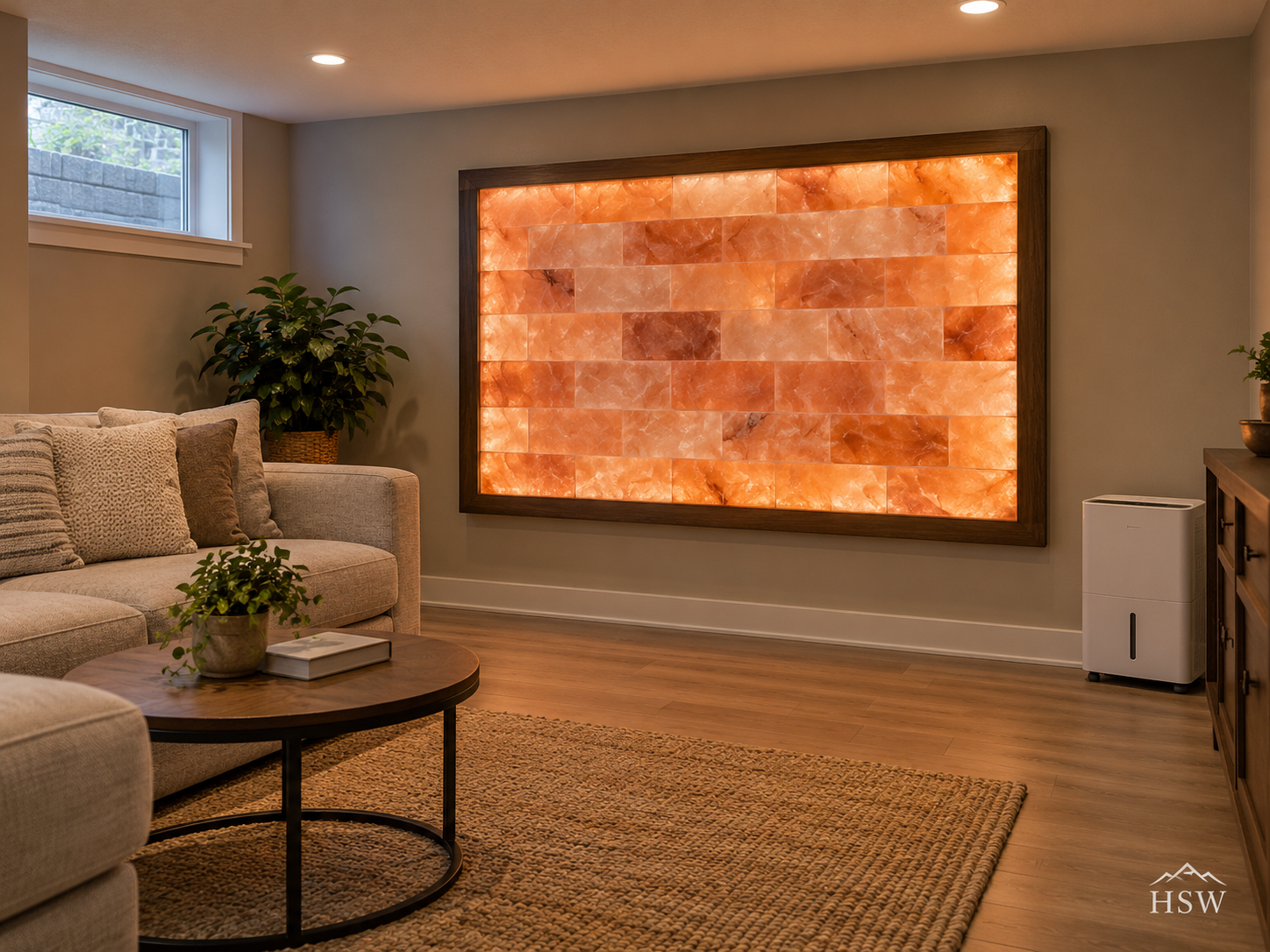
Yes, a Himalayan salt wall in a basement can be a practical decorative feature when the space stays dry and the installation is properly designed. However, a basement with recurring leaks, condensation, or uncontrolled humidity needs attention before salt tiles are installed.
Imagine a finished downstairs lounge with comfortable seating and a softly illuminated salt panel. The idea is attractive, but the most important work starts behind the finished surface: understanding the room’s moisture conditions and choosing a suitable support system.
This guide explains what to check before adding a salt wall to your basement.
Is a Himalayan Salt Wall in a Basement Right for Your Space?
Start with how the basement behaves throughout the year.
A room that feels dry during winter may become damp during warmer months or after heavy rain. Likewise, fresh paint and new flooring do not establish that the underlying walls are free from moisture problems.
Before choosing a location, look for:
- Water stains or recurring damp patches.
- Condensation on walls, windows, or pipes.
- Peeling paint or damaged wall finishes.
- Musty odors that return after cleaning.
- A history of water entering after storms.
If you notice these signs, investigate their cause before covering the wall. A decorative installation should follow moisture repairs rather than conceal the problem.
Why Moisture Matters for a Himalayan Salt Wall in a Basement
Salt is sensitive to water. Sufficient moisture can dissolve its surface and change its appearance.
Research on salt used in interior building applications examines how humidity affects the material. The practical implication is that the room conditions need to suit the salt installation, including the area behind the visible tiles. pmc.ncbi.nlm.nih.gov
This does not mean every basement is unsuitable. It means suitability depends on the specific room, its seasonal conditions, and the complete installation.
A finished, conditioned lounge presents a different situation from an unfinished basement with damp masonry.
Check Humidity Before Ordering Tiles
Use a hygrometer to monitor relative humidity near the proposed installation.
Take readings at different times and during different weather conditions. If possible, use a monitor that records changes so you can see more than a single reading.
The EPA’s guide to moisture control recommends keeping indoor relative humidity below 60%, ideally between 30% and 50%. These are general indoor moisture recommendations, not a tested operating specification for a salt wall. Ask the supplier for requirements that apply to your chosen product. US EPA
Room readings also do not establish that a cold foundation wall or a concealed cavity is dry. If there is any doubt, have an appropriate contractor assess the proposed location.
Fix Water Problems Before Installing the Feature
If water enters through the foundation, a plumbing leak, or another source, resolve that issue first.
The EPA emphasizes fixing the water problem as part of addressing recurring mold and moisture. A decorative wall covering is not a moisture repair. US EPA
Depending on the cause, the work may involve plumbing repairs, drainage improvements, or an assessment of the basement construction.
A dehumidifier can help manage airborne moisture, but it does not replace fixing an active leak. Similarly, applying a coating without understanding where the moisture comes from may leave the underlying problem unresolved.
Confirm that repairs have worked under the conditions that previously caused trouble before proceeding.
Choose the Location Carefully
Once the basement’s moisture conditions are understood, compare possible positions for the feature.
A dry seating area may offer a more manageable location than a wall beside a shower, utility sink, or frequently damp laundry area.
Ask your installer to assess the actual wall construction. An interior partition may be worth considering, but it still needs suitable support and a review of nearby moisture sources.
Also think about everyday use. Keep the feature away from places where furniture, exercise equipment, or stored items may strike it.
For appearance, view the proposed location from the stairs, doorway, and main seating position. A well-positioned panel can provide a focal point without covering the entire room.
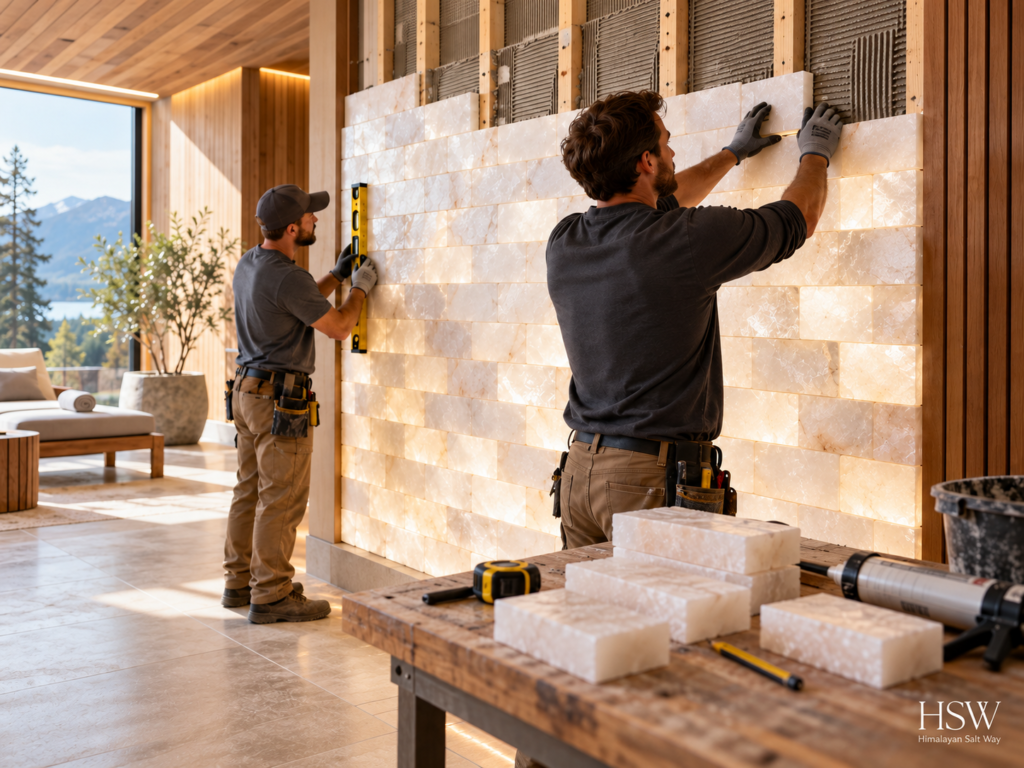
Plan Support Before Selecting the Final Size
Salt tiles add weight, so the installation needs more than an attractive layout.
The installer should confirm the total load and how it will be supported. That assessment should include the tiles, frame, backing, lighting components, and any other parts of the assembly.
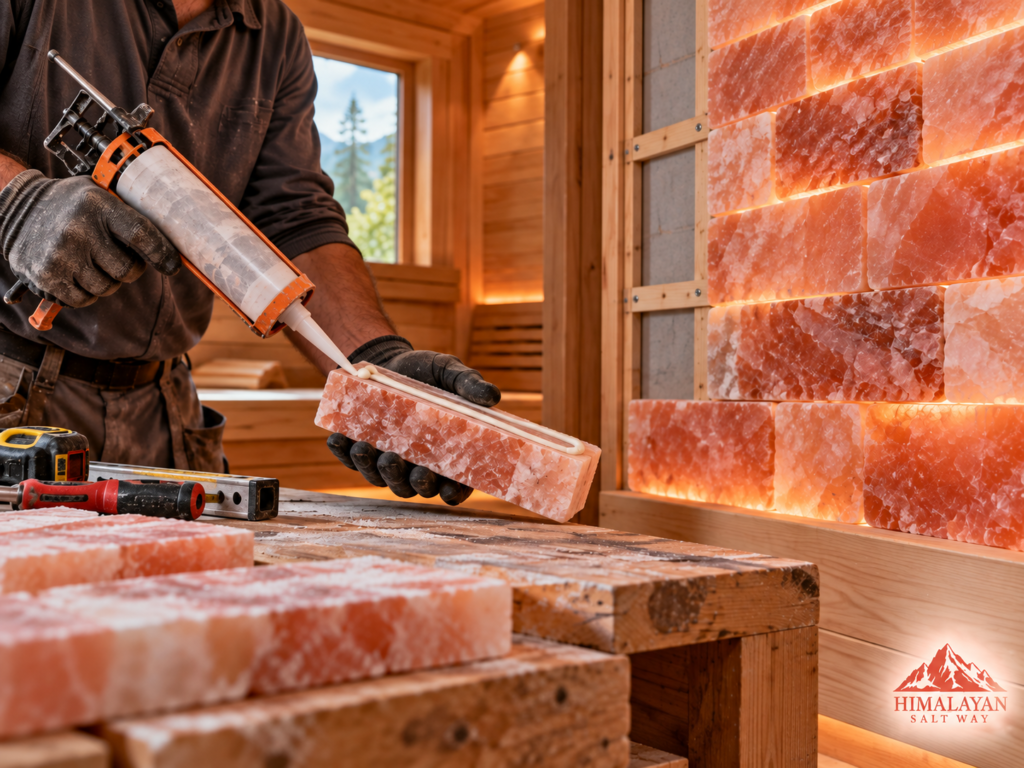
Do not assume that an existing wall finish can carry the load or that a general-purpose adhesive is suitable.
Before ordering, discuss:
- The substrate and its condition.
- The proposed mounting or support system.
- Compatibility of fixing materials.
- Access for inspection and maintenance.
- Relevant local building and electrical requirements.
When comparing Himalayan pink salt wall tiles, confirm the dimensions and product weight with the supplier so the installer can assess the actual materials.
Include Lighting Access in the Design
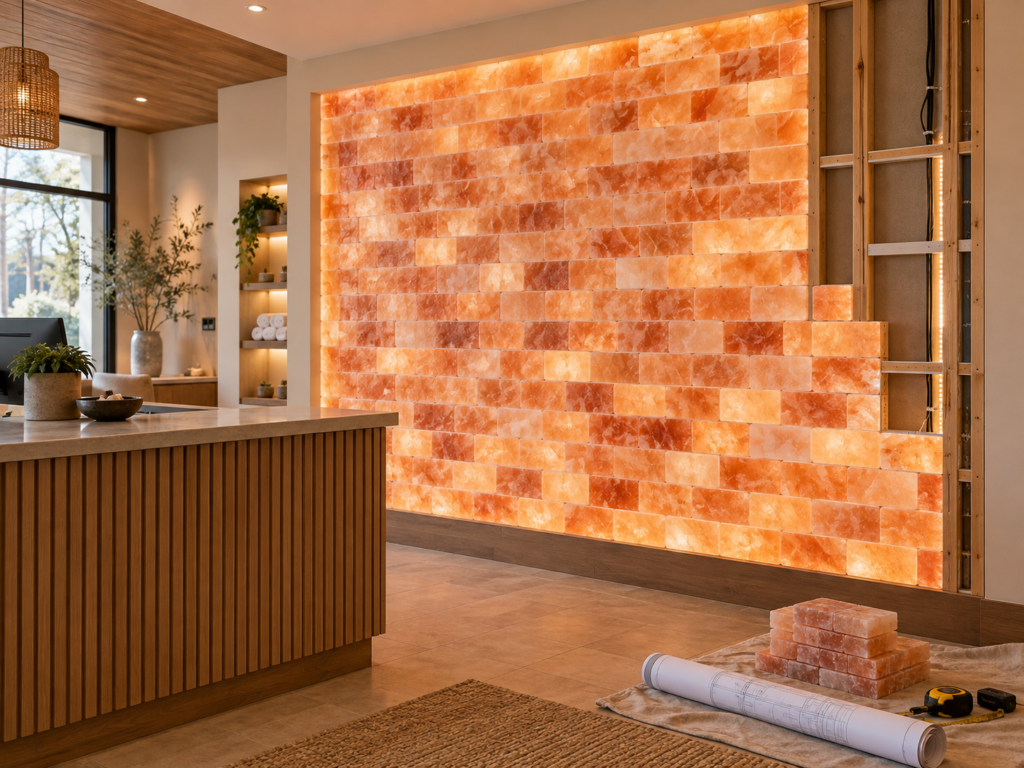
Backlighting can change the appearance of a basement salt feature. Plan it before the wall is assembled.
Ask your installer and electrician how the lighting will be positioned, powered, and accessed. Drivers, connections, and replaceable components should remain serviceable.
A small mock-up can help you review the light color and spot distracting bright points before committing to the full panel.
However, do not rely on lighting to keep the wall dry. Decorative illumination is not a substitute for moisture control.
The room also needs appropriate lighting for walking, reading, and other activities, separate from the salt feature.
Consider Starting With a Smaller Panel
A Himalayan salt wall in a basement does not have to extend from floor to ceiling.
A framed panel can be easier to incorporate into a room’s layout and may simplify access for future maintenance, depending on its design.
Before choosing its size, map out the tile rows and columns. Include the frame and installation details in the finished dimensions.
A smaller installation still needs the same attention to moisture and support. Its size does not remove those requirements.
How to Maintain a Himalayan Salt Wall in a Basement
Keep monitoring the basement once the feature is installed.
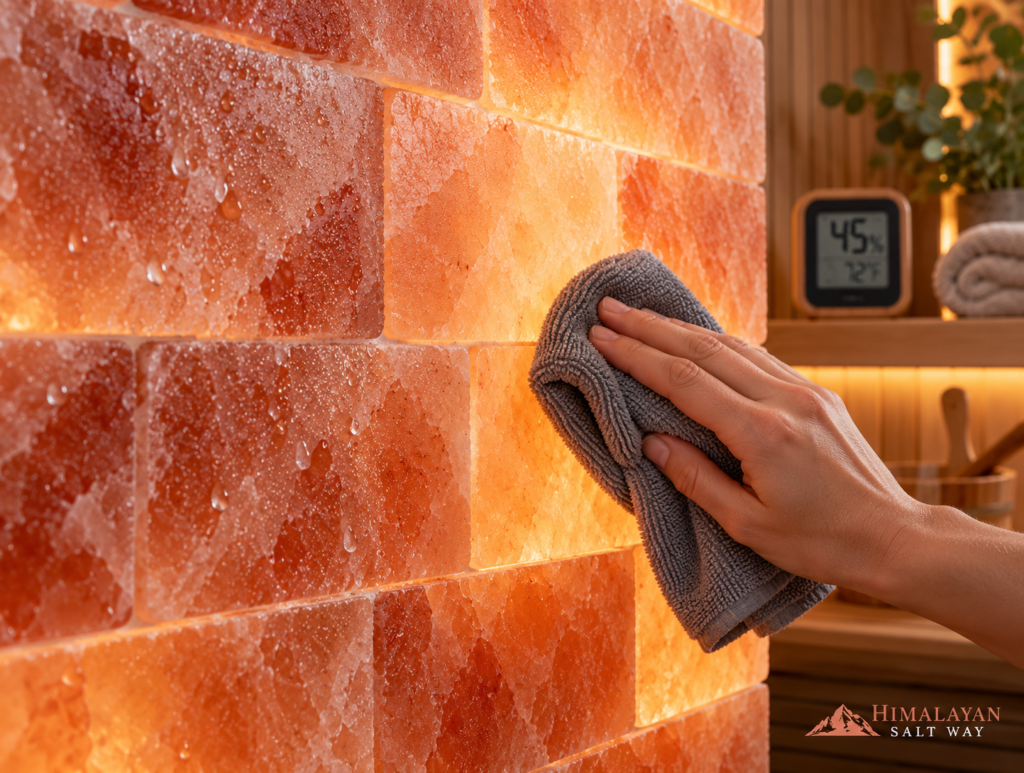
Follow the supplier’s cleaning instructions, avoid spraying liquid onto the salt, and watch for changes such as dampness, surface erosion, or deterioration of nearby finishes.
If you notice moisture, investigate the room conditions and any possible leak. Avoid repeatedly drying the visible surface while leaving the cause unresolved.
Keep the product details and installation records so future maintenance decisions can be based on the actual assembly.
Frequently Asked Questions
Can I install salt tiles directly on a concrete basement wall?
Do not assume direct installation is suitable. Have the concrete assessed for moisture, and ask the supplier and installer to specify a compatible support and fixing system.
Will a salt wall remove basement humidity?
Do not use it as a humidity-control solution. Manage moisture through appropriate repairs, conditioning, ventilation, or dehumidification.
Do I need a dehumidifier?
That depends on measured conditions. If humidity remains high, assess both the moisture source and suitable control equipment before installing the wall.
Is backlighting necessary?
No. It is a design choice. Review samples with and without illumination to decide which appearance suits the room.
Can a basement with previous flooding have a salt wall?
Possibly, but the flooding cause and any resulting damage need to be resolved first. Have the space assessed before adding moisture-sensitive finishes.
Is a salt wall the same as a halotherapy room?
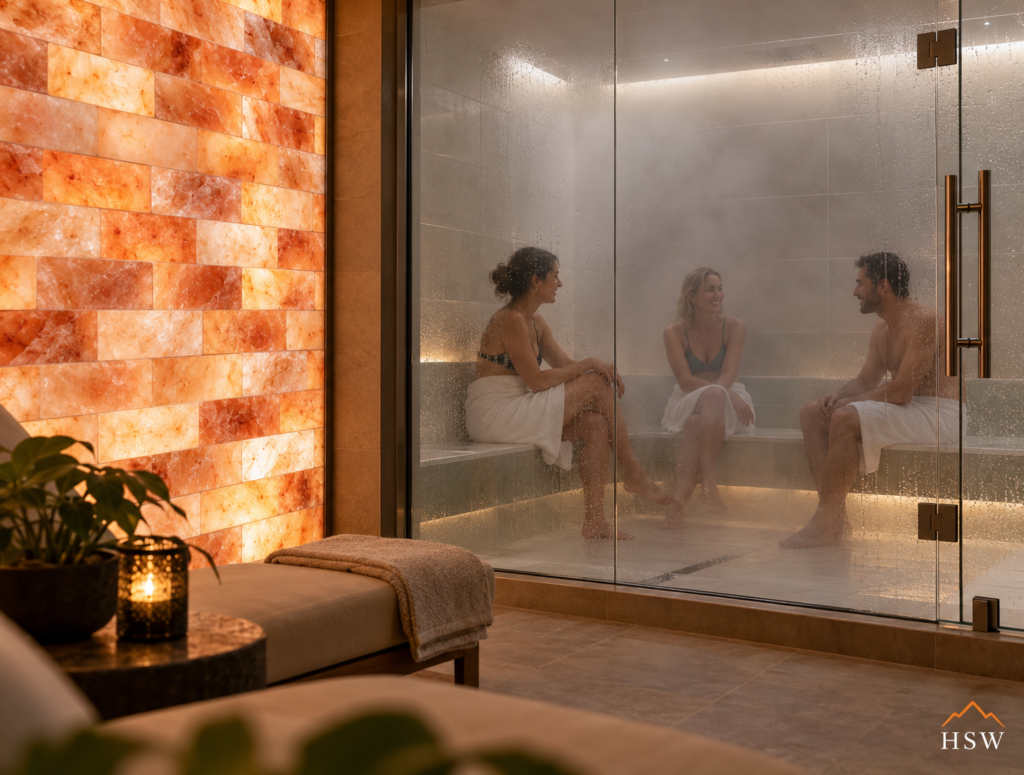
No. Decorative salt tiles alone do not establish that a room provides controlled salt-aerosol therapy.
Make the Decision Around the Basement’s Conditions
A Himalayan salt wall in a basement can work when the space remains dry, the materials suit the environment, and the installation has adequate support.
Check seasonal moisture conditions first. Then confirm the location, mounting system, and maintenance access before ordering tiles.
Those decisions give the finished feature a stronger foundation than choosing its appearance alone.