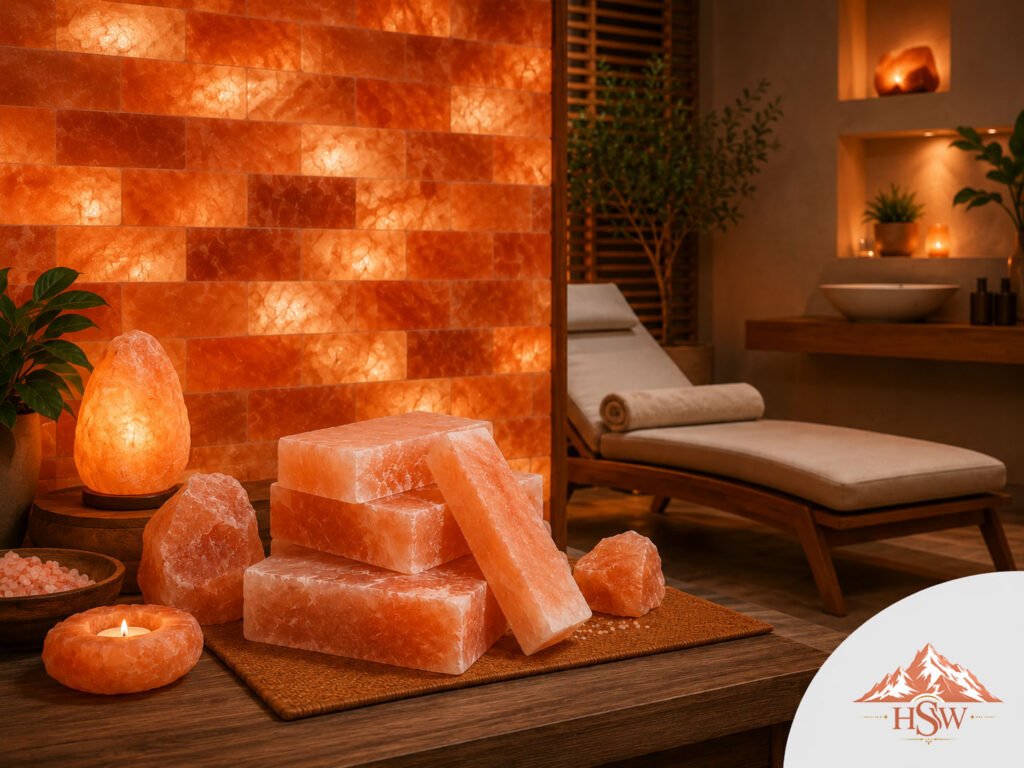
How to Choose Adhesive for Himalayan Salt Tiles and Bricks

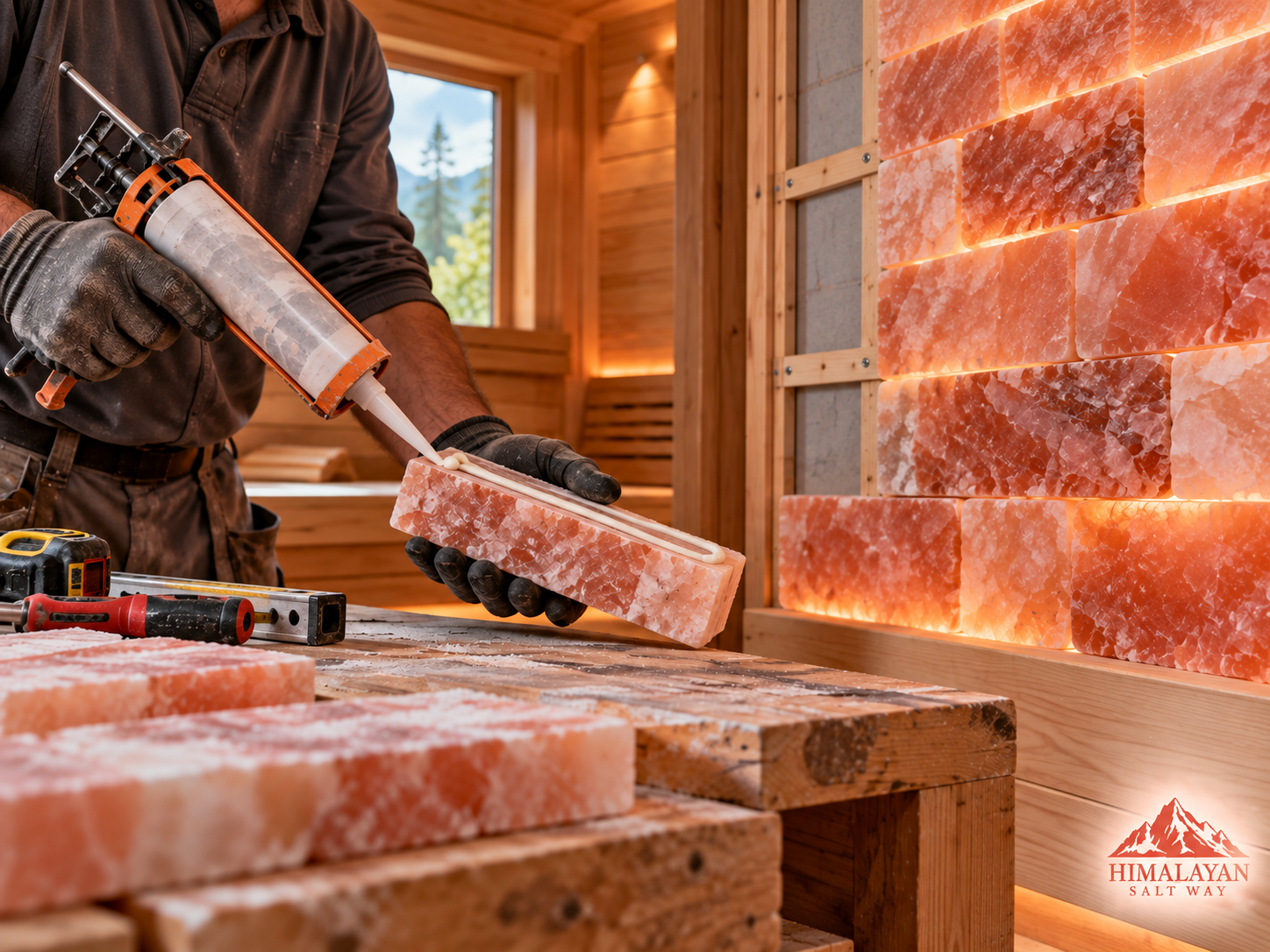
Choosing a salt wall adhesive is one of the less visible decisions in a Himalayan salt wall project, but it affects how the pieces are installed and supported. A small accent panel and a full-height spa feature have different demands. Before buying glue, look at the salt pieces, the surface behind them, the room conditions, and the installation system as a whole.
At Himalayan Salt Way, we often hear a version of the same question: “Can I use the construction adhesive I already have?” The useful answer is to check whether a product is specifically suitable for natural salt and for your particular wall. A promising label alone cannot tell you whether the backing, support, and environment are right.
Start with the Salt Tiles or Bricks
Our pink salt tiles are commonly 8 × 4 × 1 inches, while salt bricks have a thicker profile. Both can create an attractive feature, but a larger installation adds considerable weight. The adhesive must be selected for the material and planned with a backing and frame that can carry the completed wall.
Ask the supplier or installer whether the adhesive is intended for your exact pieces, including their size and finish. If you are combining pink and white tiles or using mixed thicknesses, confirm that the same application method is appropriate for each. A small test with spare pieces can also show how the adhesive looks around the edges before work starts on the entire wall.
Check the Surface Behind the Wall
The visible salt is only one part of the installation. The backing should be sound, clean, level, and dry. A suitable salt wall adhesive still needs a suitable surface. Fresh plaster, damp masonry, loose paint, or a weak panel can undermine a project even when the adhesive itself is suitable.
Before ordering, identify the actual surface: masonry, cement board, a framed panel, or another substrate. Then check the adhesive manufacturer’s instructions for that surface. If the proposed product does not list it, ask for written guidance instead of guessing. Large or tall walls may need mechanical support, edge restraints, and a structure designed for their weight. Adhesive should not be treated as a substitute for structural planning.
Consider Heat and Moisture Before Choosing a Salt Wall Adhesive
A bedroom feature wall, a sauna, and a spa reception area do not face identical conditions. Temperature changes, condensation, cleaning routines, and nearby water sources can all affect material choices. For a sauna project, confirm the adhesive’s approved operating temperature and application conditions with its manufacturer, and have an experienced installer review the wall design.
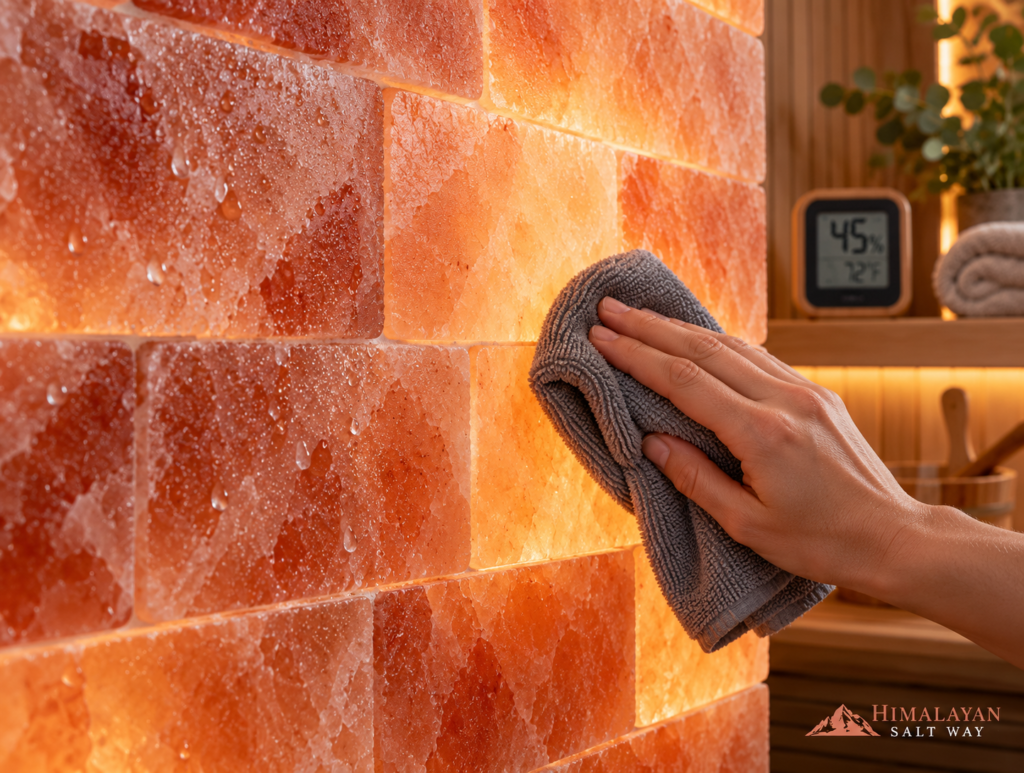
Natural salt can attract moisture from the air. If the planned location has recurring dampness or direct splashes, address that problem before installation. The U.S. Environmental Protection Agency’s indoor air guidance recommends keeping indoor humidity between 30% and 50% in homes. That is general indoor guidance, not an adhesive specification; a sauna or commercial space needs its own design assessment. Our guide to salt tile moisture and care explains why humidity matters after the wall is built, too.
Read the Product Instructions, Not Just the Front Label
When comparing adhesive products, look for clear answers to these questions:
- Which salt pieces and backing surfaces are approved?
- What preparation, application method, and quantity are required?
- What temperature and humidity conditions are allowed during installation and use?
- How long must the bond cure before the wall is handled or the room is used?
- Does a larger wall require additional framing or mechanical support?
- Are there instructions for a backlit wall and access to electrical components?
Keep the product instructions available on site. Follow the specified application and curing method rather than borrowing steps from a different adhesive. Gloves, ventilation, and storage should also follow the instructions for the exact product used.
Himalayan Salt Way carries adhesive options for salt wall projects, including a single-tube Himalayan salt adhesive. The single-tube listing describes its use with salt bricks, tiles, and blocks and advises application in dry conditions and testing on a small piece. Check the current product information and confirm suitability for your surface and room before ordering.
Plan the Entire Wall Before Applying Adhesive
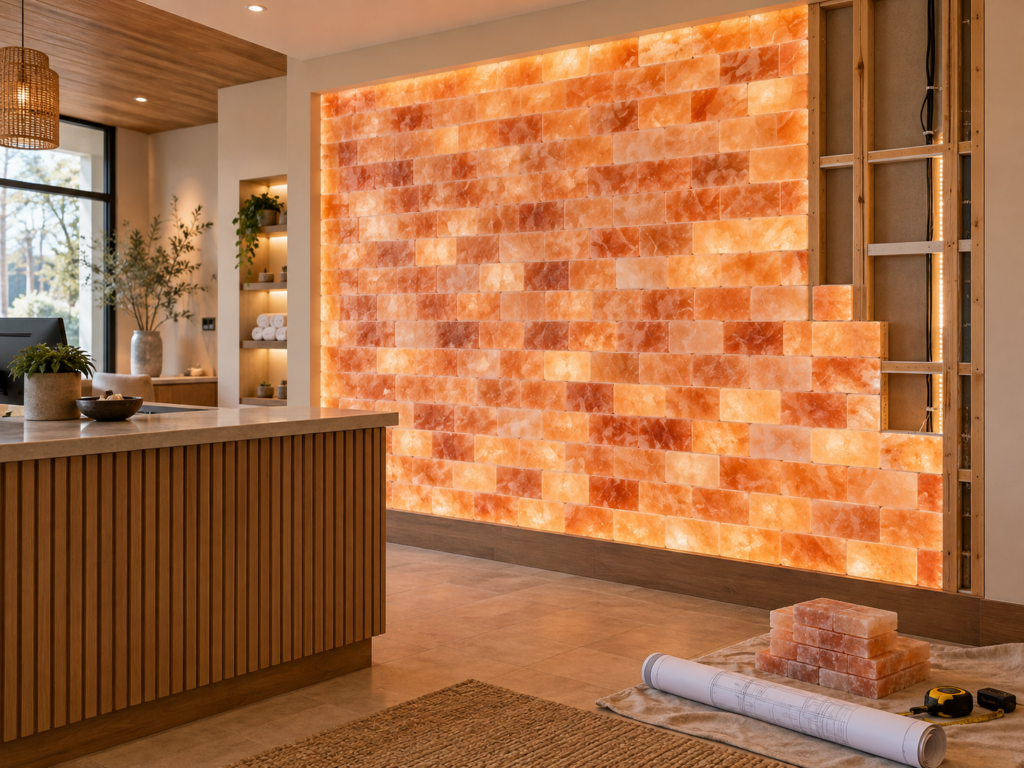
Dry-lay a few tiles or bricks to check the color mix, joint pattern, and alignment. If you want a glowing wall, plan the frame, wiring, LED placement, and future access before attaching the salt. Our LED backlighting guide covers the lighting decisions separately.
Measure the feature area and allow for cuts and spare pieces. The salt wall cost guide explains how material quantity, framing, lighting, labor, and delivery contribute to the budget. Knowing the approximate piece count also helps you discuss adhesive quantity with the supplier. Coverage can vary with bead size, substrate, and installation method, so do not assume that one tube will cover every layout equally.
Common Adhesive Mistakes to Avoid
The first is choosing solely by price or by a “heavy duty” claim without confirming compatibility with natural salt. The second is applying adhesive over a damp, dusty, or unsound backing. The third is relying on glue alone for a heavy wall that needs proper structural support.
Rushing the cure is another avoidable problem. A surface that feels firm may not have reached the product’s specified cure time. Protect the installation from water and disturbance during the period stated in the instructions. Finally, leave a practical way to inspect or service any backlighting; a beautiful wall should remain maintainable.
A Better Question to Ask Before You Buy
Instead of asking only, “Which glue is strongest?”, ask: “Which salt wall adhesive is compatible with these pieces, this backing, and this room—and what support does the finished wall need?” That question leads to a safer, more useful conversation with the adhesive supplier and installer.
If you are planning a home feature, sauna, spa, or commercial salt wall, contact Himalayan Salt Way with the wall dimensions, salt tile or brick choice, backing material, and a photo of the space. We can help you compare the available materials and adhesive options before you place an order.