
Why Is Himalayan Salt Pink? What Are Those Minerals?

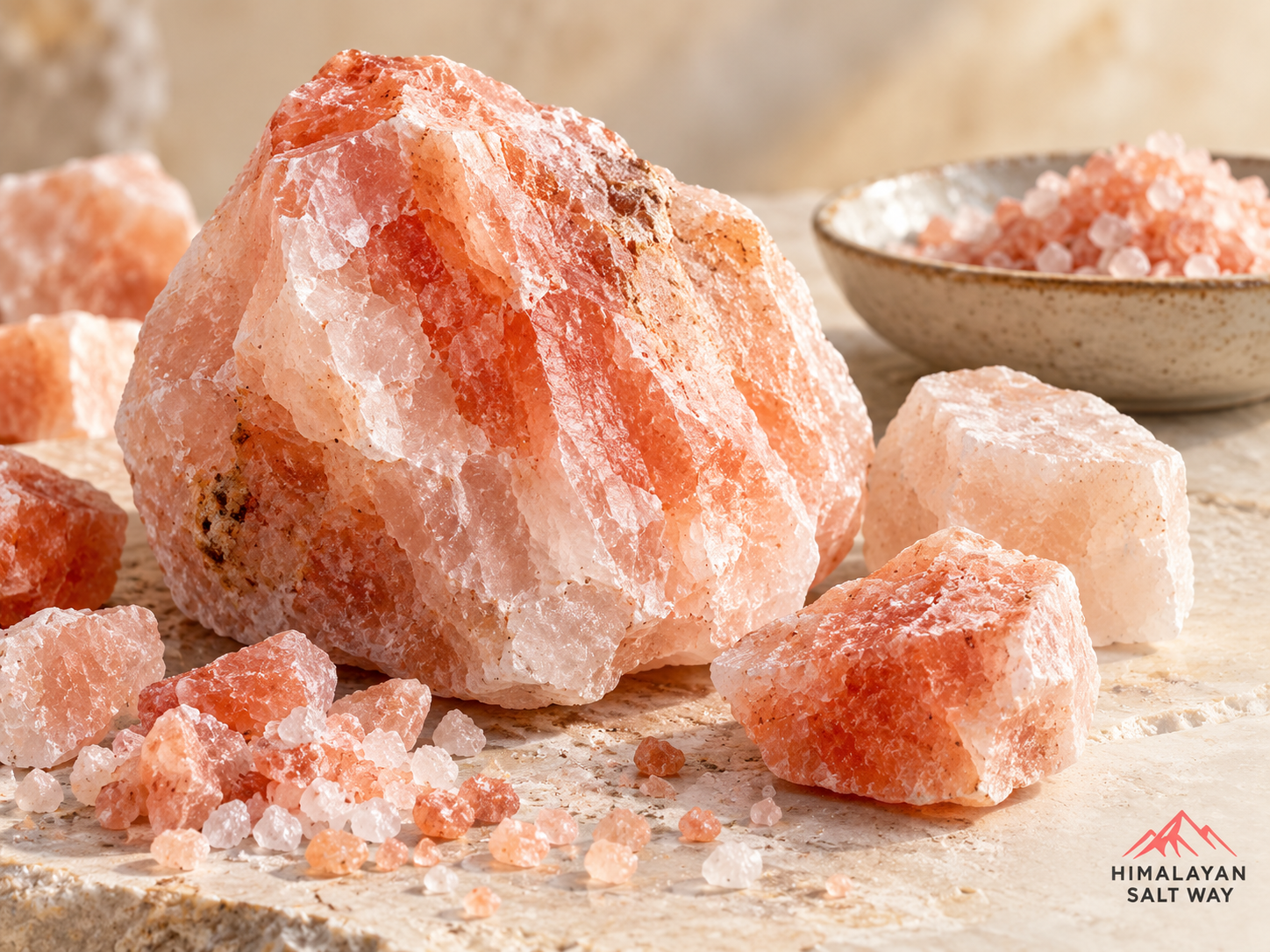
Look closely at Himalayan salt, and you will notice that “pink” is only part of the picture. Some crystals have a soft blush, while others appear peach, orange, or almost white. A single salt tile can contain several of these shades.
So, why is Himalayan salt pink? Its characteristic color is commonly attributed to small amounts of iron-bearing compounds, including iron oxides, within the salt. These naturally occurring traces give an otherwise pale material its warm appearance.
But what are the other minerals people talk about—and what do they actually tell us about the salt? Understanding the difference between its main ingredient, trace elements, and natural color makes the answer much clearer.
What Is Himalayan Salt Made Of?
Himalayan salt is primarily sodium chloride, the same compound that makes up ordinary table salt. In its natural crystalline form, sodium chloride is called halite.
Rock salt deposits form as salty water evaporates and dissolved salts crystallize. Over geological time, these deposits can become buried beneath other layers of sediment. The U.S. Geological Survey’s explanation of sedimentary salt deposits describes this evaporation and crystallization process.
The word “mineral” can be confusing here. Halite is itself a mineral. However, when product descriptions mention the “minerals in pink salt,” they usually mean the smaller amounts of other elements and compounds found alongside the sodium chloride.
Those traces are part of the material’s natural composition, but they do not replace sodium chloride as its main ingredient.
Why Is Himalayan Salt Pink Instead of White?
The familiar pink shade comes from naturally occurring inclusions, particularly iron oxides. Small quantities can influence the appearance of the surrounding salt crystals.
Think of the color as a feature within the material rather than a uniform coating. This helps explain why a piece can have a pale edge, a deeper pink center, and lighter bands running through it.
However, color is not a laboratory report. Looking at a crystal cannot tell you its exact iron content or identify every substance inside it. That requires testing.
What Minerals Are Found in Himalayan Pink Salt?
Laboratory analyses have identified several elements beyond sodium and chlorine. Commonly discussed examples include:
| Component | What it means |
|---|---|
| Sodium and chloride | Form sodium chloride, the main substance in the salt. |
| Iron | Iron-bearing compounds are associated with its characteristic pink and reddish tones. |
| Calcium | Has been measured in tested pink salt samples. |
| Magnesium | Can occur in small, variable quantities. |
| Potassium | Has also been detected, with amounts differing between samples. |
A study published in Foods examining 31 pink salts found substantial variation in their mineral composition. Its results describe the products tested, rather than a guaranteed formula for every Himalayan salt product.
For a particular batch, a relevant laboratory report is more useful than a generic mineral list.
Does Himalayan Salt Really Contain 84 Minerals?
You may have seen the phrase “84 minerals” on packaging or in online articles. It sounds precise, but it should not be treated as a guaranteed specification for every product.
Before accepting a numbered claim, ask:
- Was the actual product or batch tested?
- Does the list distinguish chemical elements from minerals and compounds?
- Are the measured concentrations provided?
- Does it explain which substances were present only in extremely small amounts?
An element being detectable does not automatically make it nutritionally significant. Similarly, a longer list does not, by itself, establish better quality.
A useful product description should explain what evidence supports its claims.
Why Are Some Pieces Darker Than Others?
Natural salt does not have the consistency of a manufactured paint color. Different pieces can display different concentrations and distributions of inclusions.
Appearance also depends on how you view the material. A thick block under warm lighting may look quite different from finely crushed salt photographed in daylight.
When comparing samples, try to keep the conditions consistent:
- View them under the same light.
- Compare pieces of similar thickness.
- Look at both the surface and the internal bands.
- Avoid judging the shade from heavily edited photographs.
These steps are especially helpful when selecting salt for an interior project. A photograph can show the general color family, but a physical sample gives you a better basis for choosing a finish.
Does Darker Pink Salt Mean Better Quality?
A darker shade is a visual characteristic, not a complete quality assessment.
For a decorative project, the better choice is the material that suits the intended appearance and meets the necessary product specifications. Check dimensions, condition, consistency of cutting, and suitability for the installation.
For example, someone planning a soft, understated wall may prefer a lighter mix. Another person may want stronger pink and orange variation as a focal point.
Neither preference requires the darkest possible salt. The goal is a finished result that works with the room.
Do Those Trace Minerals Make Pink Salt Healthier?
The presence of minerals should not be confused with a meaningful nutritional benefit. The Foods study found that ordinary amounts of pink salt did not provide a substantial contribution to mineral intake; consuming enough to do so would also mean excessive sodium intake.
Iodine is another distinction. According to the National Institutes of Health’s iodine fact sheet, specialty salts—including Himalayan salt—are not usually iodized. Do not assume that pink salt provides the same added iodine as a product labeled iodized salt.
For food use, choose salt specifically sold for consumption and check its label. A decorative salt product should not be assumed suitable for eating.
What Does Natural Color Mean for Salt Tiles and Bricks?
For interior design, the variation is part of the appeal. Instead of repeating an identical printed pattern, natural salt creates a surface with differences from piece to piece.
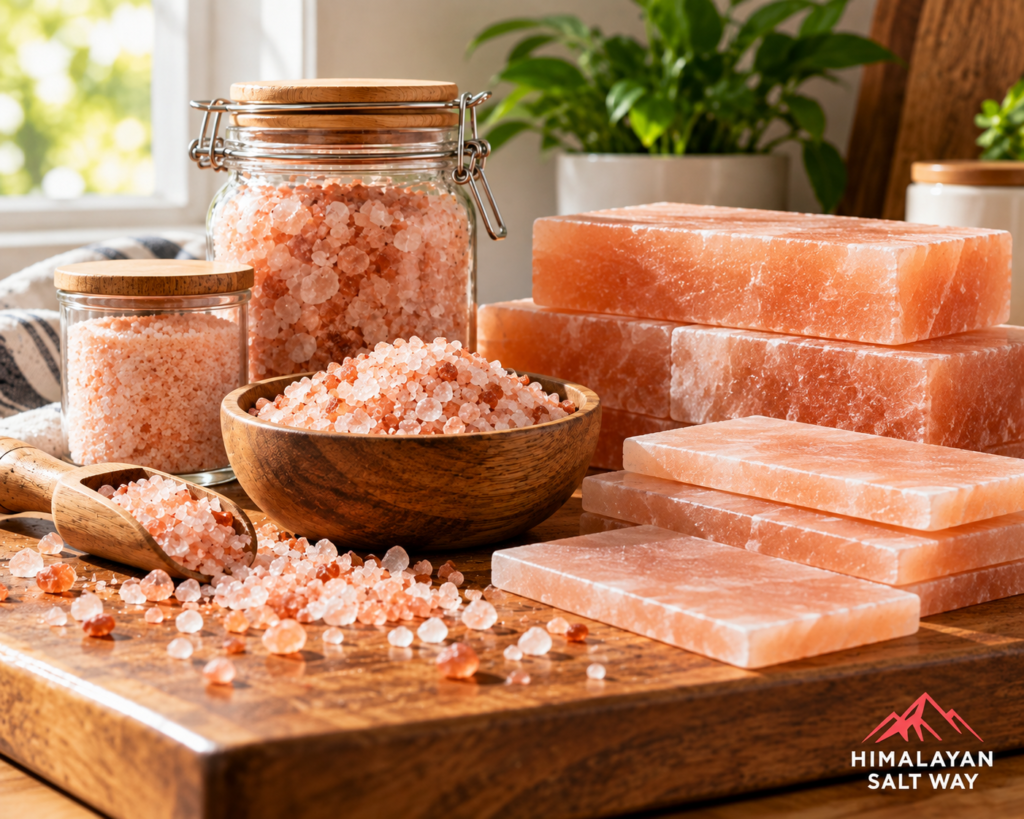
You can explore these formats through Himalayan Salt Way’s pink salt wall tiles and pink salt bricks collections.
If you are planning a wall, a practical approach is to arrange the pieces before installation. Spread stronger colors across the layout, or group them deliberately if you want a more noticeable pattern.
For a backlit design, review a sample with the intended lighting. This helps you choose based on the appearance you will actually see in the room.
Frequently Asked Questions
Is Himalayan salt naturally pink?
Its characteristic pink color occurs naturally and is associated with trace inclusions, particularly iron-bearing compounds. However, color alone cannot verify an individual product’s authenticity.
Can genuine Himalayan salt be very pale?
Pale areas and near-white sections can appear alongside pink tones. A uniform, strong pink shade should not be your only purchasing criterion.
Can I identify the minerals by looking at the salt?
No. Appearance can show variation, but identifying and measuring the components requires laboratory analysis.
Will all the tiles in a salt wall match?
Do not expect every natural piece to look identical. For a more balanced appearance, review the pieces together and plan their arrangement before fixing them in place.


One thought on “Why Is Himalayan Salt Pink? What Are Those Minerals?”