
Does Himalayan Salt Expire? Shelf Life, Storage & Signs to Watch

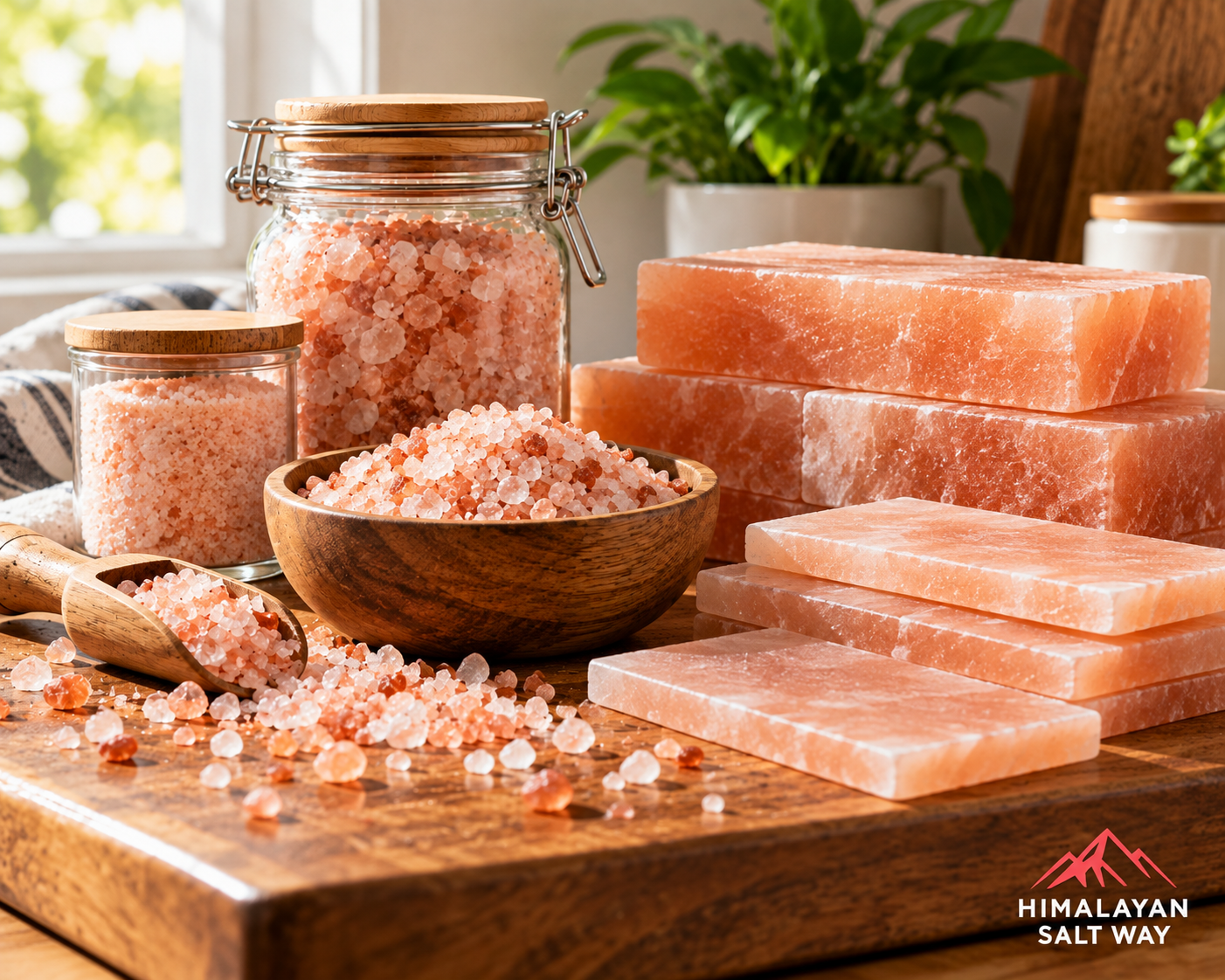
Does Himalayan salt expire? This is one of the most common questions people ask when they find an old bag, jar, or container of Himalayan pink salt in the kitchen. Pure Himalayan salt is extremely stable and does not spoil like milk, bread, meat, or other perishable foods. However, moisture, contamination, added ingredients, and poor storage can affect its texture, quality, and usability over time.You find an old bag of pink salt at the back of a kitchen cabinet. The crystals still look pink, but the package has been there for years.
Naturally, the first question is: does Himalayan salt expire?
In its plain, dry crystalline form, salt is extremely stable. Salt does not spoil in the same way that bread, milk, meat, or fresh produce does. However, moisture, contamination, added ingredients, damaged packaging, and poor storage can affect its texture, quality, and usability over time.
That distinction is important.
A printed “best by” date on a package does not necessarily mean that pure salt suddenly becomes unsafe on that date. In many cases, the date relates more to product quality and storage performance than to traditional food spoilage.
In this guide, we will look at how long Himalayan pink salt can last, why it sometimes becomes wet or clumpy, the best way to store it, and when it makes sense to replace it.
Does Himalayan Salt Expire?
Pure Himalayan pink salt does not have a typical expiration process.
Chemically, ordinary culinary salt is primarily sodium chloride. In dry crystalline form, salt is very stable and does not normally break down simply because several years have passed.
Morton Salt explains that salt itself has no expiration date, although products containing iodine, spices, flavors, or other added ingredients can deteriorate over time. Morton Salt
That means there is an important difference between:
Pure Himalayan pink salt
and
A salt product containing other ingredients.
If your pink salt contains only salt and has remained clean and dry, age alone is usually not the main concern.
Storage conditions matter much more.
How Long Does Himalayan Pink Salt Last?
There is no single universal number that applies to every Himalayan salt product.
Some manufacturers provide recommended “best quality” periods even though the salt itself remains chemically stable.
For example, Morton’s published expiration guide recommends a three-year quality period for its Himalayan pink salt because it does not contain anti-caking additives and may become caked over time. The company also states separately that salt itself has no expiration date. Morton Salt
This is a useful distinction:
Shelf life for quality is not necessarily the same as a food-safety expiration date.
A package may become harder to pour, develop clumps, or absorb moisture while the salt crystals themselves remain salt.
USDA also notes more generally that many dates on shelf-stable foods relate to quality rather than automatically indicating that a product becomes unsafe on that exact date. Food Safety and Inspection Service
Why Does Himalayan Salt Get Wet?
If you’ve ever opened a salt container and noticed that the crystals feel damp or are sticking together, humidity is usually the reason.
Salt interacts readily with moisture in its environment.
In a humid kitchen, moisture from the air can reach the salt, especially when:
- the package is left open,
- the lid does not seal properly,
- the salt is stored near steam,
- the container sits close to a stove,
- wet spoons are placed inside,
- or the packaging has been damaged.
Morton recommends storing salt in a cool, dry place and using an airtight container where needed to reduce clumping and extend usable quality. Morton Salt
So if Himalayan salt becomes slightly clumpy, that does not automatically mean it has spoiled.
It often means it has absorbed moisture.
Why Does Himalayan Salt Clump?
Clumping is one of the most common storage problems with natural salt.
Individual crystals begin sticking together when humidity enters the package.
Pure Himalayan pink salt may be particularly noticeable in this respect because some products are sold without anti-caking agents.
Clumping can range from:
- a few crystals sticking together,
- to large lumps,
- to an almost solid mass in extreme humidity.
Morton notes that natural Himalayan salt may become caked over time and advises keeping salt in dry storage. Morton Salt
In many ordinary cases, dry clumps can simply be broken apart.
But you should also inspect the product for contamination before using an old or poorly stored package.
Is Clumped Himalayan Salt Still Good?
Often, yes.
If plain Himalayan salt has merely absorbed atmospheric moisture and there are no signs of contamination, unusual odors, foreign material, or damaged packaging, clumping by itself does not necessarily indicate spoilage.
However, use common sense.
There is an important difference between:
dry salt that has formed harmless lumps
and
salt that has been exposed to dirty water, food residues, insects, chemicals, or other contaminants.
Salt should not be used simply because salt itself is stable if the container or product has become contaminated.
Can Bacteria Grow in Salt?
Salt has historically been used to help preserve foods because it reduces the amount of water available to microorganisms.
USDA explains that salt binds or removes water, helping prevent conditions that support microbial growth. Food Safety and Inspection Service
That is one reason dry salt itself is highly shelf-stable.
But this does not mean every container of salt is automatically protected from every possible contamination problem.
For example, problems may arise if someone repeatedly uses:
- a wet spoon,
- a spoon contaminated with raw food,
- an uncovered container near food preparation,
- or damaged packaging exposed to dirt and insects.
The safest approach is simple: keep culinary salt clean and dry.
What Is the Best Way to Store Himalayan Salt?
Good storage can keep Himalayan pink salt easy to use for a very long time.
1. Use an Airtight Container
Once a package is opened, transfer the salt to a container with a secure lid if the original packaging does not reseal properly.
Glass jars and food-safe containers work well.
The goal is to reduce exposure to humidity.
Morton similarly recommends airtight storage when a cool, dry location alone is not practical. Morton Salt
2. Keep It Away From Steam
A cabinet directly above a stove may seem convenient, but steam from cooking can create unnecessary moisture.
Instead, store the salt in a cool and dry cabinet.
Try to keep it away from:
- kettles,
- dishwashers,
- boiling pots,
- sinks,
- humid windows,
- and other moisture sources.
3. Never Use a Wet Spoon
This simple habit makes a surprisingly large difference.
When water enters a salt container, it can cause crystals to dissolve slightly and then reform into harder lumps as the water evaporates.
Use a completely dry spoon or shaker.
4. Keep the Container Closed
Leaving Himalayan pink salt exposed to room air for extended periods encourages moisture absorption.
After using it, close the lid immediately.
This is especially important in humid climates.
5. Protect Salt From Strong Odors and Contaminants
Although salt itself is stable, kitchen storage should still be hygienic.
Avoid keeping open salt containers close to cleaning products, chemicals, strongly scented materials, or areas where food splashes are common.
Should Himalayan Salt Be Refrigerated?
Usually, no.
Dry culinary salt does not normally need refrigeration.
In fact, repeatedly moving salt between cold and warm environments can potentially introduce condensation.
A dry kitchen cabinet or pantry is generally much more practical.
USDA’s guidance for dry shelf-stable goods emphasizes cool, clean, dry storage and protection from moisture. Ask USDA
Can You Freeze Himalayan Salt?
There is generally no reason to freeze dry Himalayan salt.
Salt already has excellent shelf stability.
Freezing offers little benefit and could introduce moisture when the container is removed from the freezer and condensation forms.
A sealed container in a dry pantry is normally sufficient.
Does Ground Himalayan Salt Last as Long as Coarse Salt?
Both can remain stable if kept dry, but finely ground salt has a larger surface area exposed to surrounding air.
That can make moisture-related clumping more noticeable.
Coarse crystals may sometimes appear easier to store simply because their texture remains recognizable even if a little moisture is absorbed.
However, storage conditions remain more important than grain size.
Whether you have:
- fine Himalayan salt,
- coarse Himalayan salt,
- grinder salt,
- or larger crystals,
keeping the product dry is the key.
Does Himalayan Salt Change Color Over Time?
Natural Himalayan salt can range from pale pink and almost white to deeper orange or reddish tones.
If an old container looks slightly different because different crystals have settled, that is not necessarily a problem.
However, a sudden or unusual change caused by external contamination should be taken seriously.
For example, if the salt develops:
- dark foreign spots,
- visible mold-like material,
- oily residue,
- unexplained discoloration,
- or contamination from another product,
it is better not to use it.
If you’re curious about the natural color itself, read our guide on why Himalayan salt is pink.
Does Himalayan Salt Lose Its Minerals Over Time?
Ordinary storage does not cause the minerals naturally present in dry pink salt to simply disappear over a few years.
The mineral composition is part of the salt crystal itself.
What changes more easily is the product’s physical condition.
For example, humidity can affect:
- texture,
- pourability,
- appearance,
- and crystal separation.
This is why a salt product may have a recommended quality date even though the salt itself remains chemically stable.
For more information about the composition of pink salt, you can also explore our guide to Himalayan salt facts.
Does Iodized Salt Expire Differently?
Yes, this is one area where the answer changes.
Iodized salt contains added iodine.
Over long storage periods, iodine content may decline.
Morton’s storage guide notes that iodine can dissipate over time and therefore gives iodized salts a recommended quality period. Morton Salt
Pure Himalayan pink salt is typically different because it is generally sold as natural rock salt rather than standardized iodized table salt.
Always check the ingredient label because products can vary.
Does Flavored Himalayan Salt Expire?
This is another important exception.
If Himalayan pink salt has been mixed with ingredients such as:
- garlic,
- herbs,
- chili,
- spices,
- dried citrus,
- flavorings,
- or other seasonings,
you are no longer dealing with pure salt alone.
Those additional ingredients can lose flavor, aroma, color, and quality over time.
In this situation, follow the manufacturer’s storage instructions and best-by date.
Morton similarly distinguishes pure salt from salt-and-seasoning products because added ingredients can deteriorate. Morton Salt
How Can You Tell If Himalayan Salt Should Be Thrown Away?
Instead of looking only at the date printed on the package, inspect the salt and its storage history.
Consider replacing it if:
The packaging was exposed to dirty water
Floodwater, dirty sink water, or other contaminated liquids are different from ordinary atmospheric humidity.
There are insects inside the package
Dispose of contaminated food products.
It smells unusual
Plain salt should not develop a strong strange odor.
Foreign substances are visible
Oil, food residue, cleaning chemicals, mold-like material, or unknown particles are good reasons to discard it.
You do not know what contaminated it
When storage history is uncertain and contamination is possible, replacing a relatively inexpensive food ingredient is generally the sensible option.
What About Himalayan Salt Blocks?
Solid Himalayan salt blocks require somewhat different care than loose culinary salt.
A salt cooking block is still salt, but because it is a large solid slab, repeated heating, cooling, washing, and exposure to moisture can physically change it.
Over time, a cooking block may:
- develop cracks,
- become thinner,
- show rough edges,
- dissolve gradually,
- or eventually break apart.
This is not the same as a conventional food expiration date.
Rather, it is wear from use.
If you use a Himalayan salt cooking surface, follow the product’s specific care instructions.
You can explore our Himalayan salt cooking products to see different culinary forms of natural salt.
Can Himalayan Salt Tiles or Bricks Expire?
Himalayan salt is also used outside the kitchen in architectural products such as salt tiles and bricks.
These products do not have a normal food expiration date.
However, salt walls and decorative salt installations must still be protected from excessive moisture because salt can gradually dissolve when continuously exposed to water.
For installations, environmental conditions matter far more than age alone.
You can learn more about Himalayan salt tiles and bricks and their use in decorative and wellness spaces.
Does Himalayan Salt Go Bad After Opening?
Opening the package does not start a traditional spoilage countdown.
What opening does is expose the salt to the surrounding environment.
After opening, the main concerns become:
- humidity,
- contamination,
- dirty utensils,
- damaged packaging,
- and exposure to food particles.
So an opened package stored properly may remain in excellent condition far longer than a poorly stored package opened only recently.
Does Himalayan Salt Expire If the Package Says “Best By”?
Not necessarily.
A best-by date commonly indicates the period during which the manufacturer expects the product to maintain optimal quality.
USDA explains that many food dates are associated with quality rather than automatically being food-safety deadlines. Food Safety and Inspection Service
Salt manufacturers may also use recommended quality periods because texture, anti-caking performance, iodine content, or additional ingredients can change with time.
That is why you should consider both:
the printed date
and
the actual condition of the product.
Frequently Asked Questions
Does Himalayan salt expire?
Pure Himalayan salt does not normally expire in the same way perishable food does. Dry crystalline salt is chemically stable, although moisture and contamination can reduce its usable quality over time. Morton Salt
How long can Himalayan pink salt last?
Properly stored pure salt can remain usable for a very long time. Some manufacturers still provide recommended best-quality periods; Morton, for example, lists three years for its Himalayan pink salt product because natural salt may cake over time. Morton Salt
Can I use Himalayan salt after its best-by date?
A best-by date is often related to quality rather than indicating that pure salt instantly becomes unsafe. Inspect the product, packaging, and storage conditions before use. Food Safety and Inspection Service
Why is my Himalayan salt wet?
Humidity and exposure to steam are common causes. Store salt in a sealed container in a cool, dry location.
Is clumpy Himalayan salt bad?
Not necessarily. Ordinary moisture can make salt crystals stick together. Check for actual contamination before deciding whether to use it.
Can Himalayan salt grow mold?
Pure dry salt does not provide the same environment as moist foods, but contaminants or organic material introduced into a container can create problems. Keep culinary salt clean and dry.
Should Himalayan salt be refrigerated?
No refrigeration is normally required for dry culinary salt. A cool, dry pantry or cupboard is usually more appropriate.
Does Himalayan salt lose its pink color?
Natural pink shades generally remain stable. Unusual discoloration caused by contamination is different and should be investigated.
Can salt absorb moisture?
Yes. Moisture exposure is one of the primary reasons salt becomes clumpy or difficult to pour.
Final Thoughts
So, does Himalayan salt expire?
For plain Himalayan pink salt, the simple answer is that dry salt is extremely stable and does not spoil according to a normal food-expiration timeline.
What matters more is how it has been stored.
Keep it:
- dry,
- sealed,
- clean,
- away from steam,
- away from contaminated utensils,
- and protected from excessive humidity.
If the only issue is ordinary clumping, the salt may still be perfectly usable. But if there are signs of contamination, strange odors, foreign substances, damaged packaging, or uncertain exposure to dirty liquids, replacing it is the safer choice.
Ultimately, the printed date on a package can be helpful for quality guidance, but proper storage is what keeps Himalayan salt in its best condition.
For more educational guides about natural pink salt and its uses, visit the Himalayan Salt Way blog.

One thought on “Does Himalayan Salt Expire? Shelf Life, Storage & Signs to Watch”