Does Himalayan Pink Salt Really Contain 84 Minerals?

Himalayan pink salt minerals are often linked to the familiar “84 minerals” claim, but does that number apply to every product? To understand the claim, we need to look at what researchers have measured and how much of each mineral a normal serving provides.
Himalayan pink salt minerals include small amounts of naturally occurring elements alongside its main ingredient, sodium chloride. However, the research discussed below does not establish that every Himalayan salt product contains exactly 84 minerals. It also helps answer a more useful question: how much of those minerals do you actually get?
Understanding the difference between a mineral being present and being nutritionally significant makes the claim much easier to evaluate.
What Does “84 Minerals” Actually Mean?
The phrase is often used loosely. A mineral, a chemical element, and an essential dietary nutrient are related concepts, but they are not interchangeable.
For example, a laboratory report might measure individual elements within a salt sample. Calling every detected element a beneficial “mineral” would oversimplify the results.
When you see the number 84, ask three questions:
- Which substances were measured?
- How much of each substance was found?
- Does the report apply to the product or batch you are buying?
An exact number is most useful when it comes with an explanation. Without supporting analysis, it tells you little about the composition of a particular bag of salt.
What Research Shows About Himalayan Pink Salt Minerals
A 2020 study published in Foods examined 31 pink salt samples sold in Australia, most labelled Himalayan. Researchers tested for 25 elements and found considerable differences between samples.
That distinction matters. Testing for 25 elements does not demonstrate that salt contains only 25, but it does not verify a universal count of 84 either.
The study detected nutrients such as calcium, magnesium, potassium, and iron. Their concentrations varied, and some other elements were detected in only a few samples. Its findings support a cautious interpretation: pink salt can contain trace elements, but a fixed mineral count should not be assumed for every product. mdpi.com
Are Those Trace Minerals Nutritionally Important?
A substance can be measurable in a laboratory without providing much nutrition in a normal serving.
The same study concluded that ordinary quantities of pink salt supplied too little of these additional nutrients to make a meaningful dietary contribution. Increasing salt intake to obtain more minerals would also increase sodium intake. mdpi.com
For everyday use, the sensible approach is to treat pink salt as a seasoning. Its mineral content is interesting, but it should not be the reason to add extra spoonfuls to a meal.
This is where product descriptions can become confusing. “Contains magnesium” describes presence. “A useful source of magnesium” makes a stronger nutritional claim and needs evidence about the amount provided per serving.
Why Is Himalayan Salt Pink?
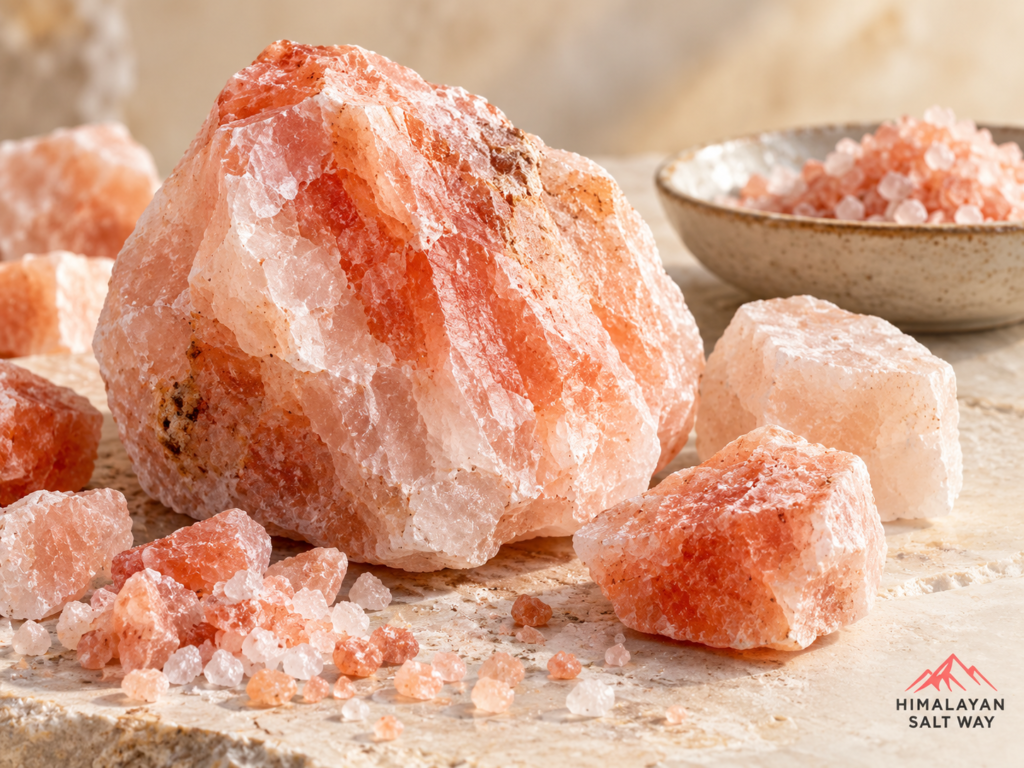
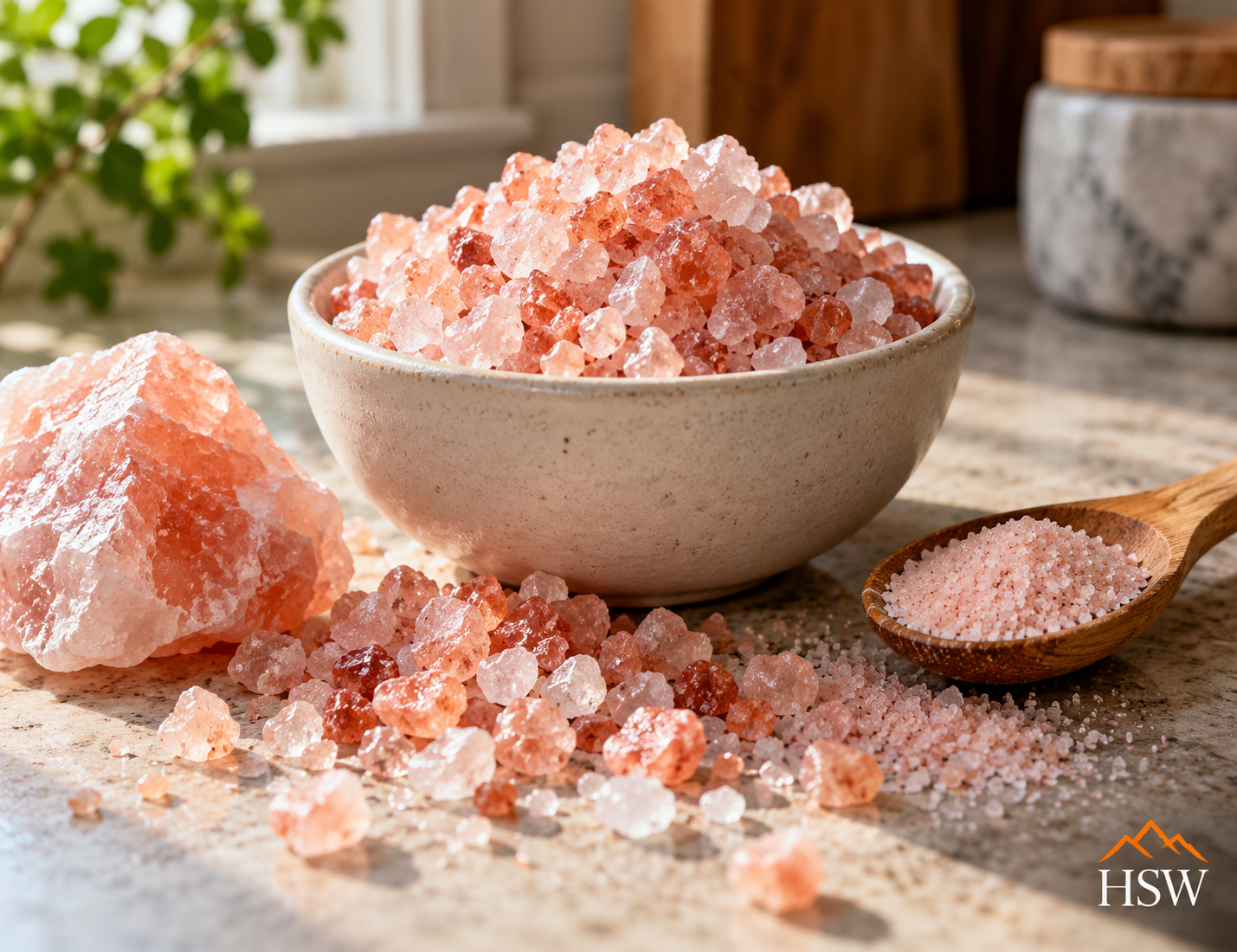
Small amounts of iron oxide contribute to Himalayan salt’s characteristic pink appearance. Its crystals can also retain trace amounts of other minerals.
However, appearance is not a substitute for a composition report. A darker crystal does not tell you precisely which elements are present or how much nutrition a serving provides.
Harvard’s guide to salt and sodium explains both the pink coloration and the limited nutritional contribution of minerals in less processed salts. The Nutrition Source
Does Pink Salt Contain Iodine?
The “84 minerals” claim should not be taken as a promise that pink salt supplies enough iodine.
According to the National Institutes of Health’s iodine fact sheet, specialty salts, including Himalayan salt, are usually not iodized. The product label should indicate whether iodine has been added.
Iodized salt and naturally occurring trace elements are different things. Iodization involves adding iodine deliberately, whereas the trace elements in rock salt depend on its composition.
Other dietary sources of iodine include seafood, dairy products, and eggs. If iodine content matters to your purchase, check the label rather than relying on a general mineral claim. Consumer
Is Himalayan Pink Salt Healthier Than Table Salt?
The presence of additional trace elements does not automatically make pink salt a healthier everyday choice.
Both pink salt and table salt are primarily sodium chloride. Harvard notes that the small mineral amounts in less processed salts do not offer substantial nutritional benefits.
Crystal size can also affect comparisons. A teaspoon of coarse salt may hold a different quantity from a teaspoon of finely ground salt. That difference does not make coarse pink salt a low-sodium product. Check the nutrition label and serving size when comparing options. The Nutrition Source
Choosing a salt for its texture, appearance, or how it works in a recipe is a more practical approach than choosing it for an impressive mineral count.
How to Evaluate a Pink Salt Mineral Claim
You do not need to become a laboratory specialist to read a product description thoughtfully. Look for information that answers the claim directly.
Check the product’s intended use. For seasoning, choose a product clearly sold for food use. A decorative salt item should not be assumed suitable for eating.
Look beyond the headline number. A useful analysis identifies the substances tested, their concentrations, and the sample or batch examined.
Read the serving information. Measurements per kilogram can look impressive, but they do not describe what a small sprinkle adds to your meal.
Ask for clarification when needed. If a seller advertises an exact mineral count, it is reasonable to ask which analysis supports it.
After purchase, storage is another practical consideration. Our guide to Himalayan salt shelf life and storage explains how to handle moisture, clumping, and an older container of salt.
Frequently Asked Questions
Does every Himalayan pink salt product contain exactly 84 minerals?
The research discussed here does not establish that exact count for every product. A claim about a particular salt needs supporting analysis relevant to that product.
Does finding an element mean it is beneficial?
No. Detection tells you that a substance is present at a measurable level. Its nutritional relevance depends on what it is and the quantity supplied.
What should buyers look for instead of a mineral count?
Clear food-use labelling, serving information, and supporting evidence for specific claims are more useful than an unexplained number.
Can I still use pink salt if the 84-mineral claim is uncertain?
Yes. You can choose food-grade pink salt for seasoning without depending on that claim. The important point is to understand what the product information actually supports.
Himalayan pink salt has an appealing appearance and a place in the kitchen. You do not need a guaranteed count of 84 minerals to appreciate it. Clear labelling and realistic expectations make it easier to choose and use with confidence.