Pink Salt Tiles in Kitchens: Good Idea or Not?


Pink salt tiles in kitchens can create a warm, distinctive feature, especially when soft lighting brings out their natural texture. However, a kitchen asks more of its surfaces than a living room does. Steam, splashes, cooking grease, and frequent cleaning all affect which materials belong where.
The practical answer is yes—for a carefully placed decorative feature in a dry area. Exposed salt tiles are a less suitable choice for a working backsplash, a countertop, or a wall that regularly gets wet.
Before choosing them, think about how you actually use your kitchen. A beautiful wall should fit your everyday routine as well as your design.
Why Choose Pink Salt Tiles in Kitchens?
Natural salt tiles have variations in color and texture that give a wall depth. Some pieces look pale pink, while others have warmer peach tones or lighter bands. That variation can complement wood cabinetry, neutral paint, and simple kitchen finishes.
They can also create an attractive focal point in an open-plan kitchen and dining space. A small illuminated panel may provide enough visual interest without covering an entire wall.
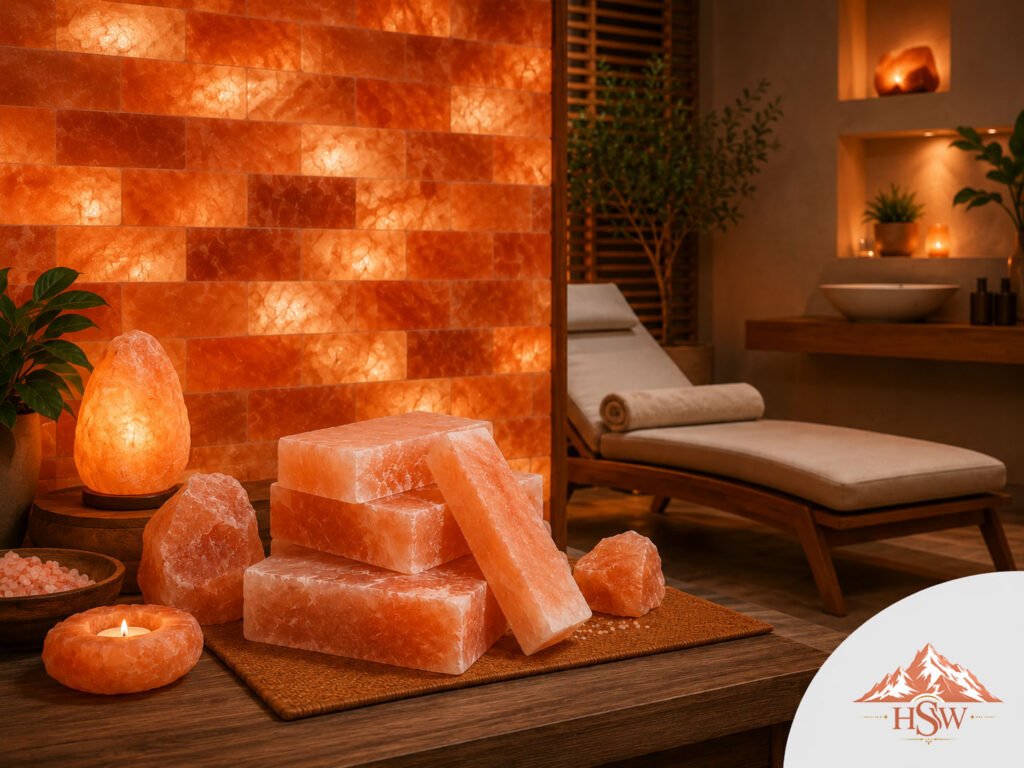
You can browse Himalayan Salt Way’s pink salt wall tiles to compare available options. When planning a kitchen feature, consider the tile thickness and installation system alongside its appearance.
The Main Concern: Water and Moisture
Salt behaves differently from ceramic, porcelain, or glass. Sodium chloride dissolves in water, as explained in PubChem’s sodium chloride reference. For an exposed salt surface, repeated contact with water can gradually affect its finish and shape. CID 5234 – PubChem
In practical terms, this makes placement especially important. A panel beside a dining table faces different conditions from one behind a sink.
Before choosing a wall, look for:
- Water splashes during washing and food preparation.
- Steam from kettles, cookers, and boiling pots.
- Condensation on nearby surfaces.
- Grease that would require regular washing.
- Dampness caused by leaks or poor ventilation.
If the proposed wall needs frequent wet cleaning, choose a washable kitchen finish for that location.
Where Pink Salt Tiles in Kitchens Work Best
The following placements are design suggestions based on limiting exposure to moisture and cooking residue. They are not a guarantee that every salt tile system will suit every kitchen.
Pink Salt Tiles in Kitchens: Dining-Side Walls
A wall near the dining area can be a good place to explore a salt feature. It is often farther from the sink and cooking appliances, while still being visible from the kitchen.
Keep the panel away from places where drinks are regularly spilled or chairs might strike the surface.
Kitchen Salt Tiles in a Dry Decorative Niche
A recessed niche can frame a small salt panel neatly. However, the niche itself must stay dry. Avoid locations above appliances that release steam or inside an enclosed space where moisture collects.
Plan access to lighting components before installation. A decorative feature becomes harder to maintain when its electrical parts are inaccessible.
Pink Salt Tiles in Open-Plan Kitchens
In a kitchen that opens into a lounge or dining room, a salt panel can sit on the adjoining wall. This allows you to enjoy its appearance while placing it farther from the busiest cooking activities.
Observe the proposed location during a normal cooking session. Steam may travel farther than expected, particularly in smaller rooms.
Where to Avoid Pink Salt Tiles in Kitchens
Behind the Sink
A sink backsplash needs to tolerate splashes, soap, and regular wiping. Exposed salt tiles are an impractical choice where water contact is routine.
Use a suitable washable backsplash around the sink and place the salt feature elsewhere.
Directly Behind the Stove
The wall behind a stove collects grease and cooking residue. It also needs to meet the appliance manufacturer’s requirements for clearances and surrounding materials.
Do not assume that a salt tile installation is approved for this location. Its backing, adhesive, frame, and lighting system all need consideration.
On Countertops and Food Preparation Surfaces
Decorative wall tiles should not automatically be treated as food-contact surfaces. A kitchen counter needs to withstand spills, cleaning, cutting, and everyday handling.
If you want to cook or serve food on salt, choose a product specifically intended for that purpose and follow its care instructions.
Around Steam-Producing Appliances
Think beyond the stove. Kettles, rice cookers, coffee machines, and dishwashers can expose nearby walls to moisture.
For example, a panel above a coffee station may look suitable until a kettle boils beneath it several times a day. Check appliance use before deciding on the layout.
Can Glass Protect Pink Salt Tiles in Kitchens?
A protective glass screen may help reduce direct splashes and grease exposure. However, it does not automatically make a salt installation waterproof.
Moisture may still enter around edges or collect inside a poorly designed enclosure. The assembly also needs to allow appropriate cleaning and access to lighting.
If you want a protected panel, ask the installer to explain:
- How the design limits moisture reaching the salt.
- How condensation will be managed.
- How the glass and surrounding surfaces will be cleaned.
- How damaged tiles or lighting components can be accessed.
Treat this as a complete installation system, rather than simply adding glass in front of an exposed wall.
Planning Pink Salt Tiles in Kitchens
Check Ventilation First
Good ventilation helps manage cooking moisture. The EPA’s indoor environment guidance recommends keeping indoor humidity between 30% and 50% as part of general moisture control. This is guidance for the indoor environment, rather than a product-specific limit for salt tiles. US EPA
Follow the tile supplier’s environmental requirements as well. Even a room with reasonable overall humidity can have a wet area beside a sink or a concentrated plume of steam above a kettle.
Plan Support and Installation
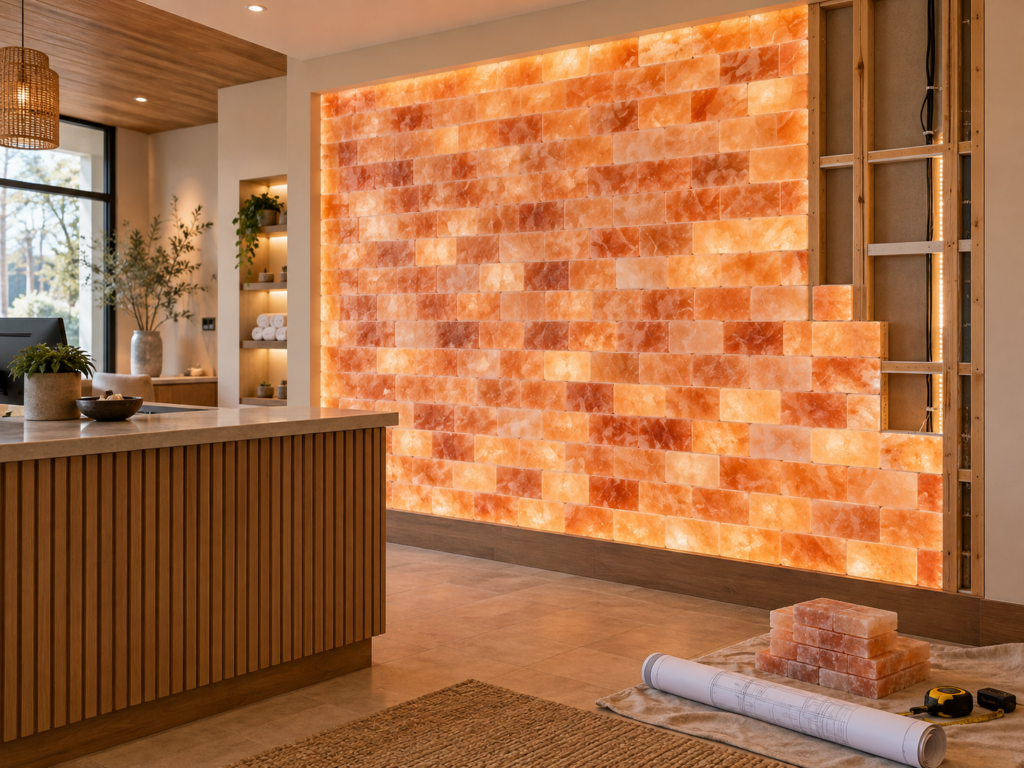
Salt tiles add weight to a wall. The installer should assess the backing, attachment method, and total load before work begins.
Use a fixing system approved for the specific tiles and application. Do not assume that an ordinary ceramic tile adhesive will perform suitably with salt.
Make Lighting Accessible
Backlighting can highlight the tiles’ natural variation. However, lighting should be chosen for the installation conditions and fitted according to its manufacturer’s instructions.
Plan a way to service the LEDs and power supply. Access matters just as much as the finished appearance.
Review Samples Before Ordering
Look at a sample beside your cabinetry, countertop, and wall paint. View it in daylight and under your evening lighting.
Natural variation is part of the material’s character. A sample helps you judge whether those warmer tones suit the room.
How to Clean and Maintain Kitchen Salt Tiles
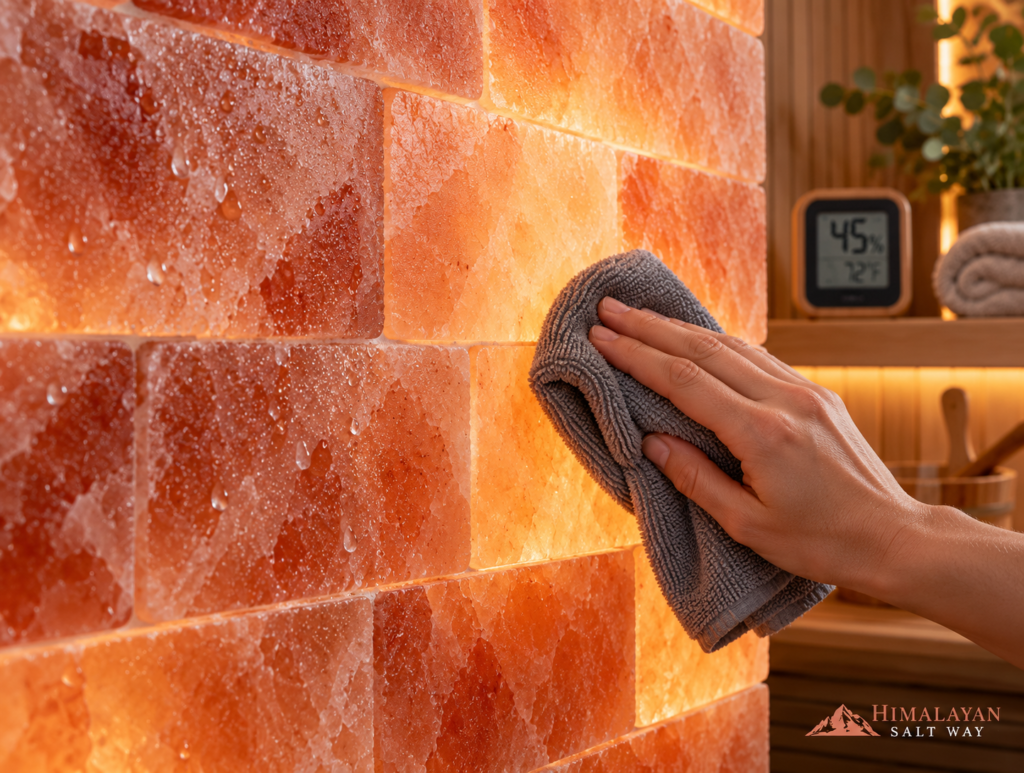
Follow the supplier’s care instructions. For routine dusting, a soft, dry cloth or brush is generally a more suitable starting point than washing an exposed salt surface.
Avoid spraying cleaner directly onto the tiles or treating them like a conventional backsplash. If grease repeatedly reaches the panel, its location may be unsuitable for the way your kitchen is used.
Watch for damp patches, surface changes, or moisture around the base. Investigate the source promptly rather than repeatedly wiping away the symptoms.
Frequently Asked Questions
Can pink salt tiles be used as a kitchen backsplash?
They are better considered for a dry decorative area. Around sinks and active cooking zones, a washable backsplash is usually the more practical choice.
Are pink salt tiles waterproof?
No. Salt dissolves in water, so exposed tiles should be protected from direct and repeated water contact.
Can I use ordinary wall tiles for cooking?
Use a product specifically intended for cooking or serving food. Do not assume a decorative wall tile is suitable for food contact or heating.
Should I cover every kitchen wall with salt tiles?
A smaller feature is often easier to position away from moisture and maintain. Start with the location and daily use of the room before deciding on size.
Is a Salt Tile Feature Right for Your Kitchen?
Pink salt tiles in kitchens make the most sense when you want a decorative focal point and have a dry location for it. They are less practical where surfaces need regular scrubbing or receive frequent splashes.
Choose the location first, then plan the support, lighting, and care. A modest panel on a well-chosen wall can bring warmth to the room while keeping everyday maintenance manageable.