Can Himalayan Salt Tiles Be Used in a Steam Room?

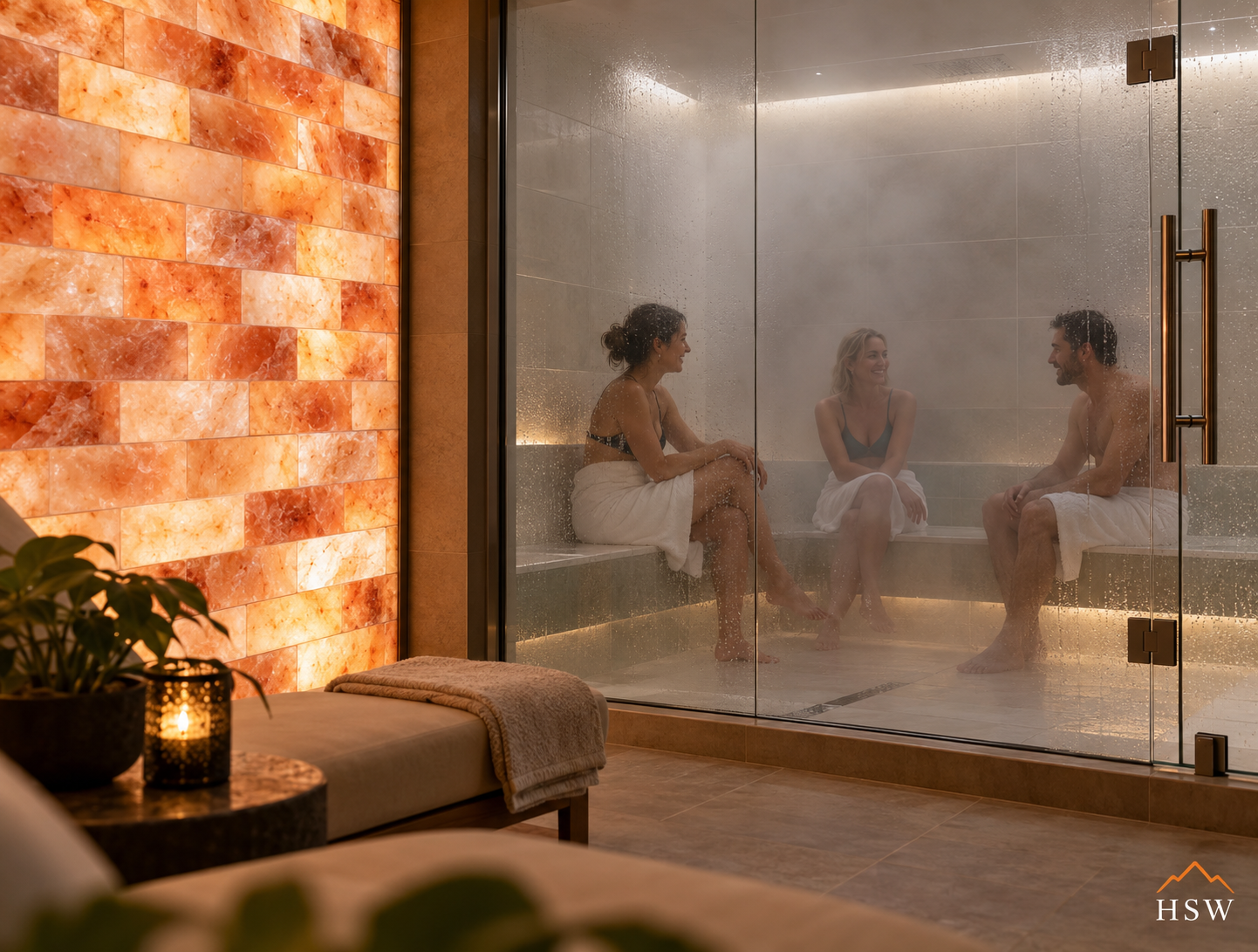
Using salt tiles in a steam room may seem like an attractive design choice, but persistent humidity can damage natural salt. Himalayan salt tiles dissolve when exposed to water, so condensation can gradually erode their surface. This guide explains the risks and where a salt feature wall may be more suitable.
Exposed Himalayan salt tiles are generally a poor choice inside a steam room. Salt dissolves in water, and the persistent humidity and condensation in a steam enclosure create conditions that can damage its surface. A dry sauna or a separate relaxation lounge may offer a more suitable setting, depending on the installation and moisture levels.
Before buying Himalayan salt tiles for a steam room, it helps to understand how steam affects them—and how to achieve a similar design without exposing natural salt to constant moisture.
Why Salt Tiles in a Steam Room Are Vulnerable
Himalayan salt tiles are made from natural rock salt. Unlike conventional ceramic wall tiles, they are water-soluble.
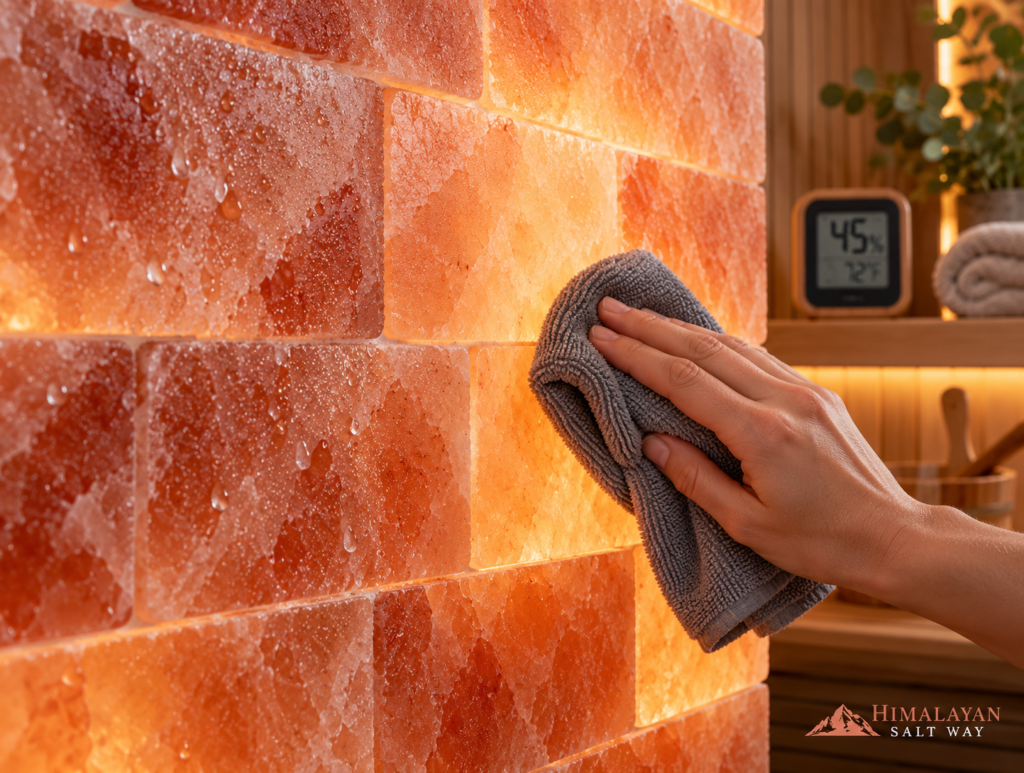
Two forms of moisture matter here. Humid air can encourage salt to absorb moisture, while condensation puts liquid water directly onto its surface. That water can dissolve some of the salt and carry it away as salty runoff.
Cargill’s technical bulletin on salt storage explains that salt absorbs moisture when surrounding relative humidity rises above approximately 75%. That figure is general storage guidance, rather than a guaranteed operating limit for a Himalayan salt wall. Temperature, mineral composition and direct water exposure also matter. cargillsaltstore.com
For steam-room planning, the practical conclusion is straightforward: natural salt should not be treated as a waterproof wall finish.
A Steam Room Is Different From a Sauna
The terms “sauna” and “steam room” sometimes appear together in product descriptions. However, they describe different environments.
MrSteam’s explanation of steam showers and saunas describes steam showers as using moist heat at approximately 100% humidity. Traditional dry saunas generally operate at higher temperatures with much lower background humidity. blog.mrsteam.com
| Installation area | Moisture conditions | What this means for natural salt |
|---|---|---|
| Steam room | Persistent high humidity and condensation | Exposed salt is generally unsuitable |
| Traditional sauna | Lower background humidity, with temporary increases when water is added to stones | Suitability depends on placement, drying and installation specifications |
| Infrared sauna | Usually no steam generator | May offer more suitable conditions if the space stays dry |
| Relaxation lounge | Depends on ventilation and nearby wet areas | Often a better location when humidity is controlled |
A product described as suitable for a sauna should not automatically be considered suitable for a steam room. Always confirm which environment the supplier’s guidance actually covers.
What Can Happen to an Exposed Salt Wall?
A salt wall may look fine when first installed. Problems can develop later as repeated steam sessions expose it to moisture.
Surface sweating and salty runoff
Water may collect on the tiles and dissolve salt at the surface. As it runs downward, it can leave residue on the frame, floor or adjoining finishes.
Changes in shape and appearance
Repeated dissolution can gradually alter the tile surface. Edges may lose definition, and the wall may develop uneven areas. Letting it dry afterward does not replace salt that has already washed away.
Installation problems
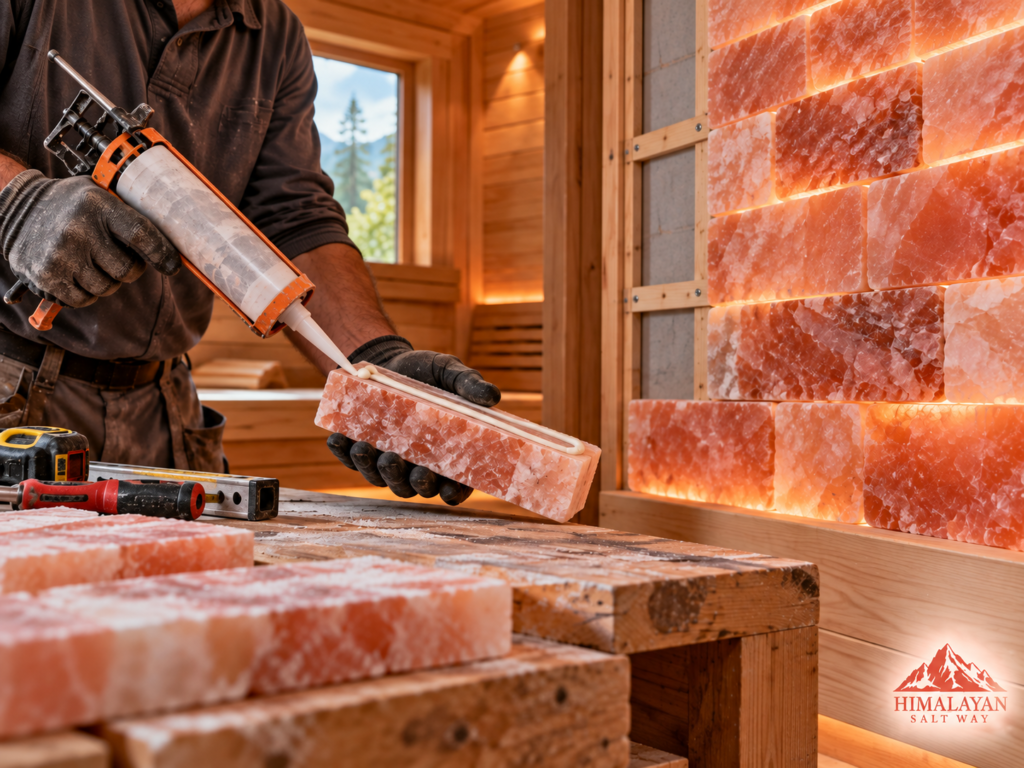
Surface deterioration can also affect the contact area between a tile and its mounting system. The result depends on the adhesive, backing and mechanical support, so the entire assembly needs assessment.
Exposure of nearby components
Salty moisture can create maintenance concerns for metal fittings and electrical components. Backlighting should therefore be designed for the actual conditions, with suitable protection and access for inspection.
These are reasons to assess the complete installation before purchase, rather than relying on the thickness or appearance of the tile.
Does Adhesive Protect Salt Tiles in a Steam Room?
No. An adhesive may help attach salt tiles to an approved surface, but it does not make the exposed salt face resistant to water.
Similarly, waterproofing behind the wall protects the building structure only when the specified system is installed correctly. It does not prevent moisture from reaching salt on the room-facing side.
Harvia’s steam-room construction guidance highlights the need to prevent humidity from entering building structures through penetrations. This illustrates why steam-room construction must address moisture throughout the assembly. Harvia
A secure bond and a waterproof building envelope serve different purposes. Neither makes natural salt itself waterproof.
Can Himalayan Salt Tiles Be Protected Behind Glass?
A professionally designed enclosure may allow salt to be displayed behind glass while separating it from the wet environment. However, this should be treated as a specialist design option, rather than a simple DIY workaround.
A glass panel placed in front of the tiles does not necessarily stop humid air from entering around the edges. Moisture can become trapped if the enclosure is poorly designed.
Before choosing this approach, ask the designer and installer to confirm:
- How steam and water will be kept away from the salt.
- Whether condensation could form inside the enclosure.
- How the backing, frame and lighting will be protected.
- How the tiles will be inspected or replaced.
- Whether the complete assembly is approved for that location.
Unless the complete system has documented suitability, installing exposed Himalayan salt tiles in a steam room remains a poor choice.
Better Places for a Himalayan Salt Feature Wall
You do not need to give up the salt-wall design entirely. Often, moving it outside the wet enclosure provides a more practical solution.
A separate relaxation lounge
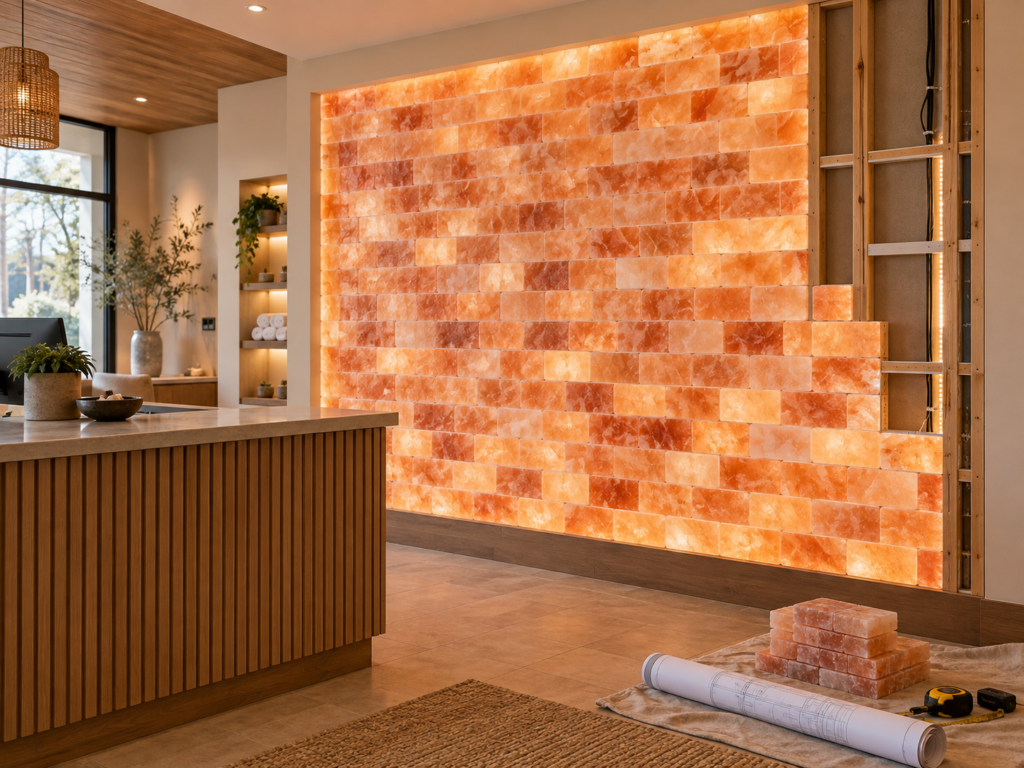
A salt feature wall can create a warm focal point where guests rest before or after a steam session. Choose a location that remains dry and does not receive steam whenever the enclosure door opens.
A suitable dry sauna
A salt wall may be considered for a dry sauna when the supplier’s specifications allow it. Placement, mounting, lighting and drying between sessions still matter. Keep the installation away from direct splashing and follow the heater manufacturer’s clearance requirements.
A reception or treatment area
A dry reception space or treatment room can offer the same decorative effect with less exposure to moisture. However, rooms with showers, frequent wet cleaning or persistent humidity need further assessment.
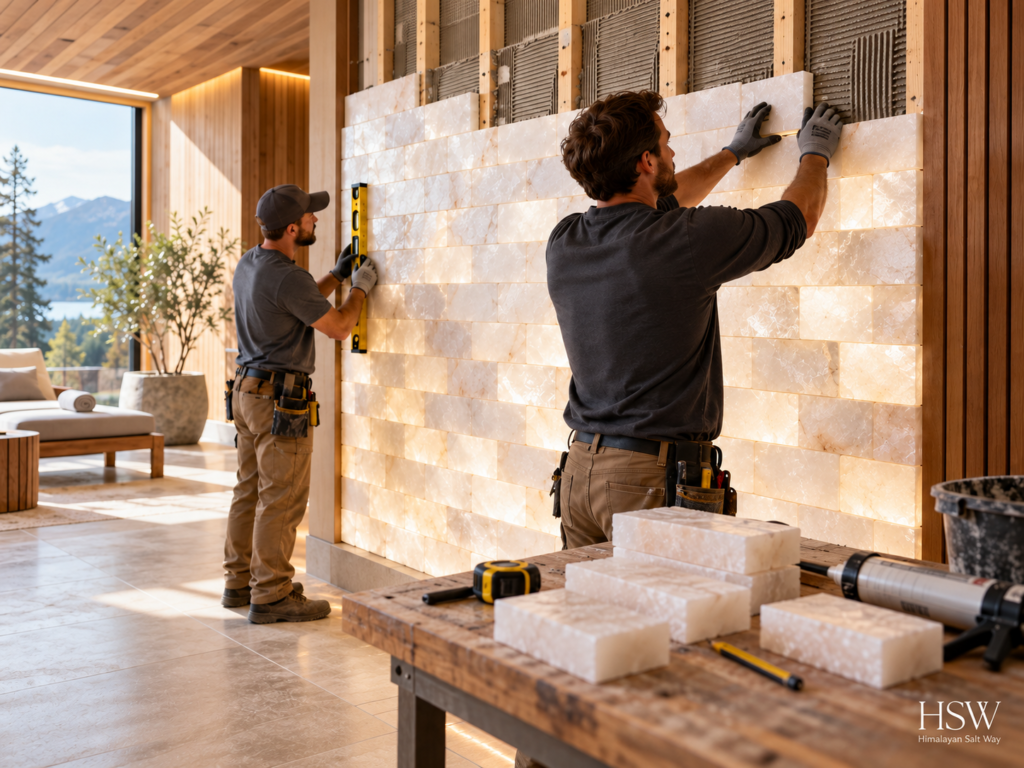
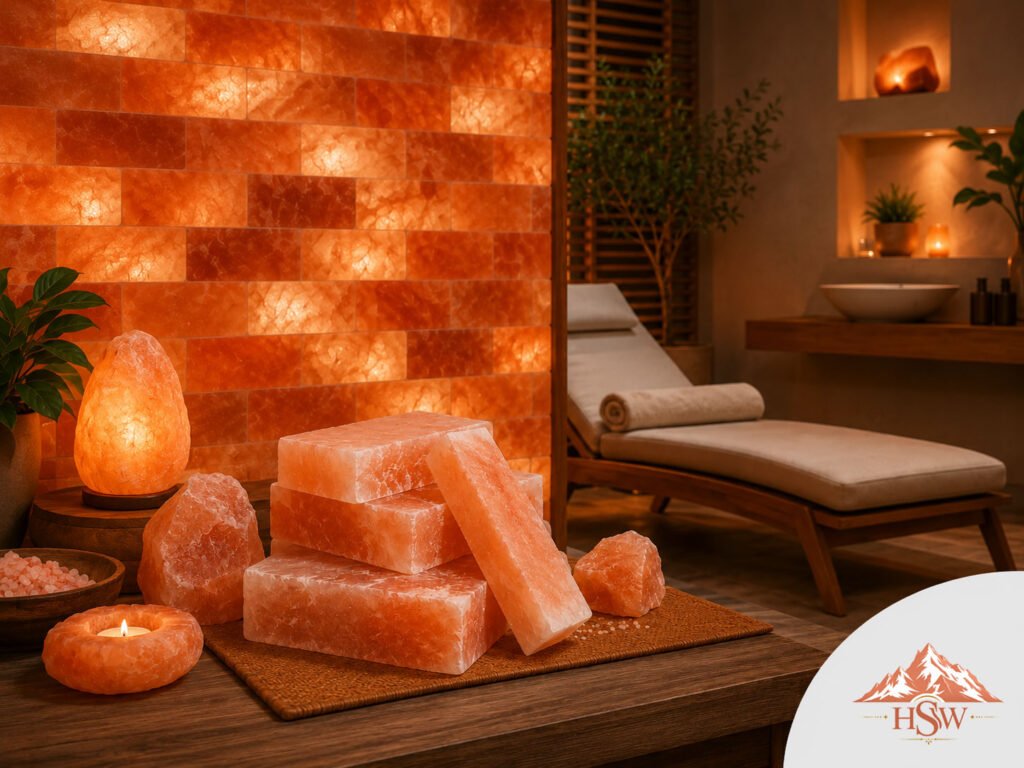
HSW’s Himalayan pink salt wall tiles are worth exploring for projects where the environment suits natural salt. For a thicker decorative format, you can also compare the pink salt bricks and blocks. Thickness changes the design and weight; it does not remove salt’s sensitivity to water.
Alternatives to Salt Tiles in a Steam Room
For the wet enclosure itself, choose finishes and a complete installation system specifically approved for steam-room use.
Suitable options may include porcelain, ceramic or glass tiles, subject to the manufacturer’s specifications. The backing, vapor-control system, setting materials, grout and sealants must also suit the application.
If you mainly want the warm appearance of a salt wall, consider peach-toned finishes or appropriately rated warm lighting. Natural salt can then become a separate feature outside the enclosure.
Your installer should verify the complete system before work begins. A water-resistant decorative surface alone does not establish that the whole wall is suitable for steam exposure.
Questions to Ask Before Ordering Salt Tiles
Before selecting a pack size or planning the lighting, answer these questions:
- Will the tiles be exposed to steam, condensation or splashing?
If so, reconsider the location or ask about a documented protective system. - Does the room dry fully between sessions?
Persistent dampness is a concern even outside a steam enclosure. - Does the supplier approve this specific application?
Ask about steam rooms explicitly, rather than relying on a general “spa” or “sauna” description. - How will the wall be supported and maintained?
Confirm the backing, mounting method, load requirements and access for repairs.
For more background on material selection and care, read HSW’s Himalayan salt bricks guide.
Frequently Asked Questions
Can Himalayan salt tiles melt in a steam room?
The main concern is dissolution rather than melting. Moisture can dissolve the salt surface, causing erosion and salty runoff.
Are thicker salt bricks better for steam rooms?
Thicker bricks contain more material, but they remain water-soluble. Thickness alone does not make exposed salt suitable for persistent steam and condensation.
Will ventilation prevent damage?
Ventilation can support drying after use. However, it cannot eliminate exposure while the steam room is operating or restore salt that has dissolved.
Can I seal salt tiles for steam-room use?
Do not assume that a general stone sealer is suitable. Any protective treatment needs documented compatibility with natural salt and the intended environment. A coating alone should not be treated as approval for the installation.
Where should I install a salt wall near a steam room?
A separate, dry relaxation area is generally a more practical location. Check that escaping steam, splashes and wet cleaning will not reach the wall.
Choose the Location Before Choosing the Tiles
Himalayan salt can bring natural color and a soft glow to a wellness interior. Its appearance, however, does not change how it responds to water.
For most projects, the sensible approach is to use steam-rated finishes inside the wet enclosure and reserve natural salt for a suitably dry area. Before ordering from Himalayan Salt Way, describe the intended location and moisture conditions so product selection starts with the environment.