Himalayan White Salt Tiles: Are They Natural, Pure and Healthy?

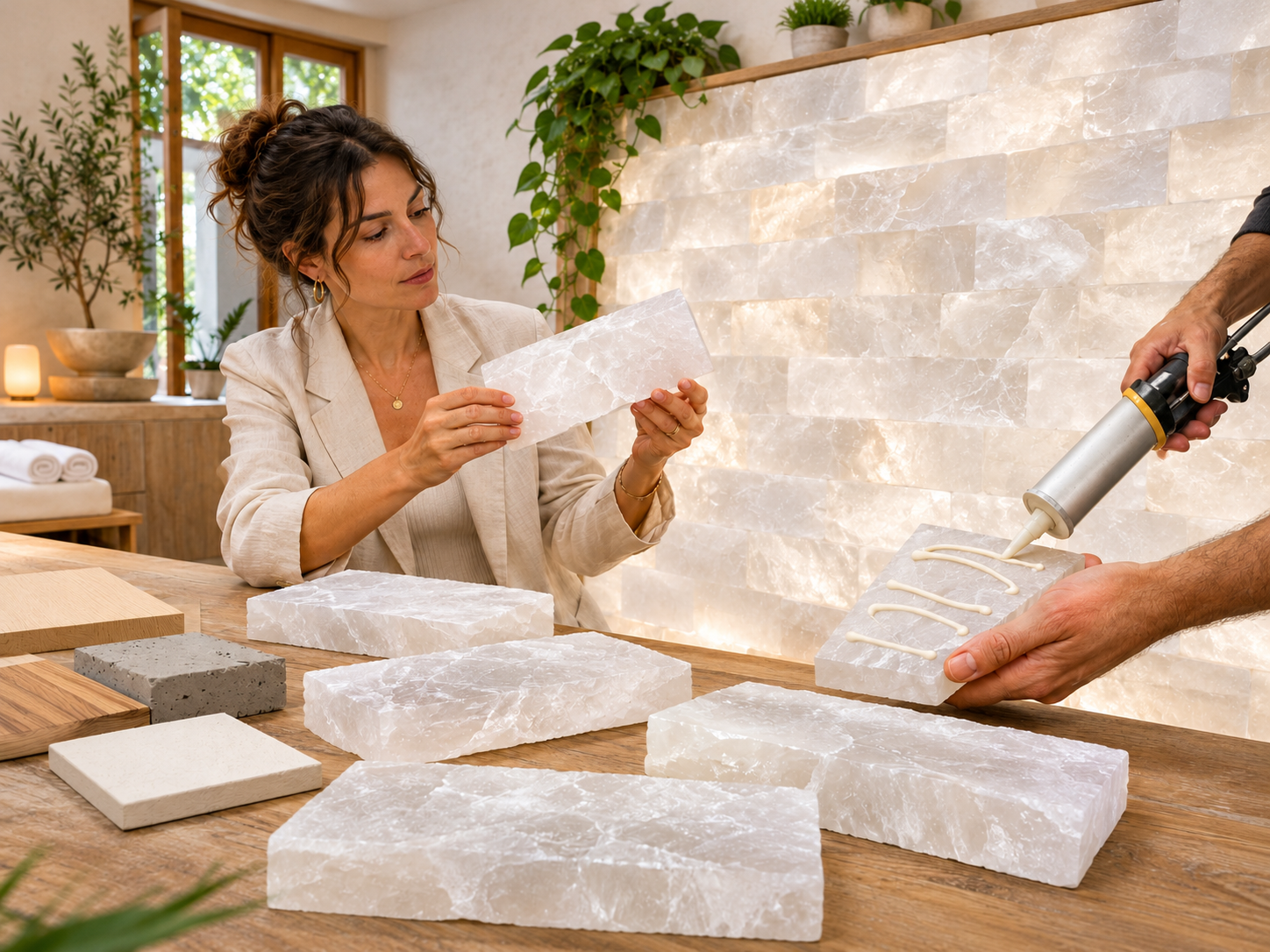
White salt tile purity is a common question for people considering Himalayan salt walls. White Himalayan salt tiles are popular for their natural light colouring in spas, saunas and feature walls but does their colour prove they are pure? And do decorative salt tiles have proven health benefits? Let’s look at how they form, how they are mined and what the evidence says.
What are Himalayan white salt tiles?
Himalayan white salt tiles are cut from natural rock salt, which is mainly made up of halite (sodium chloride). Salt from the Salt Range occurs in different colours. The Pakistan Mineral Development Corporation (PMDC) lists four types of rock salt from the Khewra area: white, pink, dark pink and greyish.
So white salt can occur naturally; it doesn’t have to be coated to look pale. Some pieces may also look clear or slightly translucent, depending on the salt and how light passes through the crystal.
How is the salt formed?
Rock salt formed when salty water evaporated and left minerals behind. Over a long time, layers of these deposits became part of the underground rock. Halite is an evaporite mineral, meaning it forms as salty water becomes concentrated and evaporates. The USGS explains how marine evaporite deposits form, and PMDC describes the ancient salt deposits at Khewra.
How are Himalayan white salt tiles mined and made?
The Khewra Mine uses a room-and-pillar system. Salt is extracted from selected areas while pillars of rock salt are left behind to support the mine. After extraction, salt intended for decorative use can be cut and finished into tiles.
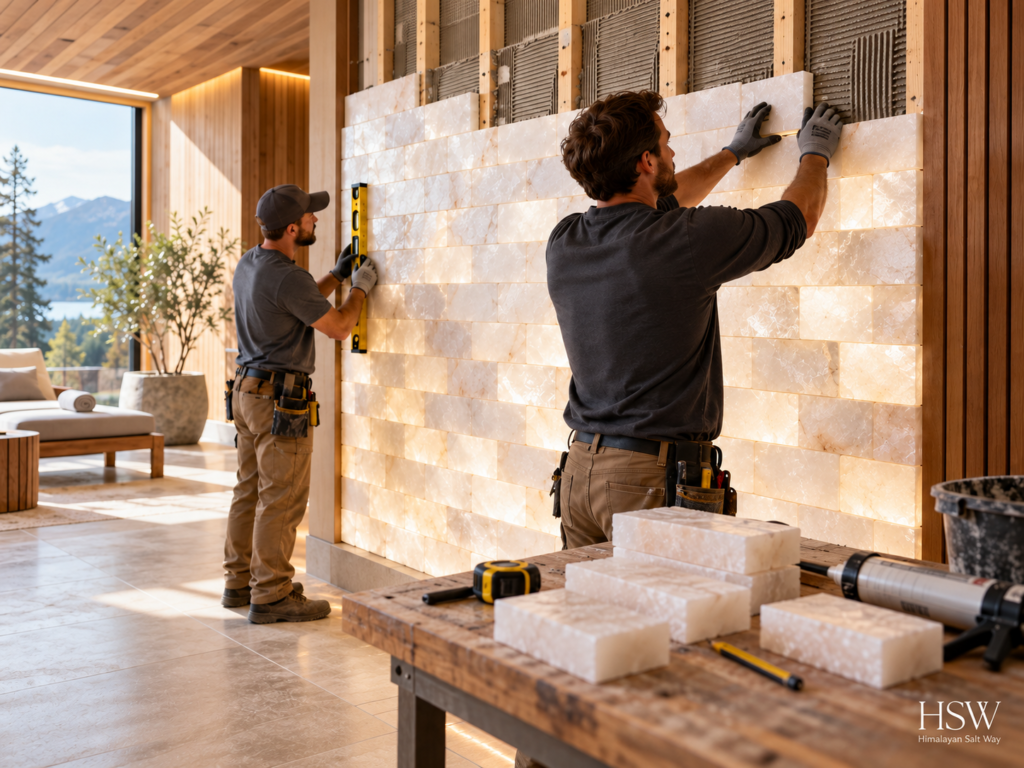
The exact cutting and finishing process can vary by manufacturer. When comparing tiles, ask where they come from, what size and finish they have, and how much natural variation to expect. Our white salt tile installation guide can help you plan your project. You can also compare them with our pink salt wall tiles.
White salt tile purity: what does the colour mean?
White salt tile purity cannot be confirmed by colour alone. Natural rock salt is mainly halite, but it can contain small amounts of other minerals, moisture and insoluble material.
PMDC gives an average purity figure for salt from Khewra Mine. That figure describes salt from the mine; it isn’t a laboratory certificate for every finished tile. If you need to know the exact composition of a product, ask the supplier for test documentation.
Decorative salt tiles aren’t automatically food-grade salt. Don’t use building tiles for cooking unless they’re specifically sold and documented for that purpose.
Do Himalayan white salt tiles have health benefits?
There are no established medical benefits from using decorative salt tiles. A solid tile doesn’t deliver a measured dose of salt to your lungs or treat asthma, allergies or other health conditions. People may enjoy the look and lighting of a salt room, but that’s different from a proven medical benefit.
Salt walls are also different from some salt therapy treatments, where equipment disperses salt particles into the air. Research about one kind of salt therapy shouldn’t be assumed to apply to a room with solid tiles. The National Center for Complementary and Integrative Health advises people with asthma not to replace proven care with complementary approaches. A Cochrane review of speleotherapy for asthma found there wasn’t enough reliable evidence to reach a firm conclusion about its effectiveness.
If you have asthma or another respiratory condition, keep following your healthcare professional’s advice. If a facility uses equipment to disperse salt particles, ask your clinician whether that activity is suitable for you.
What should you consider before buying?
- Origin: Where was the salt mined?
- Size and finish: What are the tile dimensions and surface finish?
- Colour: Natural white salt can look clear, milky or slightly translucent. Ask about samples so you can see how it looks in your space.
- Installation: What is the wall surface? Which adhesive will be used? How much will the tiles weigh? Will they be exposed to moisture? What lighting is planned?
- Purity and health claims: Ask what evidence supports the claims. Colour and advertising wording don’t prove purity; product-specific testing is needed.