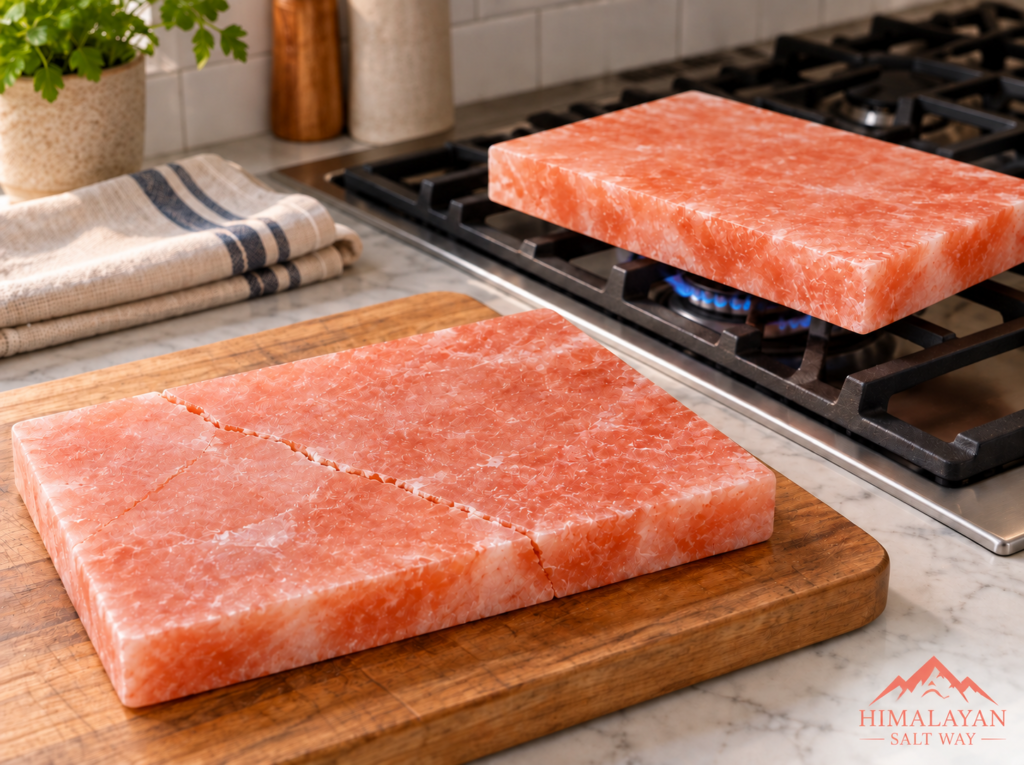
Why Is Food Too Salty on a Himalayan Salt Block? Common Mistakes and Fixes

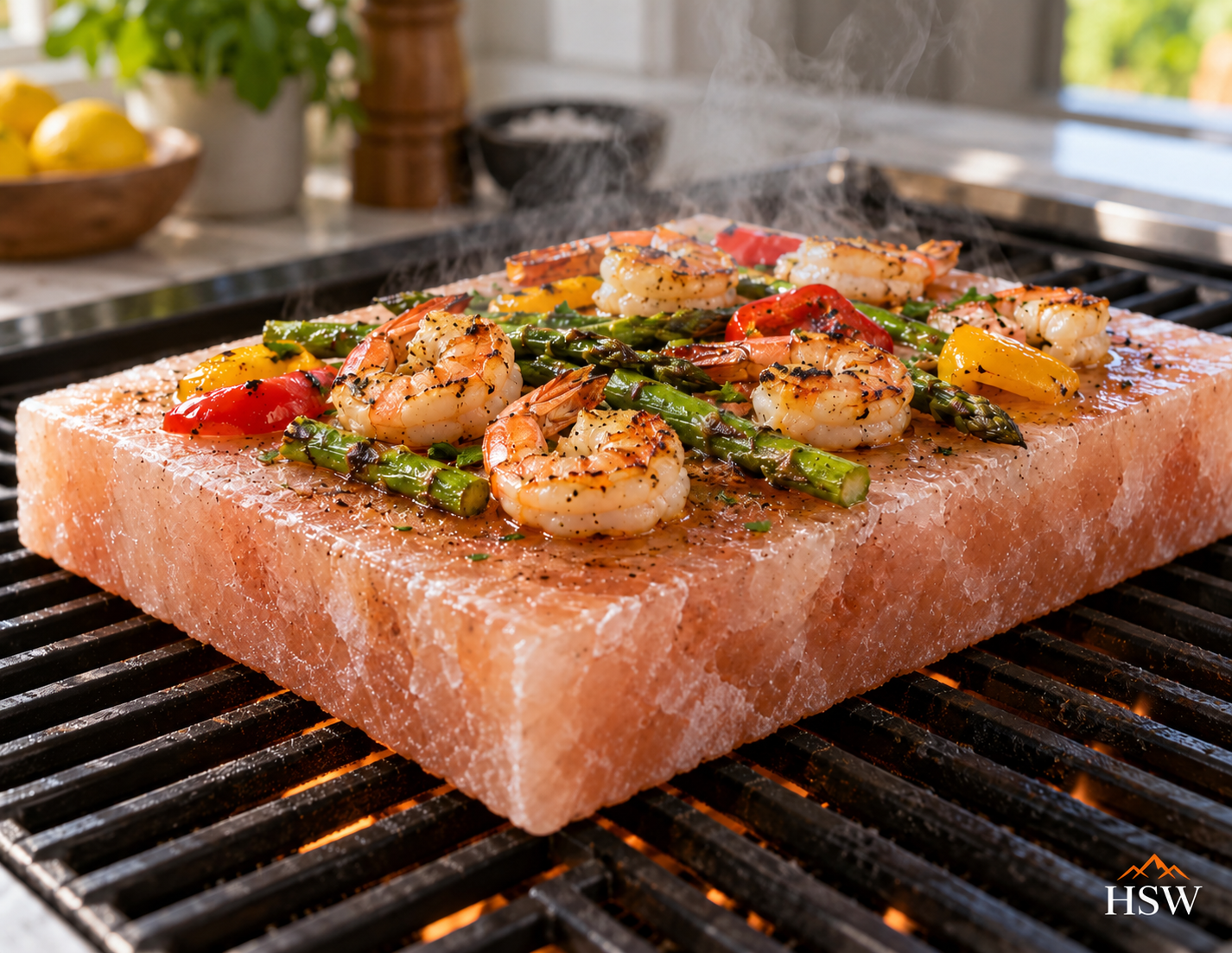
Is your Himalayan salt block too salty when you cook shrimp, steak or vegetables? It can be frustrating when a meal looks delicious but the salt overwhelms every bite. Before giving up on your cooking tile, check the added seasoning, surface moisture and how you heat the block.
If you find your Himalayan salt block too salty, look at how you prepared and cooked the food before giving up on the plate. Extra seasoning, wet ingredients and unnecessary contact with the salt surface are useful places to start.
A salt cooking tile does two jobs at once: it provides a cooking surface and contributes seasoning. Once you account for both, it becomes easier to make a meal that tastes balanced.
Why Is Your Himalayan Salt Block Too Salty?
Moisture helps explain what happens. Water at the point where food touches the block dissolves some of its surface salt. That dissolved salt then seasons the food.
Consequently, a wet ingredient can behave differently from a dry one. Fat content, food thickness and the temperature of the cooking surface also influence the result. The Meadow’s salt block guide discusses these factors and why different ingredients respond differently. The Meadow
Think of the block as an ingredient in your recipe. If you season everything as though you were using an ordinary pan, you may end up adding more salt than the dish needs.
Himalayan Salt Block Too Salty? Common Cooking Mistakes
1. Adding Salt Before You Start Cooking
Salting a steak or sprinkling seasoning over vegetables feels automatic. However, the cooking tile already contributes salt.
For your next trial, leave out the added salt. Use black pepper, garlic or a salt-free spice blend instead. Taste a safely cooked sample before deciding whether the finished dish needs more seasoning.
Also, check the ingredient label on your favorite rub. A blend described as “steak seasoning” or “seafood seasoning” may contain plenty of salt.
2. Using Salty Marinades and Prepared Ingredients
Sometimes the salt shaker stays in the cupboard, yet the food still tastes heavily seasoned.
Soy sauce, bottled marinades, brines and prepared spice mixes can introduce salt before the food reaches the block. Pre-seasoned meat or seafood may do the same.
A practical way to troubleshoot is to simplify one batch. Choose an unseasoned ingredient and keep the flavorings straightforward. Add your sauce after cooking, when you can control the amount more easily.
For example, try plain shrimp with pepper and a little suitable cooking oil. Once cooked, finish them with herbs and lemon on a separate plate.
3. Putting Very Wet Food on the Surface
A bowl of marinated vegetables can carry more liquid than you realize. That moisture matters because it helps dissolve salt where the food touches the tile.
Before cooking, drain excess marinade and gently blot surface moisture with paper towels. Follow normal food-handling practices; do not wash raw meat or poultry as a preparation step.
The aim is to remove dripping liquid, rather than dry out the ingredient itself. Himalayan Salt Company’s cooking tips explain the relationship between food moisture, surface salt and flavor. himalayansaltusa.com
4. Starting Before the Block Is Properly Heated
It is tempting to start cooking as soon as the tile feels warm. However, a surface that is insufficiently heated for searing can prolong cooking and contribute to excessive seasoning.
Heat the block gradually according to its manufacturer’s instructions. The Meadow specifically identifies inadequate heating as a possible cause of oversalted food. The Meadow
Do not respond by suddenly turning the burner to maximum. Follow the recommended heating stages, use an approved heat source and respect the temperature limits for your particular plate.
For a broader introduction, read our guide to using Himalayan salt blocks for cooking.
5. Following Your Usual Recipe Without Adjustments
A recipe written for a skillet may call for salted butter, a salty rub and a finishing sprinkle of salt. Using all three on a salt tile can make it difficult to judge how much seasoning the block contributes.
Keep your first attempt simple. Leave out optional salt, set salty sauces aside and use consistent portions.
Once you like the result, bring other ingredients back one at a time. This makes it easier to identify what changes the flavor.
Himalayan Salt Block Too Salty? Try These Simple Fixes
You do not need to change every part of dinner. Start with a small test batch:
- Choose an unseasoned ingredient. Avoid brined or heavily marinated food for this trial.
- Prepare similar portions. Consistent thickness makes the results easier to compare.
- Drain and blot excess surface moisture.
- Heat the tile gradually. Follow the instructions supplied with your cooking block.
- Cook a small batch first. Check doneness before tasting.
- Move cooked food onto a regular plate. Adjust sauces and finishing seasonings there.
Keep a short note about the ingredient and preparation method. If the result improves, repeat it before changing another variable.
When you are ready to try something different, our Himalayan salt block recipe ideas offer several starting points.
Can Oil Help When Your Himalayan Salt Block Is Too Salty?
A thin coating of suitable cooking oil may help moderate salt transfer. Salt does not dissolve in oil as it does in water, which helps explain why fat changes the interaction between food and the block. Both The Meadow and Himalayan Salt Company discuss this effect. The Meadow
Use oil sparingly and follow your plate’s cooking instructions. More oil is not automatically better, and it will not undo salt already introduced by a marinade.
For troubleshooting, change one thing at a time. If you remove the salty marinade and add oil in the same batch, you will not know which adjustment made the biggest difference.
What Can You Do if the Food Is Already Too Salty?
Once a dish is oversalted, you cannot reliably remove all the absorbed salt. However, you can sometimes make it more enjoyable by serving a smaller portion with unsalted accompaniments.
Try plain rice, potatoes or an undressed salad. Alternatively, chop the cooked ingredient and use a modest amount in a larger dish made without added salt.
Avoid adding salty cheese, bottled dressings or another heavily seasoned sauce. Taste the whole combination before making further adjustments.
Also, do not shorten cooking below what the ingredient requires just to reduce saltiness. If flavor and doneness are difficult to balance, choose a conventional cooking method for that recipe.
Does Cleaning the Tile Remove Its Saltiness?
Cleaning removes food residue. It cannot turn a solid salt plate into a neutral cooking surface.
Let the block cool completely before cleaning. Then follow its care instructions, use minimal water and allow it to dry thoroughly before its next use. The Meadow recommends gentle cleaning without soap and storage in a dry location. The Meadow
Soaking the tile to “wash out” its saltiness is not a solution. It dissolves the material you are trying to preserve.
Frequently Asked Questions
Why is my Himalayan salt block too salty even without added salt?
Check surface moisture and heating first. Also look for salt already present in brines, packaged ingredients or marinades. Try a small batch of plain food to narrow down the cause.
Should I add salt when cooking on a Himalayan salt tile?
For your first few attempts, leave out optional added salt. Taste the safely cooked food, then adjust the finished dish if necessary.
Will every ingredient taste equally salty?
No. Moisture, fat content, thickness and cooking conditions influence how food responds to the salt surface. Test a small portion when trying a new ingredient.
Can I use a decorative salt wall tile for cooking?
Choose a product specifically intended for food contact and your planned cooking method. A decorative tile’s appearance or dimensions do not establish that it is suitable for heating food.
Himalayan Salt Block Too Salty? Getting the Flavor Right
If your first meal tastes too salty, keep the next attempt simple: plain ingredients, no optional added salt, less surface moisture and gradual heating.
Taste a small, safely cooked batch before preparing the rest. A few careful adjustments can help you understand how your cooking tile behaves—and make the next dinner much easier to season.