How Himalayan Salt Is Mined: From Khewra to Finished Products

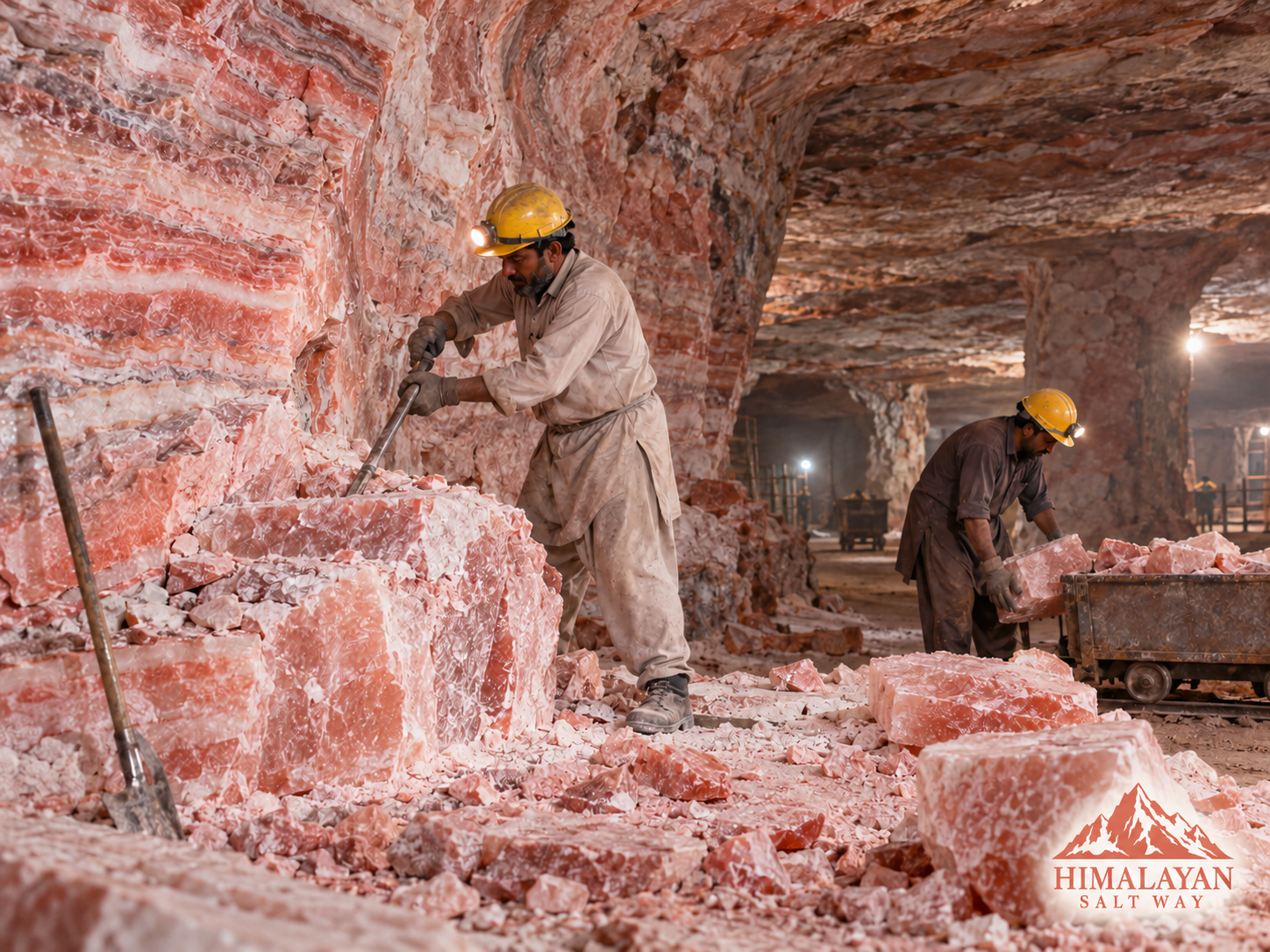
How Himalayan salt is mined is a question many people ask when they see a pink salt tile or cooking block. The journey begins with rock salt extracted from Pakistan’s Salt Range. Suitable pieces are then selected and shaped for different uses, from decorative walls to culinary products.
Where Himalayan Salt Is Mined in Pakistan
Himalayan pink salt is associated with Pakistan’s Salt Range, particularly the Khewra Salt Mine. Despite its familiar name, it is not typically collected from snowy mountain peaks. It is rock salt extracted from underground deposits.
The Pakistan Mineral Development Corporation’s overview of its mines describes salt at Khewra in shades ranging from transparent white to pink, red, and deeper carmine. That natural range of colors helps explain why finished salt products do not all look alike.
How Himalayan Salt Is Mined at Khewra?
According to the Pakistan Mineral Development Corporation, Khewra uses a room-and-pillar mining method. In simple terms, miners remove salt from planned sections while leaving pillars of rock in place to support the mine.
The extracted material comes out as rock rather than ready-to-use table salt or a perfectly shaped tile. From there, the intended product determines how it is selected and processed. A large solid piece suited to cutting has different possibilities from smaller fragments intended to be crushed.
This is the useful distinction behind the question “how is Himalayan salt mined?” Mining brings the natural rock salt out of the deposit. Cutting, shaping, grading, and packaging turn it into a finished product.
Why Are Some Pieces Pink and Others Almost White?
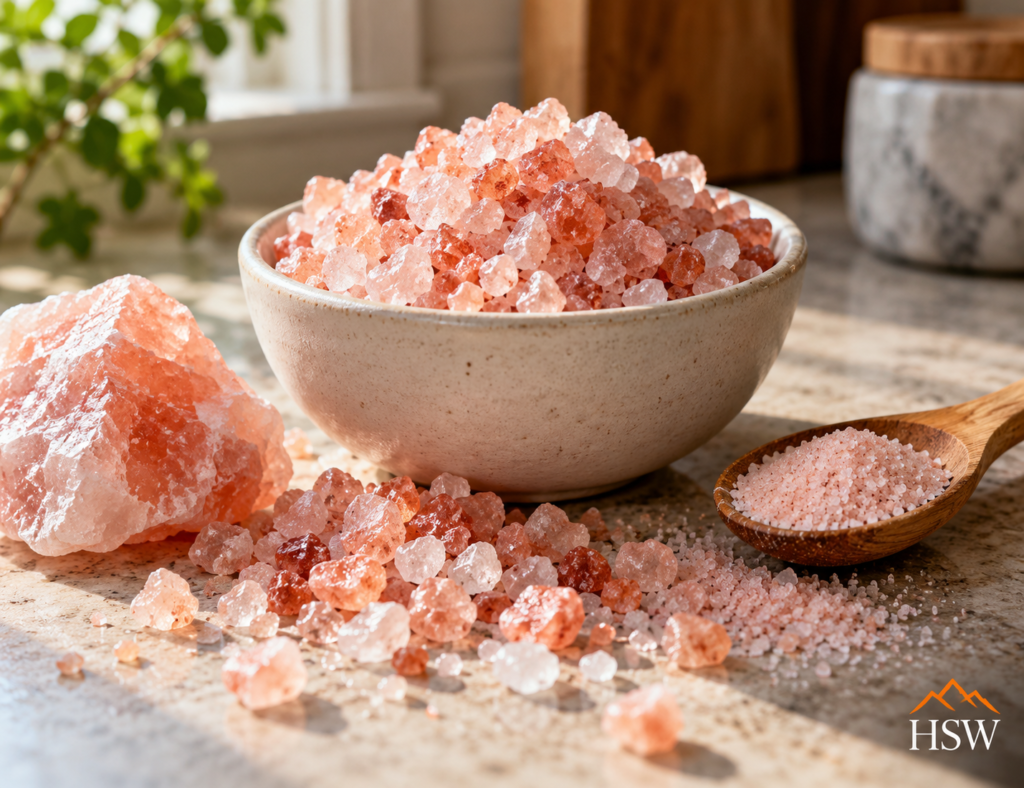
Natural salt deposits contain visible variations. A piece may be pale pink throughout, while another has white bands, orange areas, or deeper reddish sections. Research on pink salt describes iron-containing material among the contributors to its color.
For a decorative wall, those differences can be an advantage. A mix of lighter and darker pieces can add texture that a uniformly colored manufactured surface would not have. It also means buyers should expect natural variation rather than an exact color match across every tile or brick.
Color is a visual characteristic; it is not a reliable measure of nutritional value. Pink salt remains primarily salt, even when a piece has a richer shade.
What Happens After Himalayan Salt Is Mined?
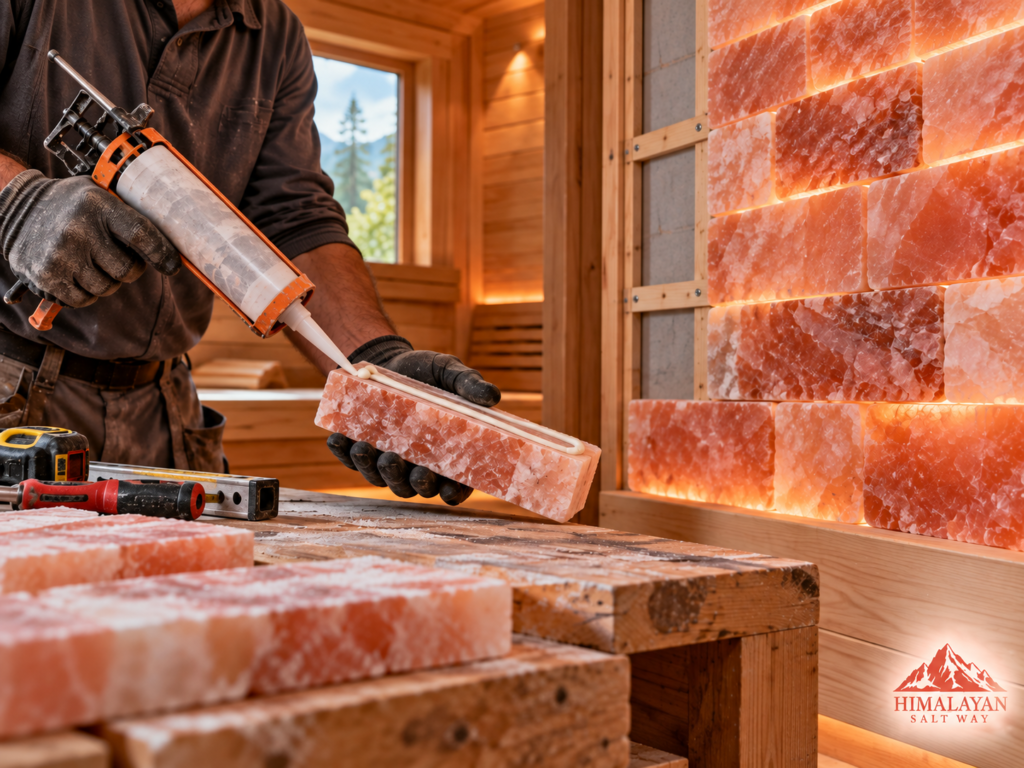
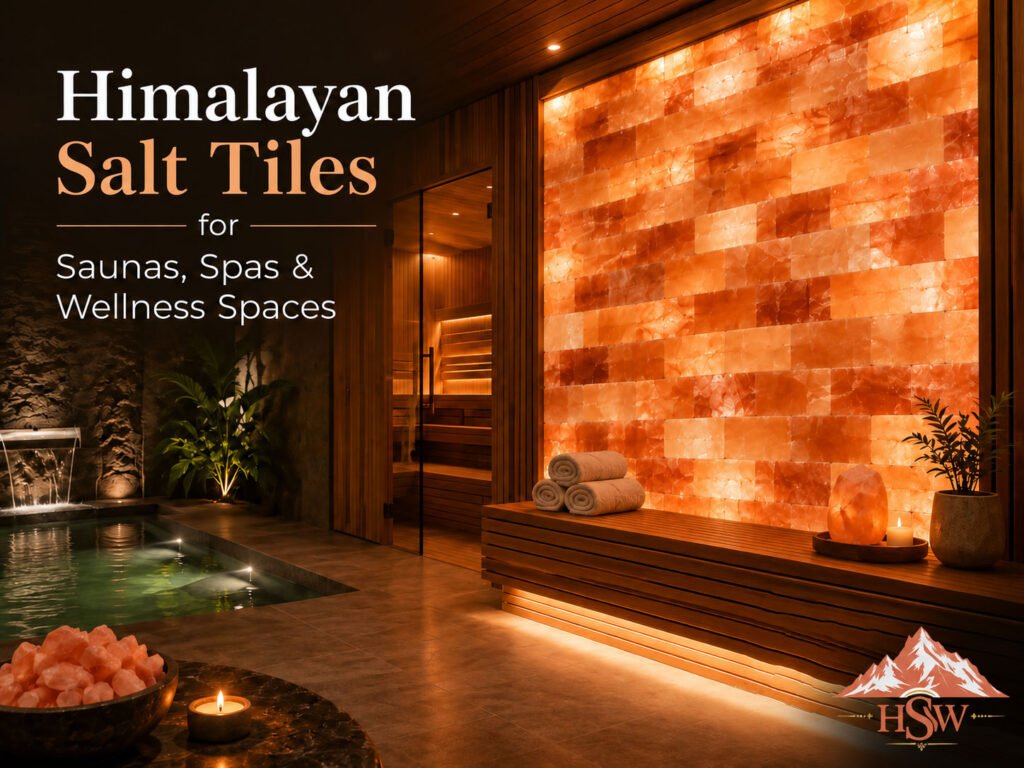
Suitable pieces of rock salt can be cut and shaped into products for interiors. Thin salt tiles are often selected for decorative walls and backlit features. Thicker salt bricks give a wall a more substantial appearance.
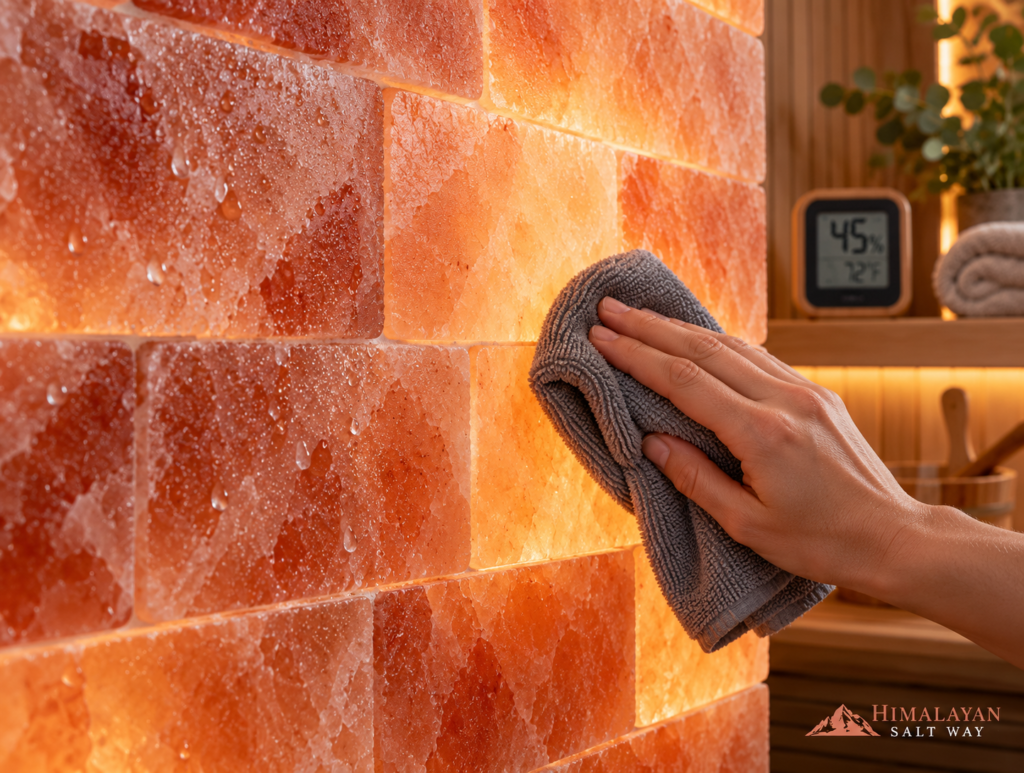
The dimensions, thickness, weight, and lighting plan matter more to a project than color alone. Before ordering for a wall, measure the installation area and consider how the material will be supported and protected from moisture.
To compare the available formats, see Himalayan Salt Way’s pink salt wall tiles and pink salt bricks and blocks. These are decorative building products; they should not be substituted for salt sold and labeled for food use.
What Else Can Be Made From the Rock?
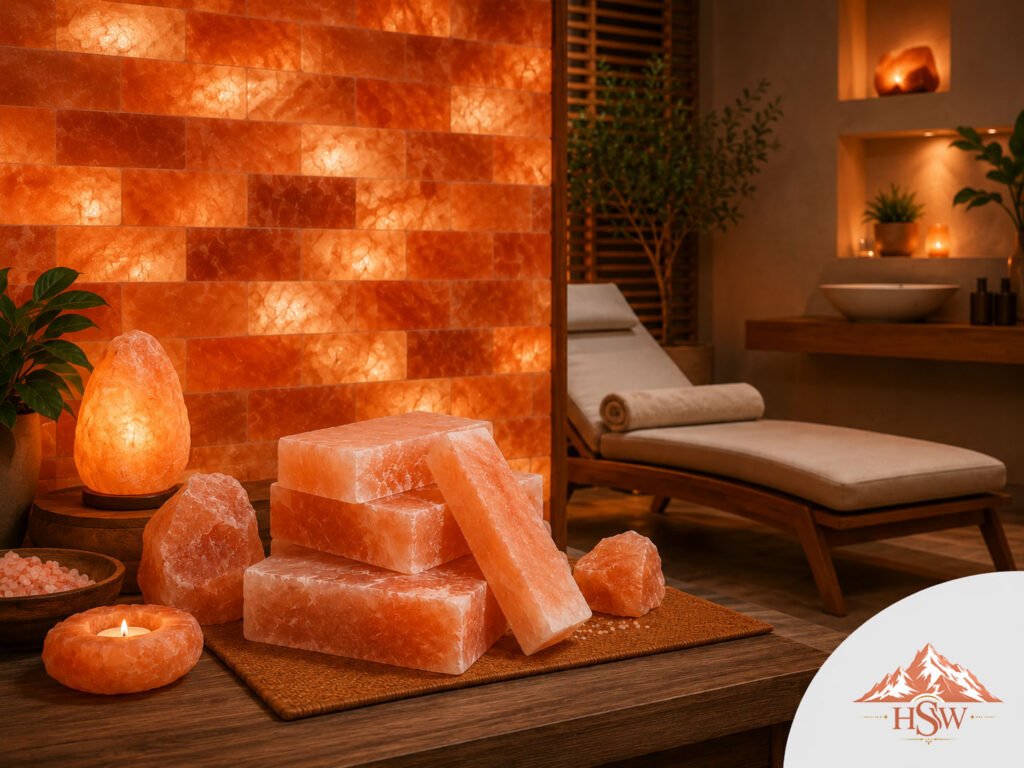
The same type of natural rock salt can serve several purposes when processed for the appropriate use. Solid pieces may be shaped into lamps or decorative objects. Pieces selected for culinary products may become cooking blocks, while salt prepared as a seasoning is crushed into smaller crystals.
That versatility is one reason the material appears in such different places: beside a stove, on a shelf, or as part of a spa interior. The finished products may share a geological origin, but their intended uses and care requirements are different.
What Should You Check Before Buying?
First, choose the product made for your intended use. If you are planning a wall, check the piece size, thickness, quantity, and installation requirements. If you need salt for cooking, choose a product specifically labeled for culinary use.
Second, allow for natural color variation. Product photographs can show the general appearance, but individual pieces of rock salt will have their own bands and shades.
Finally, ask practical questions before a larger purchase. For a salt wall, those might include how many pieces cover the measured area, how lighting will sit behind the salt, and how the installation will be kept away from persistent moisture.
Final Thoughts
Understanding how Himalayan salt is mined makes the finished products easier to appreciate. The journey begins with naturally varied rock salt in Pakistan’s Salt Range. Mining extracts it; later steps determine whether a suitable piece becomes a tile, brick, lamp, or culinary product.
For buyers, the best approach is straightforward: enjoy the natural appearance, choose a product suited to its job, and plan around the real properties of salt. Himalayan Salt Way offers Himalayan salt products for both decorative and practical uses.