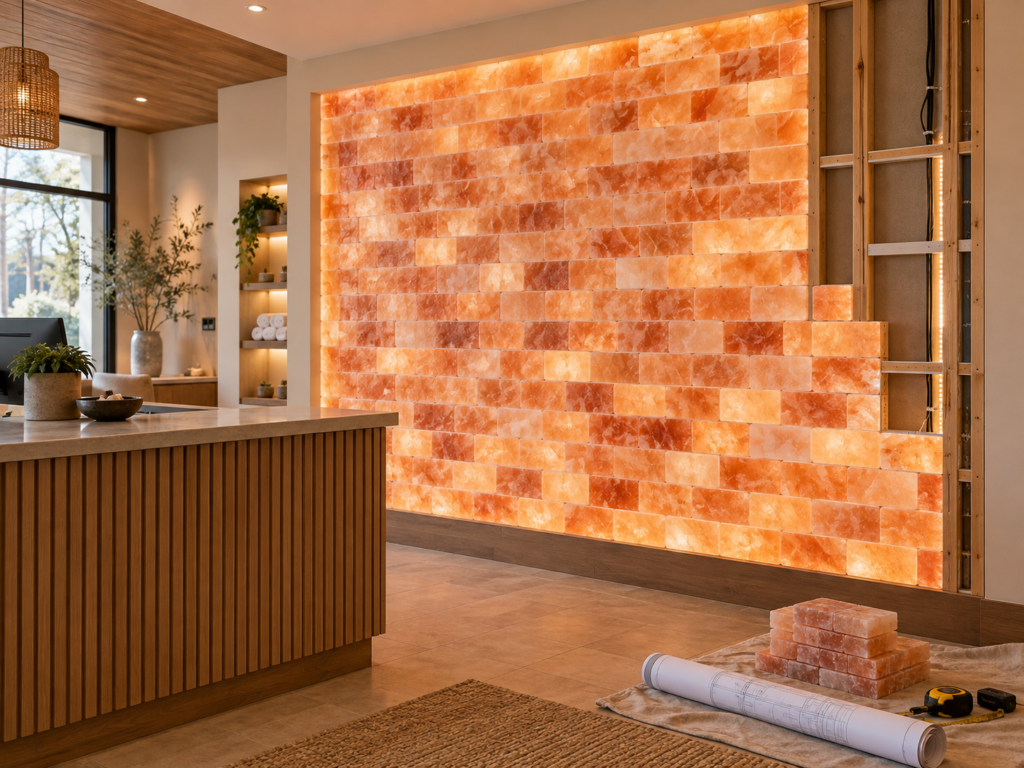
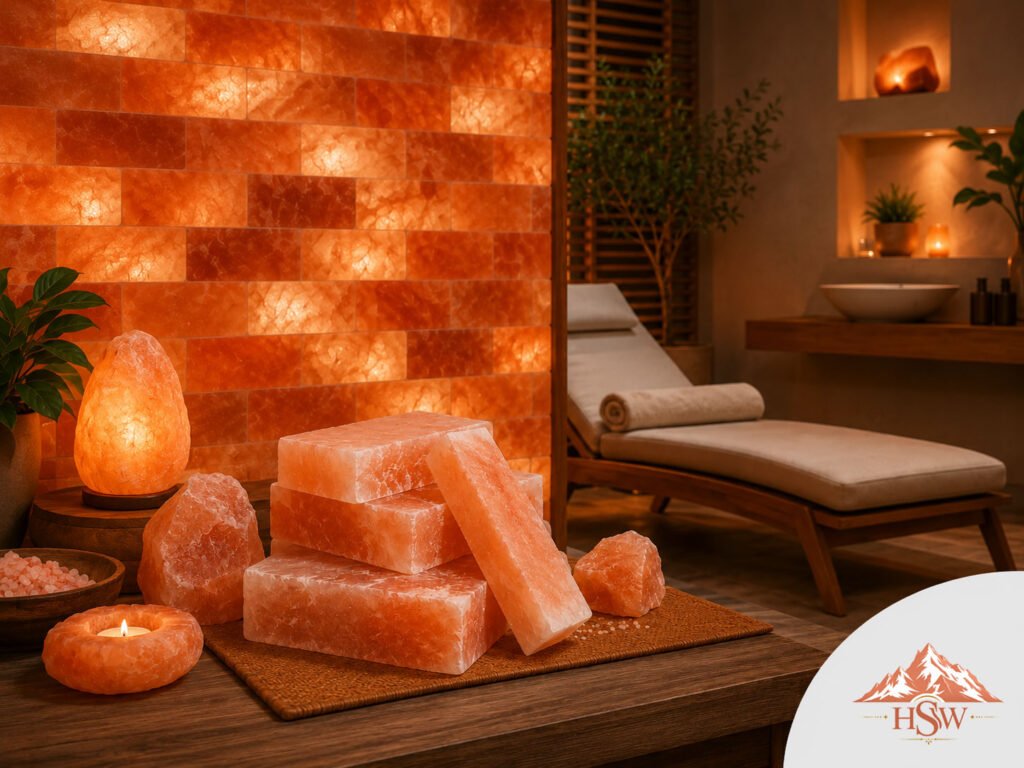
Does Himalayan Salt Adhesive Work on Wood, Concrete, and Drywall?

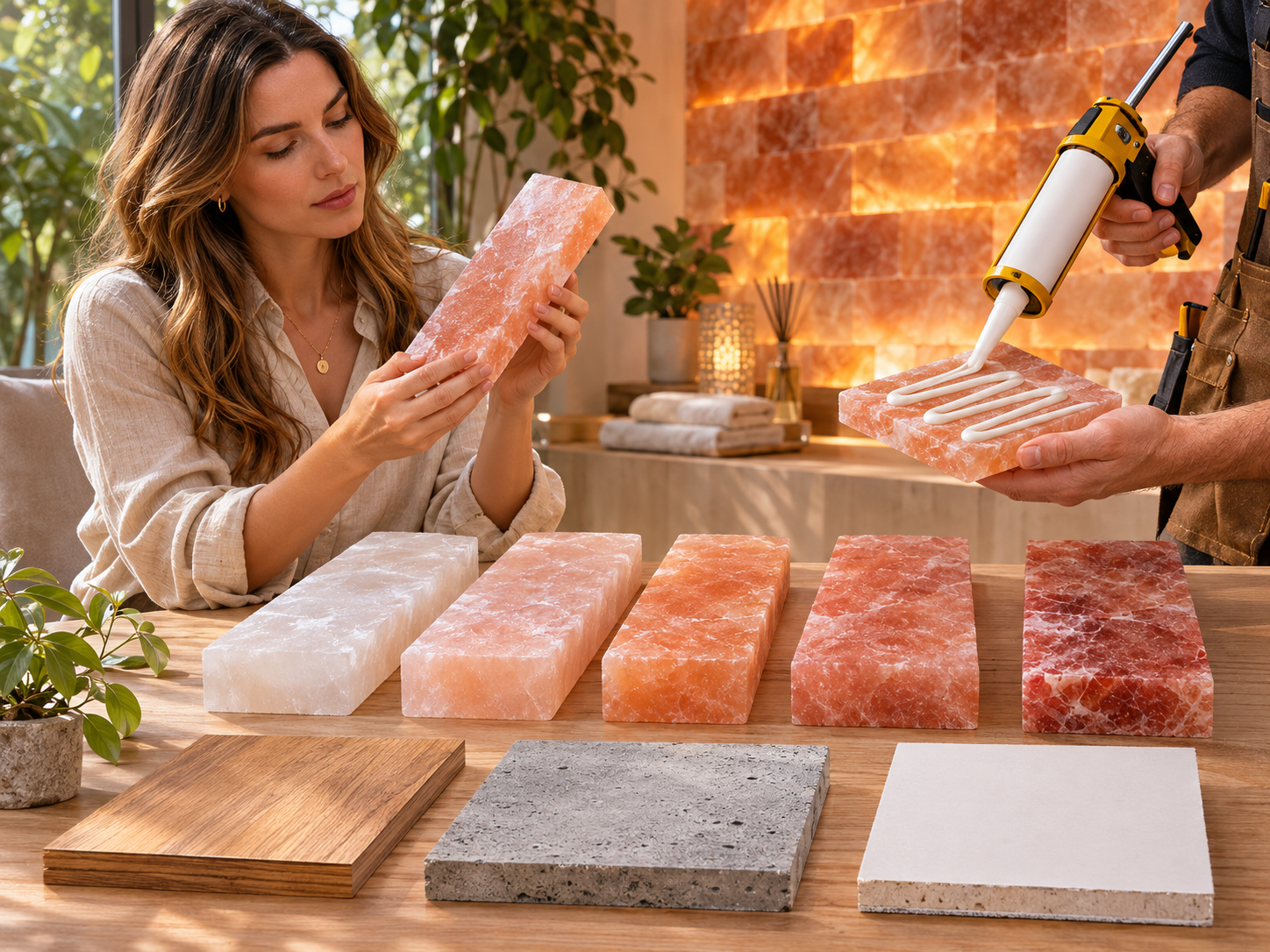
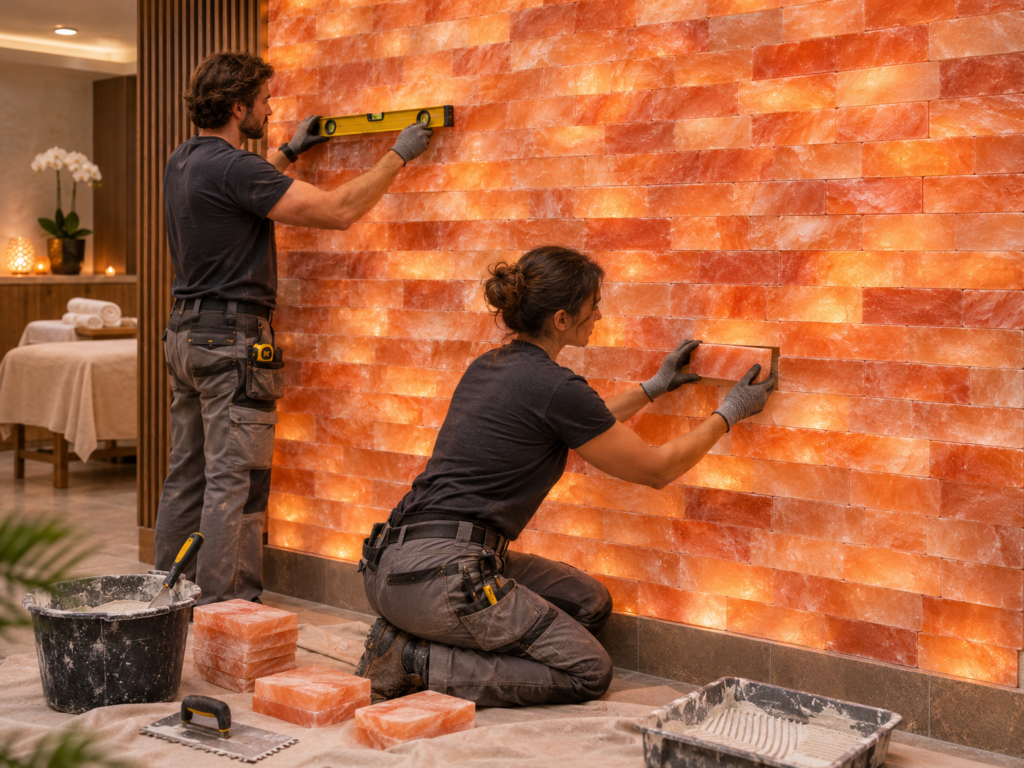
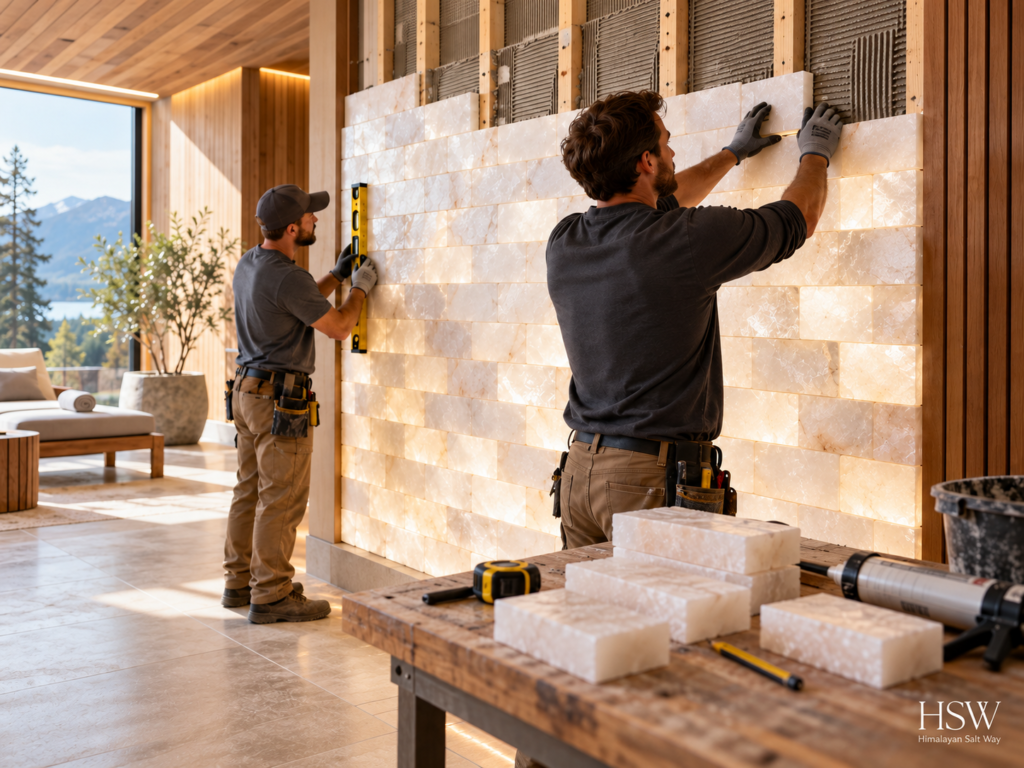
Himalayan salt adhesive for walls is an important consideration when installing natural salt bricks or tiles on wood, concrete, or drywall. The right installation method depends on surface compatibility, wall strength, moisture conditions, and proper support.
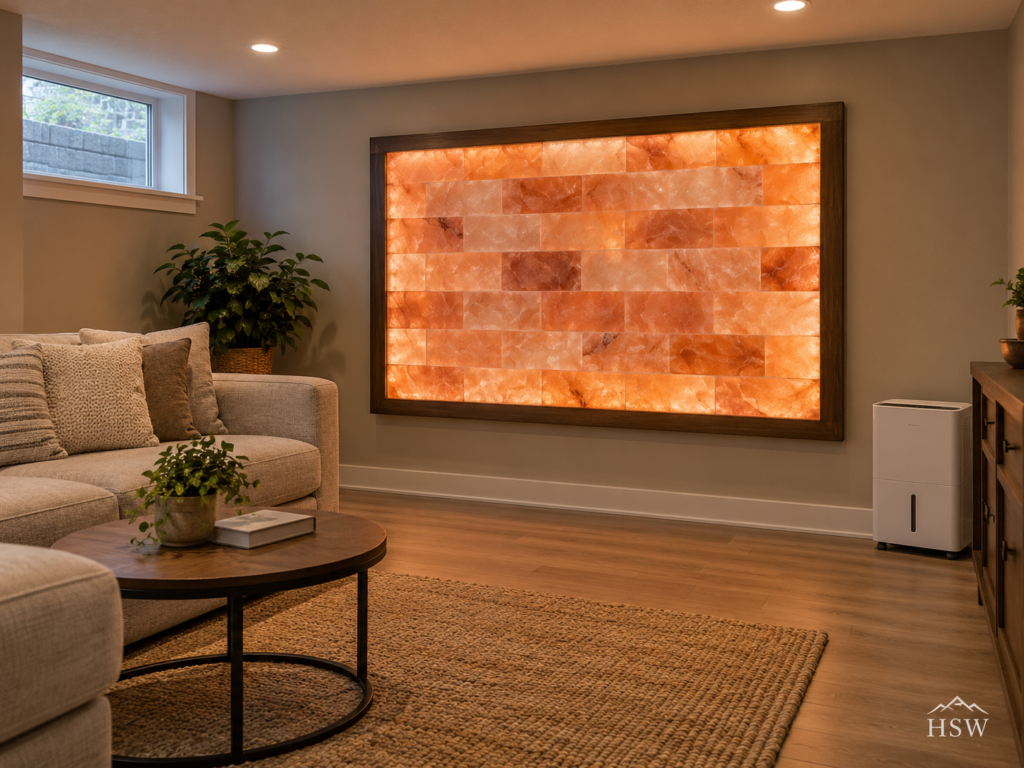
A decorative salt feature in a living room has different installation requirements from a large salt wall in a commercial spa or sauna.
At Himalayan Salt Way, we understand that choosing the correct materials is an essential part of creating a beautiful, durable salt wall. This guide explains how different backing surfaces affect installation and what to check before applying adhesive.
How to Choose Himalayan Salt Adhesive for Walls
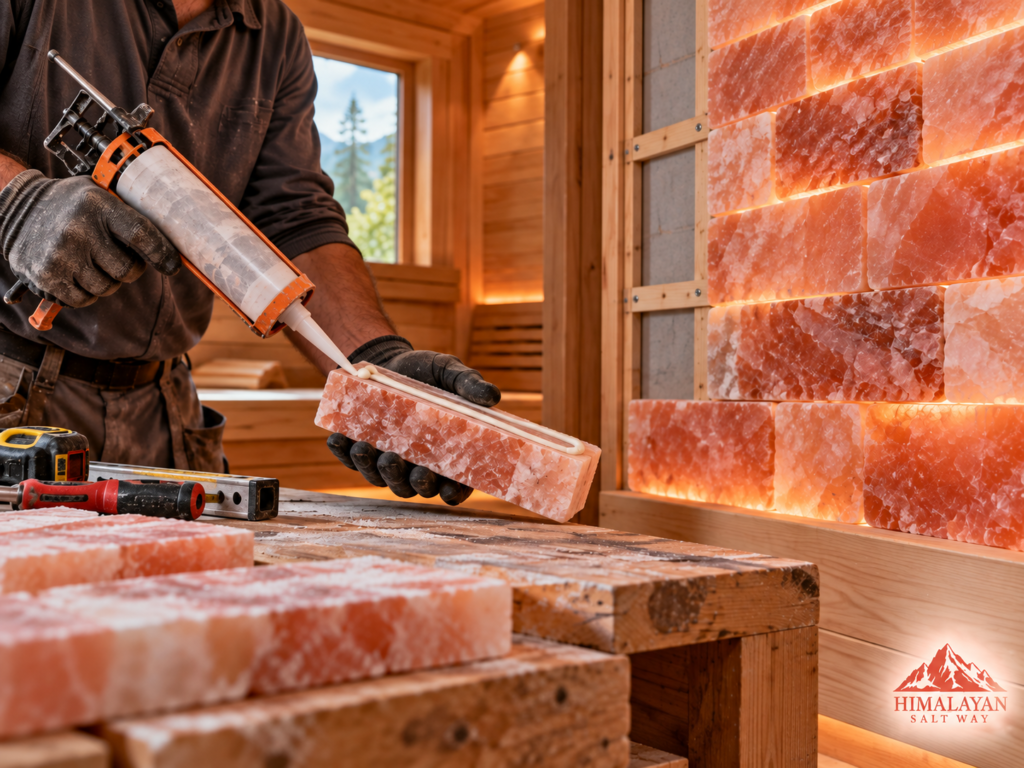
Himalayan salt adhesive is a bonding product intended for installing natural salt bricks, tiles, and blocks. Unlike ordinary household glue, a dedicated salt wall adhesive is selected with the characteristics of crystalline salt materials in mind.
Natural Himalayan salt varies in texture, thickness, and surface finish. These characteristics can influence how an adhesive makes contact with each piece.
A suitable installation system must account for:
- Compatibility with natural Himalayan salt
- Compatibility with the supporting surface
- The weight of the salt tiles or bricks
- Temperature and moisture exposure
- Required curing conditions
- Mechanical support and overall structural stability
Himalayan Salt Way offers Saltite Himalayan Salt Adhesive for salt brick, tile, and block installations.
However, an adhesive designed for salt materials is not automatically approved for direct application to every building surface. Always confirm the precise combination of adhesive, salt, and backing before installation.
Does Himalayan Salt Adhesive Work on Wood?
Wood is commonly considered for decorative wall framing and prefabricated mounting systems. It is relatively easy to cut and assemble, making it attractive for custom-sized projects.
Using Himalayan salt adhesive for walls with wooden backing requires careful attention to surface preparation, moisture, and structural support.
But Himalayan salt adhesive should only be used directly on wood when the adhesive manufacturer confirms that the specific wood material is an approved substrate.
Important Considerations for Wood Surfaces
1. Wood movement
Wood can expand, contract, or change shape as temperature and humidity fluctuate. This movement may place stress on adhesive joints and rigid salt pieces.
2. Surface treatment
Painted, varnished, laminated, or sealed wood may behave differently from unfinished wood. An adhesive that bonds to one surface finish may not bond reliably to another.
3. Structural strength
A wooden panel must be strong enough for the intended installation. Heavy salt walls may require a properly engineered frame and separate mechanical support.
4. Moisture exposure
Wood and natural salt both require careful moisture management. Damp backing or recurring condensation can create installation problems.
Is Wood a Good Choice for Salt Wall Projects?
Wood may be appropriate as part of a dry, professionally designed salt wall framing system. However, its suitability as a direct bonding surface requires manufacturer approval.
For larger projects, consider having an experienced installer assess the support frame, joints, substrate, and mounting method before attaching the salt.
Does Himalayan Salt Adhesive Work on Concrete?
Concrete and masonry are commonly used in commercial and residential buildings. Their strength can make them attractive backing candidates, but a strong wall does not automatically guarantee a reliable adhesive bond.
When choosing Himalayan salt adhesive for walls made of concrete, always verify substrate compatibility and check for moisture before installation.
The specific adhesive must be approved for concrete and natural salt.
Why Concrete Surface Preparation Matters
Before installation, inspect the surface for:
- Dust and loose particles
- Cracks or deteriorating material
- Paint, coatings, or sealers
- Uneven areas
- Active moisture or water intrusion
- Recently poured concrete that has not adequately cured
New concrete can retain moisture for an extended period. Applying natural salt over damp concrete may introduce problems even when the adhesive has a strong initial grip.
Can You Glue Salt Bricks Directly to Concrete?
Potentially, but only when the chosen product and installation system are specifically approved for this application.
An installer should verify the condition of the concrete, the required surface preparation, the mounting method, and the completed wall’s weight.
Do not assume that standard masonry mortar or ordinary construction adhesive is suitable for Himalayan salt.
For additional guidance on choosing bonding materials, read our guide to selecting adhesive for Himalayan salt tiles and bricks.
Does Himalayan Salt Adhesive Work on Drywall?
Drywall is one of the most common interior wall finishes in American homes. It is widely used in bedrooms, offices, living rooms, and other residential spaces.
Before applying Himalayan salt adhesive for walls with drywall backing, confirm that the supporting structure can safely handle the weight of the salt tiles or bricks.
However, drywall requires particular caution when planning a heavy decorative salt wall.
Why Drywall Needs Special Attention
Drywall consists of a gypsum core with facing material. Its surface can be damaged by excessive loads, moisture, or inadequate attachment.
Even if an adhesive bonds to the drywall facing, this does not establish that the drywall and its fastening system can safely carry a heavy salt wall.
Important considerations include:
- Drywall thickness and condition
- Stud locations and spacing
- Attachment of the drywall to framing
- Total weight of the proposed salt feature
- Moisture exposure
- Need for additional backing or structural supports
Can Salt Tiles Be Installed Directly Over Drywall?
Direct installation should not be assumed safe without an approved assembly design.
For a substantial salt wall, an experienced contractor may recommend a separate support system, reinforced backing, or mechanically supported panel assembly anchored to suitable structural members.
Adhesive alone should not be relied upon to prevent heavy salt bricks or tiles from falling.
Wood vs. Concrete vs. Drywall: Which Surface Is Better?
There is no universally best backing material for every Himalayan salt wall. Each surface has different characteristics, and compatibility must be confirmed for the intended installation.
| Backing surface | Main consideration | Recommended approach |
|---|---|---|
| Wood | Movement, surface finish, moisture, and load capacity | Confirm adhesive compatibility and frame design |
| Concrete | Surface condition, moisture, and coatings | Inspect and prepare an approved substrate |
| Drywall | Gypsum facing and load-bearing limitations | Have the supporting assembly professionally assessed |
Key takeaway: The strongest adhesive cannot compensate for an unsuitable or inadequately supported wall.
For anyone comparing salt materials before installation, explore our Himalayan Pink Salt Wall Tiles and choose a suitable size and thickness for the planned design.
How to Prepare a Surface for Himalayan Salt Adhesive
Correct preparation is one of the most important stages of salt wall construction.
Step 1: Identify the Existing Surface
Determine whether the proposed backing is solid wood, plywood, concrete, masonry, drywall, cement board, or another material.
Different materials can require different preparation methods.
Step 2: Check the Structural Support
Calculate the approximate total weight of the salt pieces and mounting assembly.
Confirm that the structural system can support the completed installation. Heavy or tall walls may need engineering review and mechanically supported components.
Step 3: Inspect for Moisture
Look for leaks, damp patches, condensation, and unfinished wet construction work.
Do not install salt products over an active moisture problem.
The U.S. Environmental Protection Agency’s moisture guidance recommends indoor relative humidity below 60%, ideally between 30% and 50%, where practical.
This is general indoor moisture guidance, not a guarantee of salt wall performance or an adhesive installation specification.
Step 4: Clean and Prepare the Approved Backing
Remove dust, dirt, and loose material using methods allowed by the adhesive and substrate manufacturers.
Do not add water to natural salt pieces as a routine preparation method.
Step 5: Verify Adhesive Compatibility
Review the exact adhesive instructions for:
- Approved bonding materials
- Surface preparation
- Application temperature
- Required adhesive quantity and pattern
- Working time
- Curing conditions
- Environmental limitations
If the instructions do not identify the proposed backing material, obtain written manufacturer confirmation before proceeding.
Step 6: Test Before Full Installation
A small test assembly can help identify appearance and application issues.
However, a successful small bond test does not establish the structural safety of a complete wall.
Step 7: Follow the Approved Installation Design
Use the specified supports, application method, and curing procedure. Avoid disturbing the assembly until the required curing and support conditions have been met.
How Much Himalayan Salt Adhesive Do You Need?
Adhesive quantity depends on the size and number of salt pieces, the approved application pattern, and the manufacturer’s coverage information.
Himalayan Salt Way’s Saltite product listing provides an estimated coverage of up to 60 salt bricks for a pack of two tubes.
That is a product listing estimate rather than a guarantee for every project. Actual consumption may differ depending on the brick size, joint design, surface condition, and application method.
To estimate your requirements:
- Measure the total wall width and height.
- Determine the salt brick or tile dimensions.
- Calculate the approximate number of pieces.
- Confirm the adhesive manufacturer’s coverage instructions for your application.
- Account for installation waste and any additional material required.
You can explore Saltite Himalayan Salt Adhesive – Pack of 4 when planning a larger project.
Can Himalayan Salt Adhesive Be Used in Saunas?
Saunas introduce additional challenges because of elevated temperatures, temperature cycling, and changing humidity conditions.
Before installing a salt wall in a sauna, confirm that the adhesive, backing, support system, and any lighting components are suitable for the actual operating environment.
The adhesive manufacturer’s approved service temperature is particularly important.
Do not assume that a product described as suitable for salt walls is automatically suitable for every traditional sauna, infrared sauna, or steam room.
Steam rooms require even greater caution because of repeated exposure to high humidity and condensation.
For more information, read our guide on whether Himalayan salt tiles can be used in steam rooms.
Common Himalayan Salt Adhesive Installation Mistakes
Even well-planned decorative projects can encounter problems when installation details are overlooked.
Using Regular Household Glue
Ordinary glue may not be approved for natural salt or for the weight of the finished installation.
Ignoring Surface Moisture
Damp concrete, wet wood, or moisture-damaged drywall can undermine the installation.
Relying Only on Adhesive for Support
A large salt feature may require a structural frame, bottom support, and other specified restraints.
Failing to Check Surface Compatibility
A product designed for natural salt is not necessarily approved for all backing surfaces.
Rushing the Curing Process
Initial adhesion does not mean the product has reached its specified cured strength.
Ignoring Future Maintenance
Plan access for any backlighting, electrical components, and areas that may need inspection.
For ongoing care, see our Himalayan Salt Tile Moisture and Care Guide.
Choosing the Right Materials for Your Himalayan Salt Wall
A successful salt wall starts with proper planning, not just choosing an adhesive.
Consider the visual effect you want, the dimensions of the space, the salt material, and the supporting structure.
Himalayan Salt Way offers natural pink salt tiles, salt bricks, and salt wall adhesive for decorative installations.
Before purchasing, consider these questions:
- Will the salt wall be installed in a home, spa, or sauna?
- What backing material is already in place?
- How large will the completed feature be?
- Will the installation include LED backlighting?
- Are there any potential humidity or condensation concerns?
- What mounting and support system has been approved?
You can also review our Himalayan Salt Wall Cost Guide to understand the different materials and installation expenses involved.
Frequently Asked Questions
1. Can Himalayan salt adhesive stick to plywood?
It may be possible with a compatible adhesive and approved mounting system, but plywood is not automatically an approved bonding surface. Confirm the exact product specifications, plywood condition, and support requirements.
2. Can you attach Himalayan salt bricks directly to a concrete wall?
Direct attachment may be possible using a system approved for both salt and concrete. The concrete condition, moisture level, weight, and required supports must be assessed first.
3. Is Himalayan salt adhesive safe to use on drywall?
Safety cannot be determined by adhesive compatibility alone. Drywall and its supporting framework must be suitable for the completed load. Heavy installations may require reinforced or independently supported mounting systems.
4. Can ordinary construction adhesive replace specialized salt wall adhesive?
Not automatically. Some construction adhesives list wood, drywall, and concrete among their compatible surfaces, but that does not establish compatibility with natural Himalayan salt or the intended wall assembly. Always verify both sides of the bond.
5. How long does Himalayan salt adhesive take to dry?
Drying and curing times depend on the exact product, adhesive thickness, substrate, temperature, and humidity. Follow the current manufacturer’s technical instructions rather than assuming a universal curing time.
6. Can Himalayan salt adhesive be used in humid rooms?
Only if the product and complete mounting system are approved for those conditions. Natural salt is moisture-sensitive, so repeated condensation or direct water exposure can create problems.
7. Do Himalayan salt walls require mechanical support?
Many substantial or tall salt walls require appropriately designed structural support, regardless of adhesive strength. The necessary system depends on the completed weight, geometry, substrate, and installation design.
Final Thoughts
Himalayan salt adhesive plays an important role in salt wall installation, but its effectiveness depends on the entire construction system.
Wood may offer flexible framing options, concrete may provide a substantial backing, and drywall is common in residential interiors. None should be considered automatically suitable for direct salt brick installation without confirming product compatibility and structural requirements.
The best approach is to identify your backing material, select a compatible adhesive, prepare the surface correctly, and ensure the finished wall has adequate support.
Whether you are planning a small decorative feature or a larger commercial salt wall, careful preparation can help you avoid costly installation mistakes.
Planning a Himalayan Salt Wall?
Explore Himalayan Salt Way’s salt tiles, bricks, and adhesive options or contact our team at sales@himalayansaltway.com with your wall dimensions, backing material, and project requirements.
Selecting Himalayan salt adhesive for walls involves more than choosing a strong bonding product. Proper surface preparation, material compatibility, and structural support are equally important.
Our team can help you explore available salt products and installation materials for your project.