Does a Himalayan Salt Wall Actually Improve Air Quality?

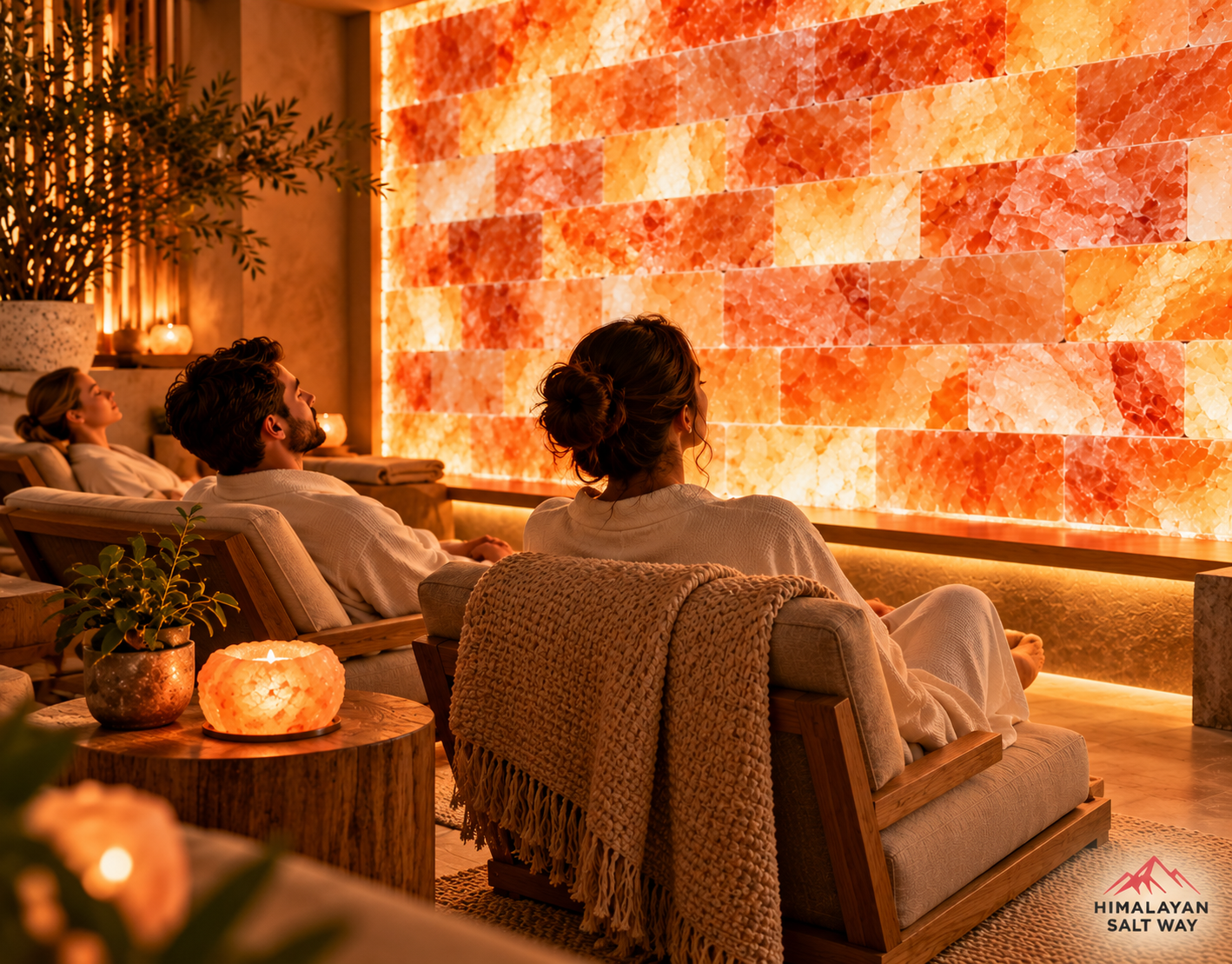
Himalayan salt wall benefits are often discussed in spas, saunas, salt rooms, and wellness spaces, especially when people ask whether a glowing salt wall can actually improve indoor air quality. The warm orange light, natural crystal texture, and peaceful atmosphere can certainly make a room feel fresher and more relaxing, but the science behind air-purifying claims is more limited than many people realize.
A Himalayan salt wall can be a beautiful wellness feature, but it is important to separate its proven design and atmospheric value from claims that it works like an air purifier.
So, does a Himalayan salt wall really improve air quality? Let’s look at what Himalayan salt walls actually do, how they differ from halotherapy, and where the evidence currently stands.
What Is a Himalayan Salt Wall?
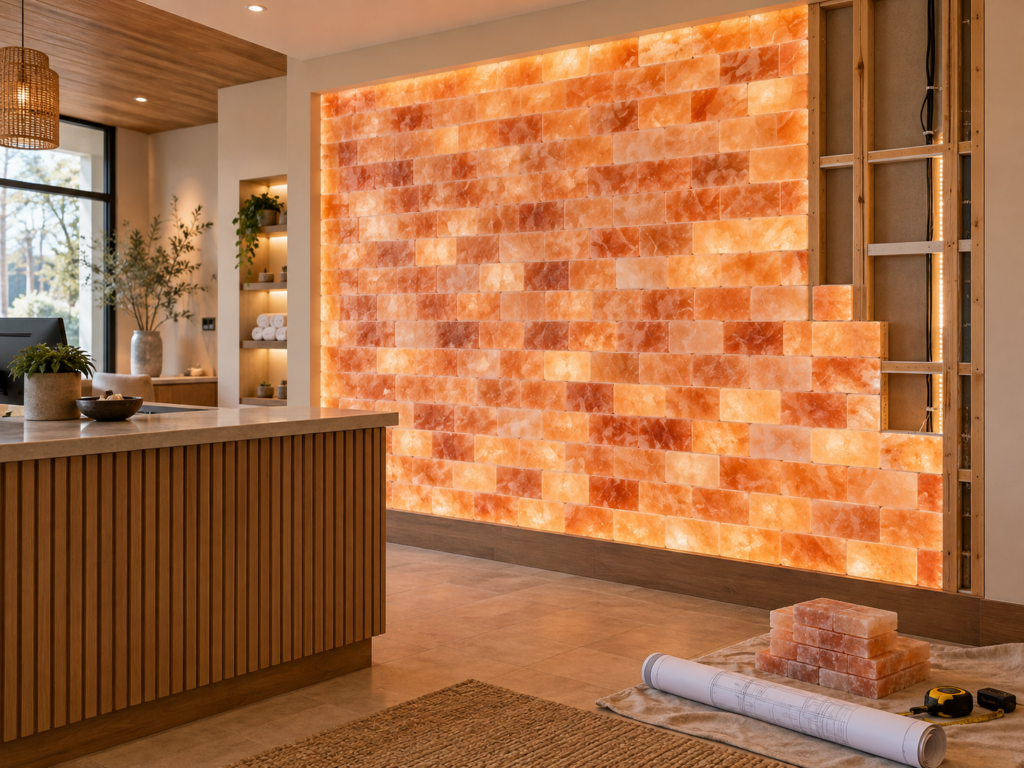
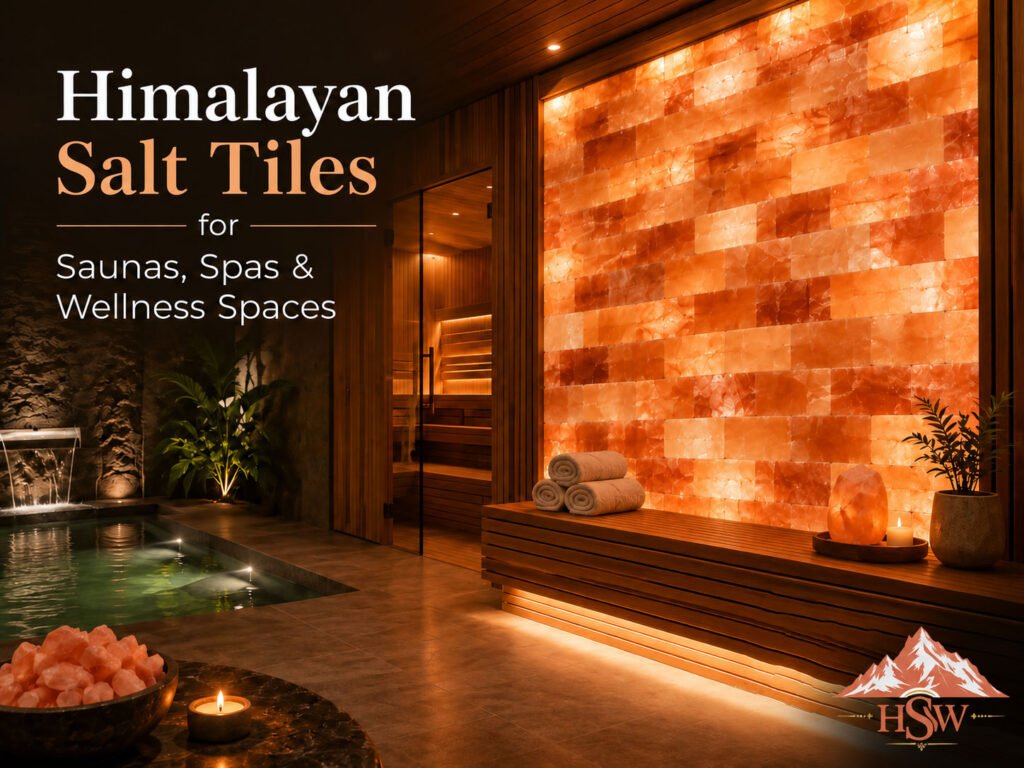
A Himalayan salt wall is an interior feature made using natural pink salt tiles, bricks, or blocks. These pieces are installed together to create a decorative wall, often with LED lighting placed behind them.
Because natural Himalayan salt is partly translucent, backlighting brings out shades of pink, orange, amber, red, and white. Each salt tile has slightly different crystal patterns and coloration, so the finished wall looks natural rather than manufactured.
Himalayan salt walls are commonly used in:
- Saunas
- Spas
- Salt rooms
- Wellness centers
- Massage rooms
- Meditation spaces
- Hotels and resorts
- Home wellness rooms
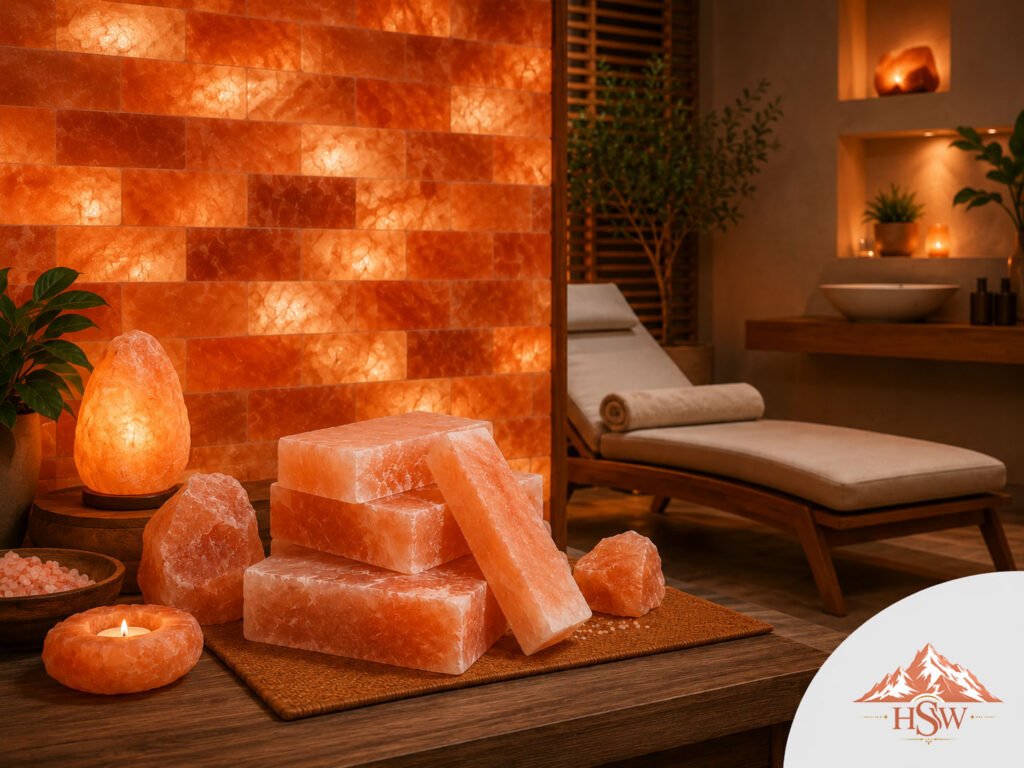
For sauna and spa projects, Himalayan pink salt tiles can be used to create decorative illuminated walls, while Himalayan salt bricks offer a thicker and more substantial appearance.
What Are the Main Himalayan Salt Wall Benefits?
The most noticeable Himalayan salt wall benefits are related to atmosphere, interior design, lighting, and relaxation.
A backlit salt wall can completely change how a room feels. Instead of bright overhead lighting, the natural salt crystals produce a softer and warmer glow.
Some of the most practical benefits include:
- Creating a relaxing wellness atmosphere
- Providing soft ambient lighting
- Adding natural texture to interiors
- Creating a premium visual focal point
- Complementing wood and stone sauna designs
- Helping salt rooms feel more immersive
- Bringing natural materials into modern interiors
For many spas and wellness centers, these visual and experiential qualities are the main reason for installing a salt wall.
Why Do People Think Himalayan Salt Walls Clean the Air?
One reason is that salt is naturally hygroscopic, meaning it can attract and interact with moisture.
Because of this property, claims are sometimes made that Himalayan salt can pull moisture, dust, allergens, or other impurities out of the air.
However, being hygroscopic does not automatically make something an effective air purifier.
Indoor air quality is influenced by many factors, including ventilation, filtration, humidity, smoke, dust, pollen, mold, and chemical pollutants.
A passive salt wall has not been proven to remove these contaminants at the same level as a proper air filtration or HVAC system.
Do Himalayan Salt Wall Benefits Include Cleaner Air?
When discussing Himalayan salt wall benefits, this is where an important distinction needs to be made.
A decorative salt wall and an active halotherapy room are not the same thing.
A passive Himalayan salt wall simply consists of salt tiles or bricks installed as part of the room.
Active halotherapy, on the other hand, uses specialized equipment to disperse microscopic salt particles into the air.
That difference matters.
A salt wall may contribute to the look and atmosphere of a wellness room, but it does not automatically create active salt therapy.
What Is Halotherapy?
Halotherapy is commonly known as dry salt therapy.
In an active halotherapy room, a device called a halogenerator grinds specially prepared salt into very fine particles and releases those particles into the air.
People sitting inside the room then breathe the salt aerosol.
This is fundamentally different from simply sitting beside a wall made from Himalayan salt bricks.
A professional salt room may therefore use both:
- Himalayan salt tiles or bricks for design and atmosphere
- A halogenerator for active dry-salt aerosol
Cleveland Clinic notes that salt therapy is popular as a complementary wellness practice, but many health claims surrounding it still lack strong scientific evidence. Cleveland Clinic
Does Halotherapy Help With Breathing?
There has been some research into halotherapy and respiratory conditions.
A review published in 2022 examined studies involving chronic respiratory diseases and reported potential improvements in some lung-function measures and quality-of-life measures. However, the authors also noted that official clinical guidelines do not currently exist for salt-room halotherapy and that better randomized clinical trials are still needed. PubMed
Other reviews have been more cautious. A review focused on COPD found that the available evidence was too limited to recommend halotherapy as a treatment and called for higher-quality studies. PubMed
So, while halotherapy continues to be studied as a complementary wellness approach, it should not be presented as a replacement for medical care.
Himalayan Salt Wall Benefits in Spas and Saunas
For commercial wellness spaces, Himalayan salt wall benefits are often strongest in design and guest experience.
A salt wall can help turn a standard sauna or spa room into a more memorable environment.
Natural Himalayan salt combines particularly well with:
- Cedar
- Hemlock
- Natural stone
- Dark wood
- Light oak
- Concrete
- Warm LED lighting
When the wall is illuminated from behind, it becomes both a decorative feature and an indirect light source.
This can help create a calmer atmosphere than harsh ceiling lights.
For spas, wellness centers, and hotels, that visual experience can become part of the overall identity of the space.
Why Do Salt Rooms Feel Relaxing?
A salt room can feel calming even without proven air-purifying effects.
Think about the environment:
Warm lighting, comfortable seating, natural textures, quiet surroundings, minimal visual clutter, and a glowing wall.
All of these elements are commonly associated with relaxation-focused interior design.
That means some of the experience people associate with a salt room may come from the environment itself rather than measurable changes to air quality.
And that is still valuable.
A wellness space does not need exaggerated health claims to create a meaningful relaxation experience.
Himalayan Salt Wall Benefits for Wellness Spaces
Another important part of Himalayan salt wall benefits is the way salt works visually with light.
Natural Himalayan salt is not uniform.
One tile may be pale pink, another may be deep orange, and another may contain white or red mineral patterns.
When backlit, these variations create a natural glowing mosaic.
That makes Himalayan salt walls especially suitable for:
- Spa lounges
- Massage rooms
- Meditation spaces
- Yoga studios
- Hotel wellness areas
- Luxury saunas
- Salt rooms
- Home relaxation spaces
Unlike printed or artificial wall panels, every real salt wall has its own natural pattern.
What About Negative Ions?
Another common claim is that Himalayan salt walls release negative ions that improve air quality.
Similar claims are often made about Himalayan salt lamps.
However, strong evidence that passive Himalayan salt products release enough negative ions to meaningfully purify indoor air is lacking.
This is why it is better to avoid describing a salt wall as a negative-ion air-cleaning system unless specialized equipment is actually being used.
The more accurate benefit is the atmosphere created by natural salt and warm lighting.
Can Himalayan Salt Walls Help With Humidity?
Salt naturally interacts with moisture, so Himalayan salt tiles can sometimes develop surface moisture in humid environments.
This is sometimes called “salt sweating.”
However, a salt wall should not be used as a substitute for proper humidity control.
Saunas and spas still require appropriate:
- Ventilation
- Air movement
- Temperature control
- Moisture management
- Condensation planning
Excessive moisture can gradually affect the salt surface, especially if it is exposed to direct water.
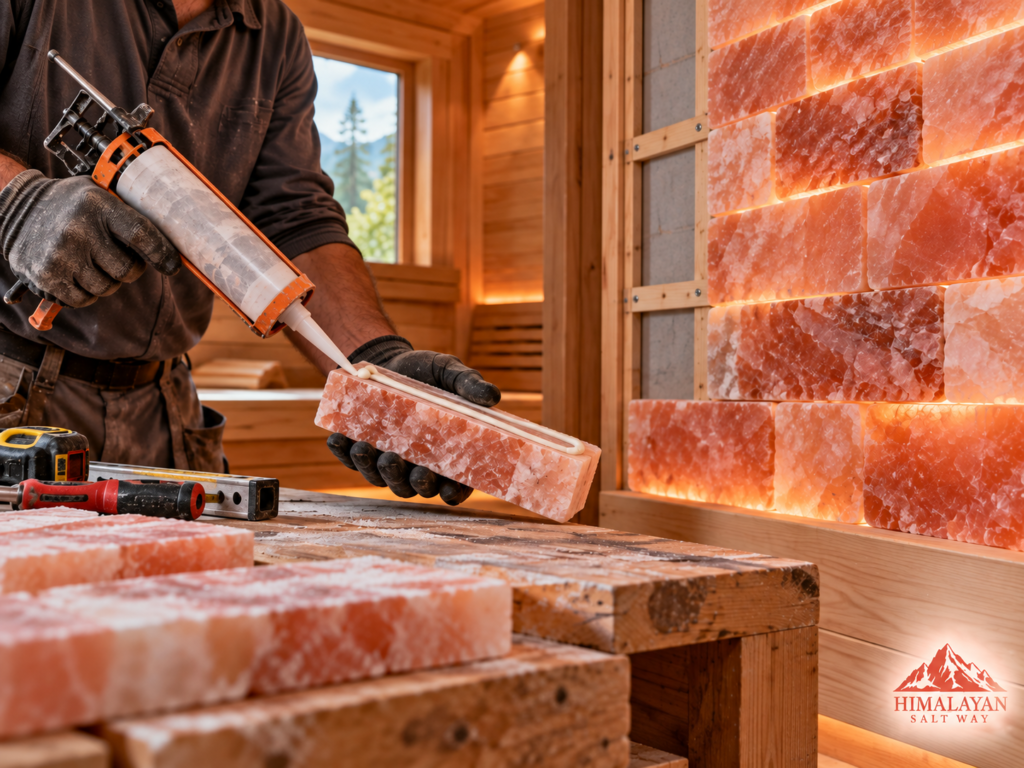
Why Proper Installation Matters
A Himalayan salt wall can contain dozens or even hundreds of individual tiles or bricks.
That means installation needs to account for weight, support, heat, lighting, and moisture.
Important factors include:
- Wall structure
- Salt tile weight
- Heat exposure
- Humidity
- Condensation
- LED placement
- Electrical safety
- Adhesive selection
For tile and brick installations, a suitable Himalayan salt adhesive can help secure the salt pieces to the intended surface.
Proper installation is especially important in sauna environments because heat and moisture levels can be higher than in ordinary rooms.
Can Himalayan Salt Walls Remove Dust or Allergens?
There is currently not enough reliable evidence to say that a passive salt wall removes significant amounts of dust, pollen, smoke, mold spores, or other indoor pollutants.
If better indoor air quality is the main goal, more established approaches include:
- Proper ventilation
- Appropriate air filtration
- HEPA filtration where suitable
- Humidity management
- Regular cleaning
- Reducing sources of indoor pollution
A Himalayan salt wall can complement a wellness-focused interior, but it should not replace these systems.
Can a Himalayan Salt Wall Replace an Air Purifier?
No.
An air purifier is designed to actively pull air through filtration media.
A passive Himalayan salt wall does not perform that function.
Therefore, someone who enjoys the look and atmosphere of a salt wall can still use a dedicated air purifier or professional HVAC system alongside it.
The two serve different purposes.
Himalayan Salt Walls in Homes
Salt walls are not only for commercial spas.
They are also used in residential interiors, especially in:
- Home saunas
- Meditation rooms
- Living rooms
- Home gyms
- Relaxation areas
- Feature walls
A full wall is not always necessary.
A smaller backlit salt panel can create much of the same visual effect while requiring less space.
For homeowners, the main appeal is usually design, ambient lighting, and atmosphere rather than air purification.
Salt Tiles or Salt Bricks: Which Is Better?
The choice depends on the intended design.
Salt tiles are usually thinner and work well for decorative backlit walls.
Salt bricks are thicker and can provide a more substantial architectural appearance.
For many sauna and spa projects, Himalayan salt tiles are practical for feature walls.
For projects requiring a deeper or heavier visual effect, Himalayan salt bricks may be more suitable.
Are Himalayan Salt Walls Worth It?
That depends on what you expect from them.
If the expectation is that a salt wall will replace an air purifier or act as a proven medical treatment, current evidence does not support that conclusion.
But if the goal is to create:
- Warm ambient lighting
- A relaxing environment
- A premium wellness aesthetic
- A natural feature wall
- A memorable sauna or spa interior
then a Himalayan salt wall can offer genuine value.
This is where the strongest Himalayan salt wall benefits are found.
So, Does a Himalayan Salt Wall Actually Improve Air Quality?
Based on current evidence, there is no strong scientific basis for saying that a passive Himalayan salt wall significantly purifies indoor air.
That does not mean Himalayan salt walls have no benefits.
Their strongest benefits are related to atmosphere, lighting, natural design, relaxation, and wellness-room aesthetics.
Active halotherapy is different because it intentionally disperses fine salt particles into the air, but even there, the scientific evidence is still developing and researchers continue to call for stronger clinical studies. PubMed
Overall, Himalayan salt wall benefits are best understood in terms of the environment they create rather than as a replacement for professional air filtration or medical treatment.
A well-designed salt wall can still be a beautiful, memorable, and calming addition to a sauna, spa, salt room, wellness center, or home relaxation space.
Frequently Asked Questions
Do Himalayan salt walls clean the air?
There is currently no strong evidence that a passive Himalayan salt wall significantly cleans indoor air. Proper ventilation and filtration remain more established methods for improving indoor air quality.
What are the main Himalayan salt wall benefits?
The main practical benefits include warm ambient lighting, natural visual texture, a relaxing atmosphere, and an attractive architectural feature for spas, saunas, salt rooms, and wellness environments.
Are Himalayan salt walls the same as halotherapy?
No. A Himalayan salt wall is typically a decorative feature. Active halotherapy uses a halogenerator to release fine dry-salt particles into the air.
Are Himalayan salt walls good for saunas?
They can work very well in sauna designs, but heat, humidity, structural support, lighting, and installation materials need to be planned correctly.
Can Himalayan salt walls replace an air purifier?
No. Salt walls and air purifiers serve different purposes. A dedicated air purifier actively filters air, while a passive salt wall does not.
Do Himalayan salt walls help people relax?
Many people enjoy the warm lighting, natural salt texture, and quiet atmosphere associated with salt-wall environments. These design features can contribute to a relaxing wellness experience.
Should a salt room use a halogenerator?
If a business wants to offer active dry-salt halotherapy, a halogenerator is the equipment used to disperse fine salt particles into the room. A decorative salt wall alone does not provide the same function.